Small Crack
27.7316°N 34.0975°E · reef
Small Crack
A crevice formation on the southern Sinai coast — a narrow fissure in the reef that divers pass through as a swim-through, flanked by soft corals and glassfish clouds, providing a geological feature in contrast to the open-water diving of the adjacent headland sites.
Overview
Small Crack sits at approximately 27.73°N, 34.10°E on the Sinai Peninsula’s southwestern coast south of Sharm el-Sheikh — in the same geographic band as Shark Observatory and Ras Ghozlani. The name is descriptive: the site’s signature feature is a narrow crack or crevice in the reef structure that forms a natural swim-through. In a dive region dominated by walls, slopes, and open reef, Small Crack’s geological feature provides a different experience — the confined passage creates a different light environment, concentrates soft corals and glassfish, and gives the dive a distinctive character among the southern Sinai coastal sites.
Site Information
- Location: Southern Sinai coast, southwest of Sharm el-Sheikh (~27.73°N, 34.10°E)
- Entry Type: Boat dive
- Site Type: Reef
- Difficulty Level: Intermediate
- Maximum Depth: 20 meters
- Typical Visibility: 15–25 meters
- Current: Mild to moderate; tidal influence
- Best Time: Year-round; October to May optimal
Marine Life
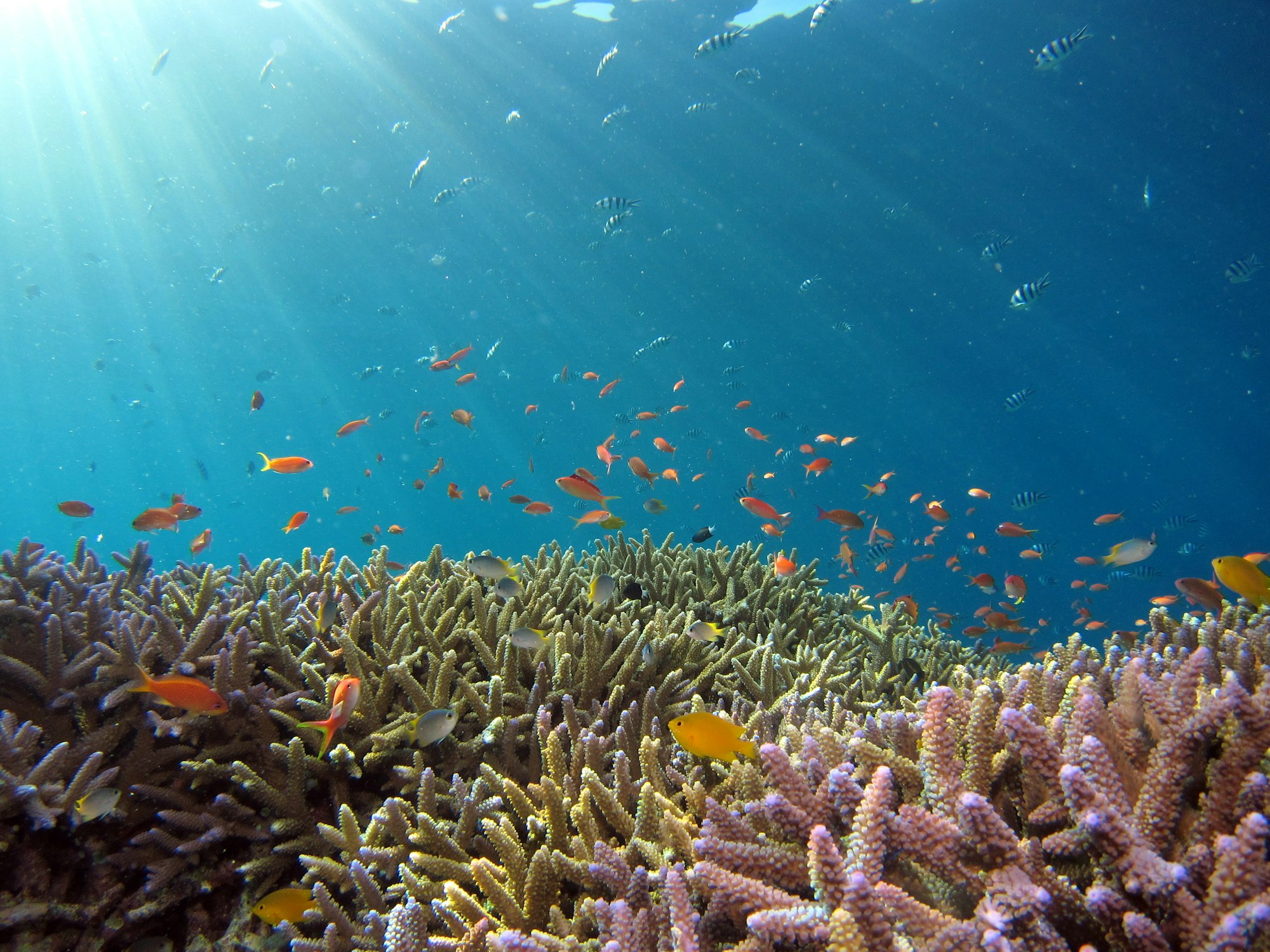
The crack itself concentrates glassfish in the dimly-lit interior, with hunting groupers waiting at the exits. Soft corals and crinoids colonise the crack walls in the reduced-light environment. The reef surrounding the crack carries the standard southern Sinai assemblage: moray eels, anthias schools, butterflyfish, and surgeonfish throughout. The open outer reef beyond the crack holds barracuda and occasional grey reef sharks.
Dive Profile
Begin on the outer reef at 8–12 metres to assess current and observe the surrounding reef. Approach the crack entrance from the leeward side and pass through at a controlled buoyancy position — single file. The crack exit opens onto the open reef or bay face depending on orientation. After the swim-through, explore the surrounding reef at 10–15 metres. Safety stop at 5 metres over the shallow reef.
Entry and Exit
Day boat from Sharm el-Sheikh (40–60 minutes). Giant stride entry. Pair with Shark Observatory or Ras Za’atar for a two-dive southern Sinai day. SMB deployment before ascending.
Tips and Recommendations
- The swim-through requires single-file movement and good buoyancy control — do not enter in strong current or with large groups
- A torch illuminates the crack interior and reveals the soft coral and glassfish in better detail than ambient light alone
- The crack exit may have stronger current than the entry — assess before committing and back out if conditions are unsuitable
Safety Considerations
The crack is not a full cave system — natural light is visible throughout. Do not enter if visibility is compromised or if current is pushing into the crack. Maintain buoyancy precision throughout the passage. Good trim control required to avoid disturbing the soft coral on the crack walls. SMB before ascending.
Photography
The crack swim-through with natural light filtering through one end creates a classic silhouette composition — position the camera to frame the light entry with the diver as silhouette. Glassfish clouds inside the crack respond well to torch-backlighting. The soft coral walls of the crack suit close-focus wide-angle in the confined space.
Sources: Divezone - Red Sea, Dive the World - Egypt Red Sea, Red Sea Scuba Diving, PADI - Diving in Egypt. Last updated 2026-04-04.
Sea-surface temperature and wave height from Open-Meteo Marine (ERA5 reanalysis, monthly averages).
22 verified species observations (8 species) logged within ~11 km of this site between 1996 and 2014, from the Ocean Biodiversity Information System.
- Tursiops · Bottlenose dolphins
- Tursiops truncatus · Common bottlenose dolphin
- Grampus griseus · Risso's dolphin
- Tursiops aduncus · Indian ocean bottlenose dolphin
- Stenella attenuata · Pantropical spotted dolphin
- Pseudorca crassidens · False killer whale
- Stenella longirostris · Spinner dolphin
- Nassarius gemmuliferus
Scientific survey records skew toward sampled taxa (molluscs, corals) and do not reflect what you are guaranteed to see on a dive.
Source: OBIS (obis.org), aggregated Darwin Core occurrence records.
Conditions change with the tide and the season. If you have dived this site, share what it was actually like — date, visibility, current, and what you saw. Real, recent reports from divers are exactly what this guide is built to collect.
Send a conditions report ›