Sodfa
27.8983°N 34.3301°E · reef
Sodfa
Named by accident — the Arabic word for “coincidence” — this lesser-known Sharm el-Sheikh drift site adjacent to Tower rewards with gorgonian fans, pinnacles, and a seasonal manta ray corridor from March to June.
Overview
Sodfa sits immediately northeast of the famous Tower dive site on the Sharm el-Sheikh coastline in the Hadaba district. The site was named by two of the original dive guides who jumped in expecting to be at a different site but found themselves on a reef that looked the same as where they’d intended to go — “sodfa” means coincidence in Arabic. Less busy than Tower, Sodfa operates as a natural extension of the Tower drift: after exploring Tower’s canyon and pillars, the dive continues northeast onto Sodfa’s gentler sloping reef and plateau, which is dotted with coral pinnacles and gorgonian sea fans along the drop-off at 18–25 metres. From March to late June, manta rays are reliably sighted at the corner section — a strong seasonal draw.
Site Information
- Location: Adjacent to Tower dive site, Hadaba, southern Sharm el-Sheikh, Sinai, Egypt
- Entry Type: Boat dive
- Site Type: Reef
- Difficulty Level: Intermediate
- Maximum Depth: 20 meters
- Typical Visibility: 20–30 meters
- Current: Mild drift current (site must be done as a drift)
- Best Time: Year-round; manta rays March to June
Marine Life
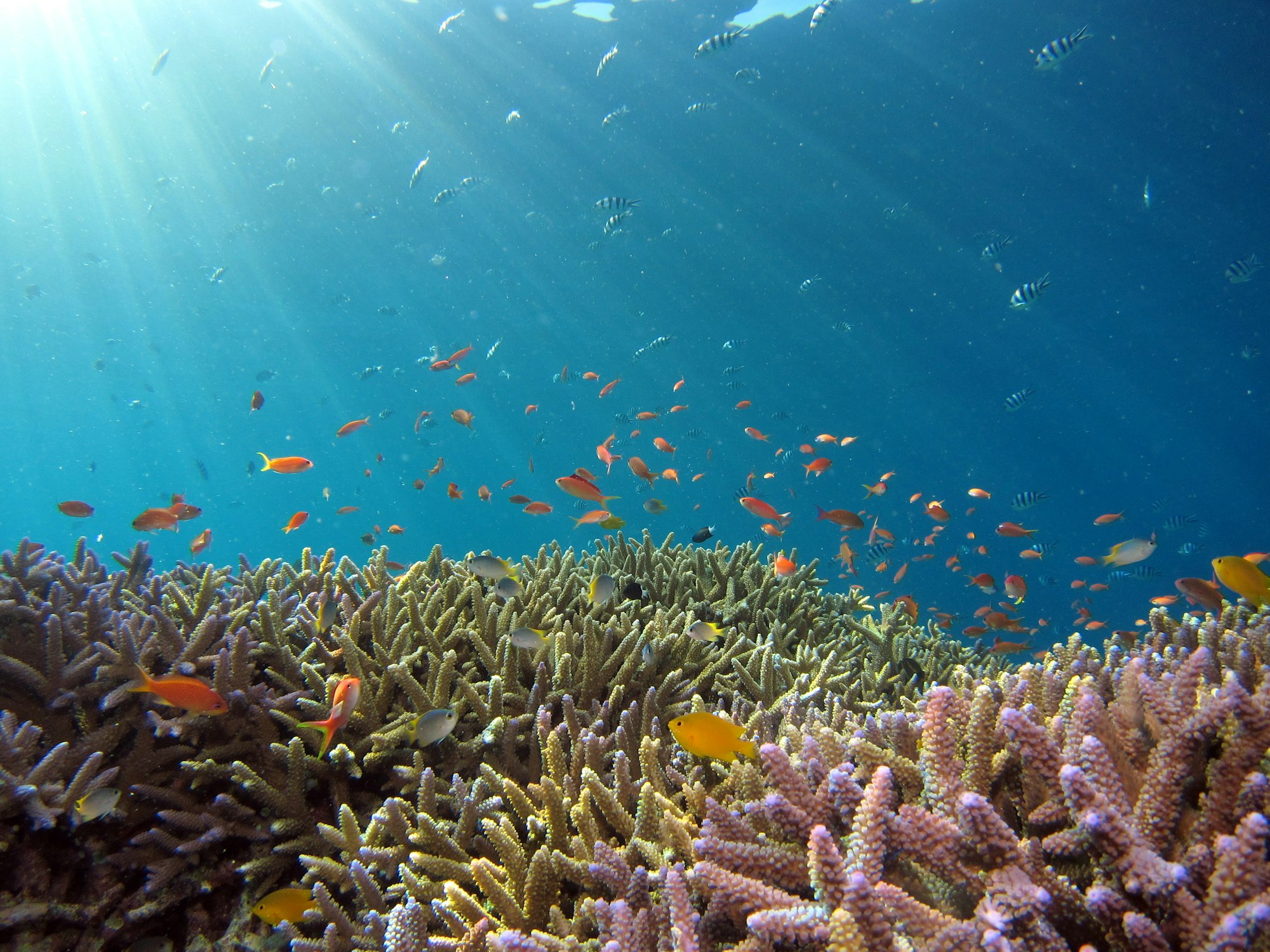
Gorgonian sea fans along the drop-off at 18–25 metres are the dominant structural feature. The pinnacles that dot the plateau host dense anthias and chromis communities. Schools of fusiliers, surgeonfish, triggerfish, and Red Sea bannerfish fill the water column between the pinnacles. Massive Porites corals and yellow soft corals are characteristic reef elements at Sodfa. The corner section, where the reef transitions to open water, is the seasonal manta ray hotspot. Whitetip reef sharks are occasional visitors. Lionfish in the shadowed gaps between coral pinnacles are consistent throughout.
Dive Profile
The dive is exclusively done as a drift; there is no mooring, so the boat follows divers. Begin drifting over the plateau at 8–15 metres, exploring the coral pinnacle cluster. Work toward the drop-off ridge at 18–25 metres where the gorgonian fans are most concentrated. At the corner section (the northeastern turn of the reef), hovering at 15–20 metres provides the best position for manta ray sightings when seasonal. Continue the drift to the end of the site and ascend when air signals safety stop depth. Finish with a safety stop at 5 metres and deploy an SMB for boat pickup.
Entry and Exit
Boat from Naama Bay or the Hadaba coast. Sodfa can be entered directly or reached as a continuation of the Tower drift dive. The boat must follow the drifting dive group throughout. Deploy an SMB early enough for the captain to track position. Entry by backroll or giant stride.
Tips and Recommendations
- Sodfa is best combined with Tower in a single drift dive — plan air to last through both sites
- The March–June seasonal manta ray visits are the main draw at this site — combine with a confirmed sighting report from the dive center before planning specifically for mantas
- The gorgonian fans at 20–25 m are less visited here than at nearby Ras Umm Sid — explore them carefully for hawkfish in the fan arms
- This site is less crowded than Tower — a genuine advantage for photography
Safety Considerations
Drift-only access means the boat must maintain constant surface watch throughout. Divers must stay together and deploy an SMB before ascending. The plateau can develop current at the corners — monitor your drift speed and air consumption. Lionfish in crevices require visual awareness. Fire coral on the reef crest. All standard reef safety precautions apply.
Photography
The gorgonian fans at the drop-off edge are exceptional close-focus wide-angle subjects — less disturbed than at busier sites nearby. Manta rays in the March–June window are the most spectacular photographic subjects; use a wide or fisheye lens for full wingspan capture in the clear, well-lit mid-water zone. Anthias clouds above the pinnacles reward ambient-light wide-angle shots in morning conditions. Red Sea bannerfish schooling over the coral landscape are a characteristic compositional subject.
Sources: Divezone - Red Sea, Dive the World - Egypt Red Sea, Red Sea Scuba Diving, PADI - Diving in Egypt. Last updated 2026-04-04.
Sea-surface temperature and wave height from Open-Meteo Marine (ERA5 reanalysis, monthly averages).
569 verified species observations (347 species) logged within ~11 km of this site between 1957 and 2015, from the Ocean Biodiversity Information System.
- Grampus griseus · Risso's dolphin
- Rhincodon typus · Whale Shark
- Pempheris tominagai
- Sargocentron caudimaculatum · Tailspot Squirrelfish
- Stenella attenuata · Pantropical spotted dolphin
- Tursiops truncatus · Common bottlenose dolphin
- Vinciguerria mabahiss
- Epinephelus fasciatus · Black-tipped Cod
- Stenella · Spinner dolphins
- Tursiops · Bottlenose dolphins
- Stenella longirostris · Spinner dolphin
- Nettenchelys
Scientific survey records skew toward sampled taxa (molluscs, corals) and do not reflect what you are guaranteed to see on a dive.
Source: OBIS (obis.org), aggregated Darwin Core occurrence records.
Conditions change with the tide and the season. If you have dived this site, share what it was actually like — date, visibility, current, and what you saw. Real, recent reports from divers are exactly what this guide is built to collect.
Send a conditions report ›