SS Umbria
19.6367°N 37.2906°E · wreck
The SS Umbria is one of the finest wreck dives in the world and a crown jewel of Red Sea diving — arguably the most historically compelling wreck on the African continent. An Italian passenger-cargo vessel deliberately scuttled by her own captain on 9 June 1940, just as Italy entered World War II, the Umbria rests at Wingate Reef off Port Sudan, Sudan. Her cargo of approximately 6,000 tonnes of bombs, 600 cases of detonators, 100 tonnes of various weapons, over 2,000 tonnes of cement, and three Fiat 1100 cars went to the bottom with her and remains there today.
Overview
The Umbria measures 154.9 metres in length and displaces 10,076 GRT. She lies on her port side with her maximum depth at approximately 38 metres and the hull rising to just 10 metres below the surface. The wreck is remarkably intact and accessible, offering everything from shallow snorkeling along the hull to deep penetration of the holds. The cargo is extraordinary — stacked artillery shells, Fiat cars (still on deck), crated aircraft engines, and ammunition cases are preserved in eerie detail. Equally stunning is the marine life: the wreck has had 85 years to accumulate corals and attract a thriving ecosystem. Access is from Port Sudan, Sudan, typically by liveaboard — making it a destination that requires commitment but delivers an unmatched experience.
Site Information
- Location: Wingate Reef, Port Sudan, Sudan
- Entry Type: Boat dive
- Site Type: Wreck dive
- Difficulty Level: Intermediate
- Maximum Depth: 38 meters
- Typical Visibility: 20-35 meters (65-115 feet)
- Current: Light to moderate
- Best Time: November to April
Marine Life
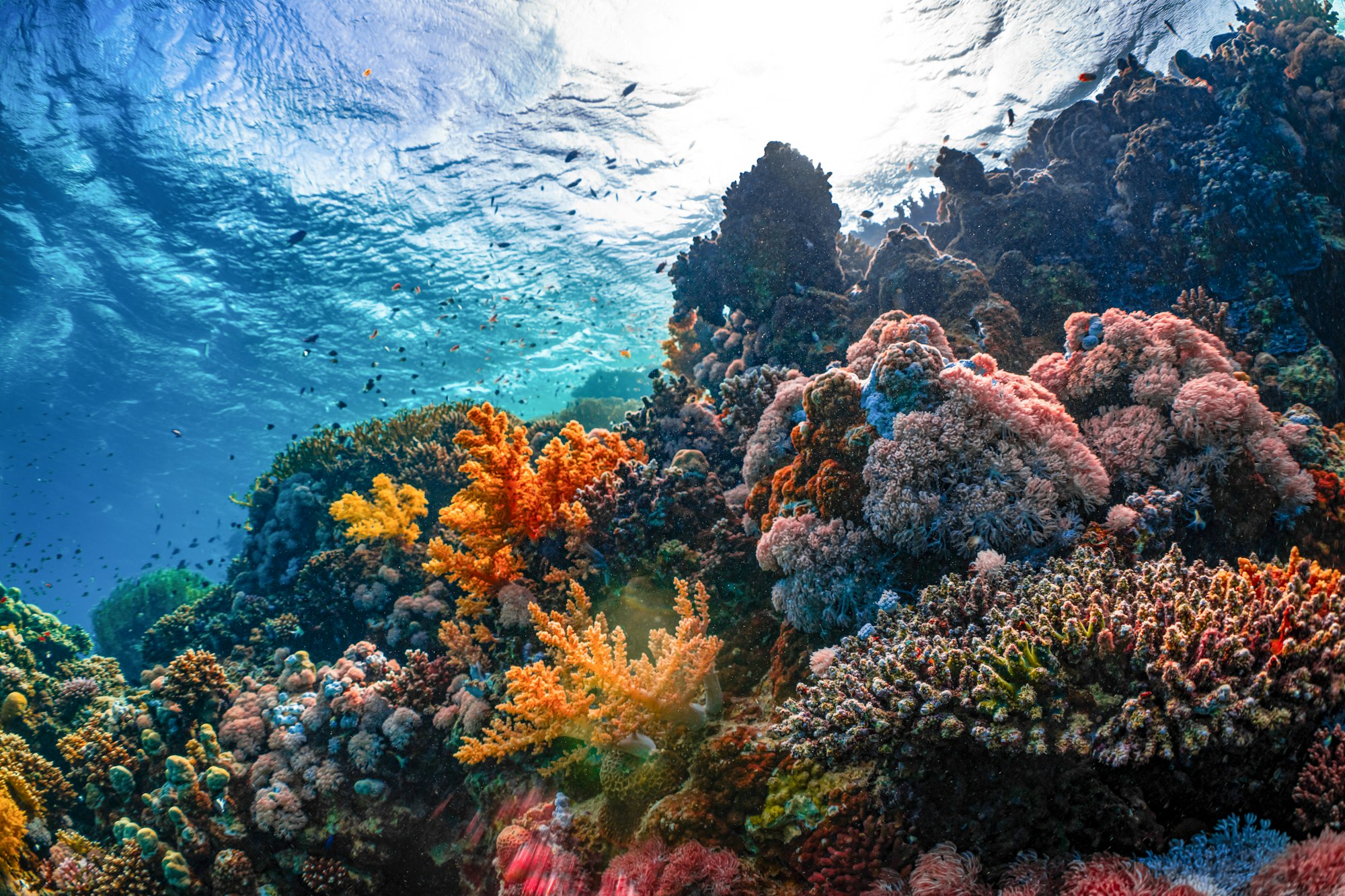
The Umbria’s encrusted hull hosts large colonies of black coral, soft corals in orange and yellow, and dense fish life. humphead wrasse patrol the deck, accompanied by large groupers, lionfish in every nook, and shimmering schools of glassfish. Hammerhead sharks are encountered on the deeper portions of the wreck and in the open water above. Manta rays and whale sharks have been reported in the surrounding waters. The Fiat cars on deck are draped in coral growth and occupied by moray eels — a surreal combination of marine biology and industrial history.
Dive Profile
Most dive profiles start at the shallowest accessible deck level (around 10-12 meters) and work gradually deeper to explore the open cargo holds. Hold 2 and Hold 3 contain the most dramatic cargo — bombs, crates, and vehicles. The deepest sections at 30-35 meters require careful air management. Multiple dives are needed to appreciate the full length of the wreck. A 5-minute safety stop at 5 meters is mandatory.
Entry and Exit
The Umbria is accessed exclusively by liveaboard from Port Sudan. Descent is typically along the mooring or anchor line. Currents are generally mild, making it one of the more relaxed wreck dives in the region despite its size. Night dives on the Umbria are spectacular and highly recommended.
Tips and Recommendations
- Plan at least three dives — exterior, forward holds, and aft section — to cover the wreck properly
- Bring a torch; the cargo holds range from dim to dark, and details reward close inspection
- The Fiat cars on the upper deck are a must-photograph subject — approach from above with a wide-angle lens
- Book with a specialist Sudan liveaboard operator; political conditions in Sudan require current research before travel
- Nitrox greatly extends bottom time on the deeper sections
- Night dives reveal lionfish, moray eels on the hunt, and the cargo in an intimate, atmospheric light
Safety Considerations
Sudan requires a special dive permit and entry visa — verify current political and travel conditions before booking. The hold penetrations involve disorientation risk in low-visibility conditions; penetrate only with a torch, line, and appropriate training. The deepest sections approach the limits of recreational diving — plan conservatively. Hammerhead sharks are present but generally not aggressive; maintain calm behavior.
Photography
The Umbria is one of the most photogenic wrecks on Earth. The upper deck in good natural light allows wide-angle compositions of the hull structure with the surface glinting above. The Fiat cars draped in coral are iconic subjects. In the holds, a torch and a macro lens reveal extraordinary detail on cargo labels, valves, and ammunition cases. A fisheye lens renders the sense of scale in the cavernous interiors.
Sources: SS Umbria Wikipedia, Divers Alert Network - The Last Voyage, Dive Photo Guide - Umbria. Last updated 2026-05-25.
Sea-surface temperature and wave height from Open-Meteo Marine (ERA5 reanalysis, monthly averages).
1801 verified species observations (160 species) logged within ~11 km of this site between 1911 and 2012, from the Ocean Biodiversity Information System.
- Mugil cephalus
- Cephalopholis argus
- Cephalopholis oligosticta
- Kyphosus cinerascens
- Crenimugil crenilabis
- Gerres oyena
- Sargocentron marisrubri
- Cephalopholis hemistiktos
- Chromodoris africana
- Pulsellum
- Odostomia dalli
- Cerithiopsidae
Scientific survey records skew toward sampled taxa (molluscs, corals) and do not reflect what you are guaranteed to see on a dive.
Source: OBIS (obis.org), aggregated Darwin Core occurrence records.
Conditions change with the tide and the season. If you have dived this site, share what it was actually like — date, visibility, current, and what you saw. Real, recent reports from divers are exactly what this guide is built to collect.
Send a conditions report ›