St John's Caves
23.6367°N 35.8250°E · cave
St John’s Caves is one of the signature dive sites within the St John’s Reef complex, a remote offshore reef system in the far south of the Egyptian Red Sea. The site is named for the series of interconnected underwater caves and caverns that pierce the reef wall, creating a dramatic labyrinth of passages illuminated by shafts of filtered light.
Overview
St John’s Reef lies roughly 100 km south of Marsa Alam, accessible only by liveaboard, and is part of one of the most pristine marine environments on the Egyptian coast. The caves themselves form in a vertical wall that drops from the surface to around 20 meters, where a series of openings lead into light-filled caverns. The largest cavern features a high ceiling and a sandy floor, with light penetrating from multiple openings. Smaller passages connect between sections of the reef. The surrounding wall is smothered in soft corals and teeming with anthias. St John’s Reef as a whole receives far less traffic than the northern Red Sea sites, and the marine life reflects this protection.
Site Information
- Location: St John’s Reef, Southern Red Sea, Egypt
- Entry Type: Boat dive
- Site Type: Cave/cavern
- Difficulty Level: Advanced
- Maximum Depth: 20 meters
- Typical Visibility: 25-40 meters (80-130 feet)
- Current: Moderate
- Best Time: October to May
Marine Life
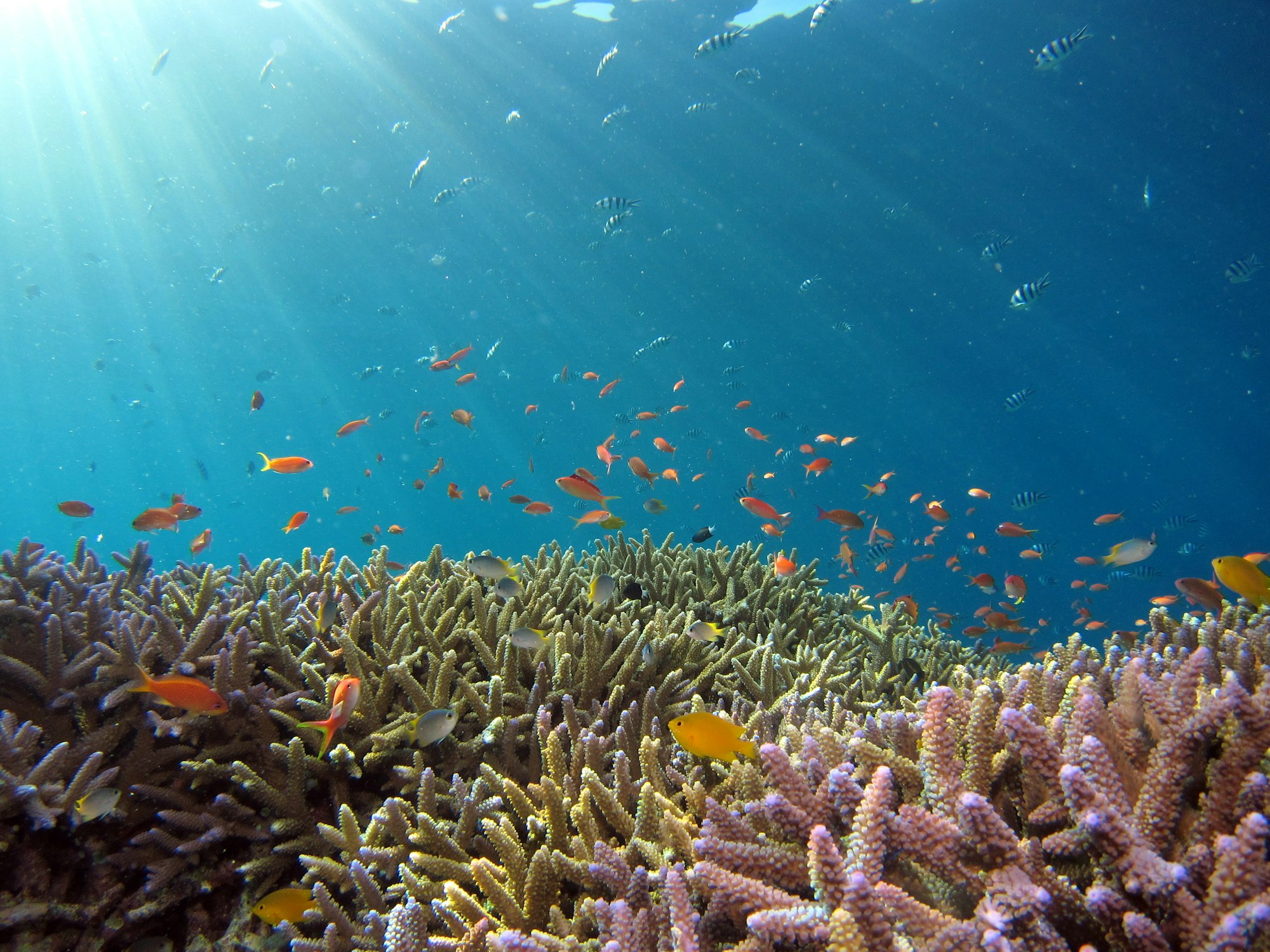
The caves shelter moray eels, lobsters, glassfish clouds, and lionfish in crevices. Outside the cave entrances, the reef wall is festooned with orange and yellow soft corals, and anthias swarm every available surface. Sea turtles are commonly seen resting in the sandy cavern floors or grazing on the reef top. Whitetip reef sharks are regular residents, often found resting on sandy ledges inside the caves. humphead wrasse and large groupers patrol the outer wall.
Dive Profile
Descend the reef wall to the main cave entrance at 12-15 meters. Pass through the cavern, checking the sandy floor and ceiling for resting sharks and lobsters. Multiple passages lead to secondary chambers — explore with natural navigation or a line if penetrating beyond the cavern zone. Return to the open wall and ascend gradually, exploring the soft coral formations on the way up. Finish with a shallow safety stop at the reef crest.
Entry and Exit
Accessed by liveaboard zodiac. Entry via back roll or giant stride. The dive begins and ends at the zodiac or liveaboard — coordinate with the crew for drift pickup if current is running. Always deploy an SMB before ascending.
Tips and Recommendations
- A torch is essential for exploring deeper passages and spotting critters on cavern walls and floors
- Penetrate only to the cavern level (with daylight visible) unless holding a full cave diving certification
- The cavern floors are sandy — poor buoyancy stirs silt rapidly, reducing visibility for everyone
- Slow down and hover: the cave walls reward patient observers with nudibranchs, shrimp, and crab
- Morning dives offer the best light penetration through cavern openings
Safety Considerations
Advanced or cavern diving certification is recommended for traversing the main passages. Never penetrate beyond the cavern zone without full cave certification, a reel, and redundant lighting. St John’s is remote — there is no decompression chamber nearby. Dive conservatively. Currents on the outer wall can be strong and variable; be prepared to abort a dive and wait for calmer conditions.
Photography
The interplay of natural light and cavern shadow creates remarkable photographic opportunities. A wide-angle lens captures the cavern’s cathedral-like scale, with silhouetted divers framed in the cave openings. On the outer wall, soft corals and anthias in natural afternoon light make for vibrant reef portraits.
Sources: Divezone - Red Sea, Dive the World - Egypt Red Sea, Red Sea Scuba Diving, PADI - Diving in Egypt. Last updated 2026-04-04.
Sea-surface temperature and wave height from Open-Meteo Marine (ERA5 reanalysis, monthly averages).
6 verified species observations (3 species) logged within ~11 km of this site between 2012 and 2012, from the Ocean Biodiversity Information System.
- Tursiops truncatus · Common bottlenose dolphin
- Stenella longirostris · Spinner dolphin
- Stenella attenuata · Pantropical spotted dolphin
Scientific survey records skew toward sampled taxa (molluscs, corals) and do not reflect what you are guaranteed to see on a dive.
Source: OBIS (obis.org), aggregated Darwin Core occurrence records.
Conditions change with the tide and the season. If you have dived this site, share what it was actually like — date, visibility, current, and what you saw. Real, recent reports from divers are exactly what this guide is built to collect.
Send a conditions report ›