St John's Habili Gaffar
23.4269°N 35.8764°E · reef
Habili Gaffar is a submerged reef pinnacle — a “habili” in local parlance — within the St John’s Reef complex of the far southern Egyptian Red Sea. These isolated, open-ocean pinnacles that rise from deeper water are characteristically swept by stronger currents than the main reef structures, and this exposure is precisely what makes them magnets for larger pelagic species.
Overview
Rising from a sandy bottom to within a few meters of the surface, Habili Gaffar presents as a compact, steep-sided pinnacle fully exposed to the prevailing Red Sea currents. The current-swept conditions bring significantly higher concentrations of plankton and nutrients, supporting denser fish aggregations than the more sheltered reef environments nearby. This is one of the more exciting dives within the St John’s system, with the constant possibility of large pelagic encounters. The site is accessible only by liveaboard.
Site Information
- Location: St John’s Reef, Southern Red Sea, Egypt
- Entry Type: Boat dive
- Site Type: Reef
- Difficulty Level: Intermediate
- Maximum Depth: 20 meters
- Typical Visibility: 20-35 meters (65-115 feet)
- Current: Moderate to strong
- Best Time: October to May
Marine Life
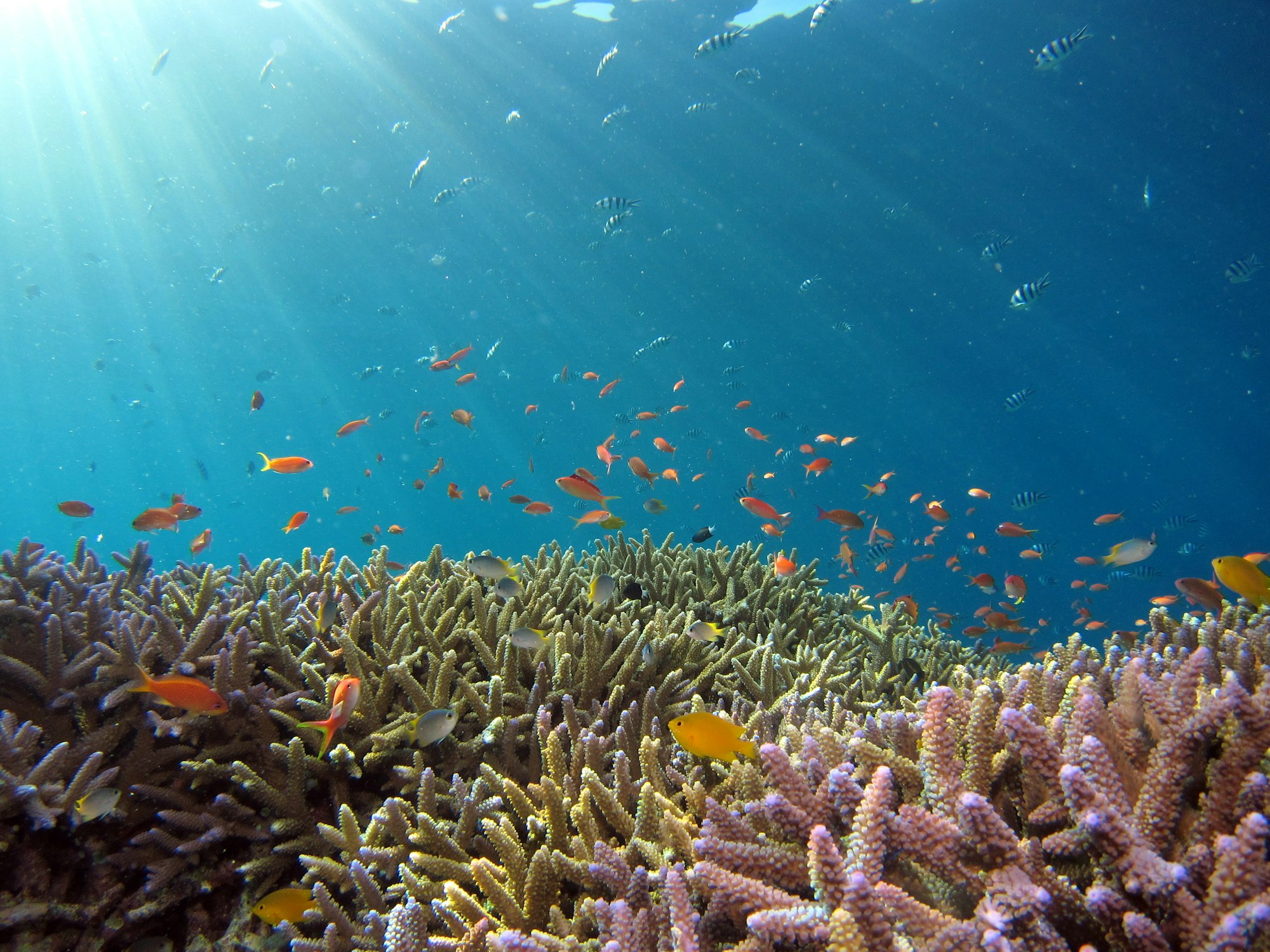
The current-washed flanks of Habili Gaffar support spectacular concentrations of fish. Enormous schools of barracuda and fusiliers swarm the pinnacle top, while large trevally and dogtooth tuna make sweeping passes. Whitetip reef sharks and grey reef sharks are commonly encountered, often sheltering in the lee of the pinnacle between hunting forays. humphead wrasse are resident and conspicuous. During the right season, hammerhead sharks and manta rays patrol the deeper water around the base of the pinnacle.
Dive Profile
Descend directly to the pinnacle top and work the current from the start. The most productive strategy is to hold position at the pinnacle top in moderate current — using a reef hook if necessary — and watch the procession of fish. Descend the windward face to explore deeper, then swing around to the sheltered side for a more relaxed look at the coral coverage. Return to the top for the safety stop.
Entry and Exit
Liveaboard zodiac access. Entry via giant stride. Drift pickups are common — deploy SMB before ascending and confirm with the zodiac crew. Current direction and strength should be briefed by the dive guide before entry.
Tips and Recommendations
- A reef hook is strongly recommended to hold position in the current without touching coral
- Brief your zodiac driver on the expected drift direction before the dive
- Watch the blue water behind the pinnacle for hammerheads and mantas — they approach from depth
- Carry a signal mirror in addition to an SMB in this remote location
- Check current conditions at the start of the dive; abort early if conditions exceed your comfort
Safety Considerations
This is an open-ocean environment with potentially strong, shifting currents. Maintain buddy contact at all times. The remote location means emergency support is hours away — plan all dives conservatively and surface with significant air reserves. Always deploy SMB before ascending; zodiac pickup in strong current can be challenging.
Photography
The schooling fish activity above Habili Gaffar is the primary photographic draw. A wide-angle lens capturing a diver silhouetted against a vortex of barracuda is a defining Red Sea image. Pelagic encounters — tuna, sharks — require a quick reaction and a pre-set camera. The pinnacle’s coral-covered flanks offer reef details in good visibility.
Sources: Divezone - Red Sea, Dive the World - Egypt Red Sea, Red Sea Scuba Diving, PADI - Diving in Egypt. Last updated 2026-04-04.
Sea-surface temperature and wave height from Open-Meteo Marine (ERA5 reanalysis, monthly averages).
25 verified species observations (5 species) logged within ~11 km of this site between 2005 and 2012, from the Ocean Biodiversity Information System.
- Stenella longirostris · Spinner dolphin
- Stenella attenuata · Pantropical spotted dolphin
- Tursiops truncatus · Common bottlenose dolphin
- Tursiops aduncus · Indian ocean bottlenose dolphin
- Grampus griseus · Risso's dolphin
Scientific survey records skew toward sampled taxa (molluscs, corals) and do not reflect what you are guaranteed to see on a dive.
Source: OBIS (obis.org), aggregated Darwin Core occurrence records.
Conditions change with the tide and the season. If you have dived this site, share what it was actually like — date, visibility, current, and what you saw. Real, recent reports from divers are exactly what this guide is built to collect.
Send a conditions report ›