Tobia Kebir
26.8103°N 33.9951°E · reef
Tobia Kebir
The largest of the Safaga Tobia reefs — a sheltered island reef with a narrow channel between two reef sections, offering calm conditions for coral gardens, glassfish pinnacles, and garden eel fields even in rough weather.
Overview
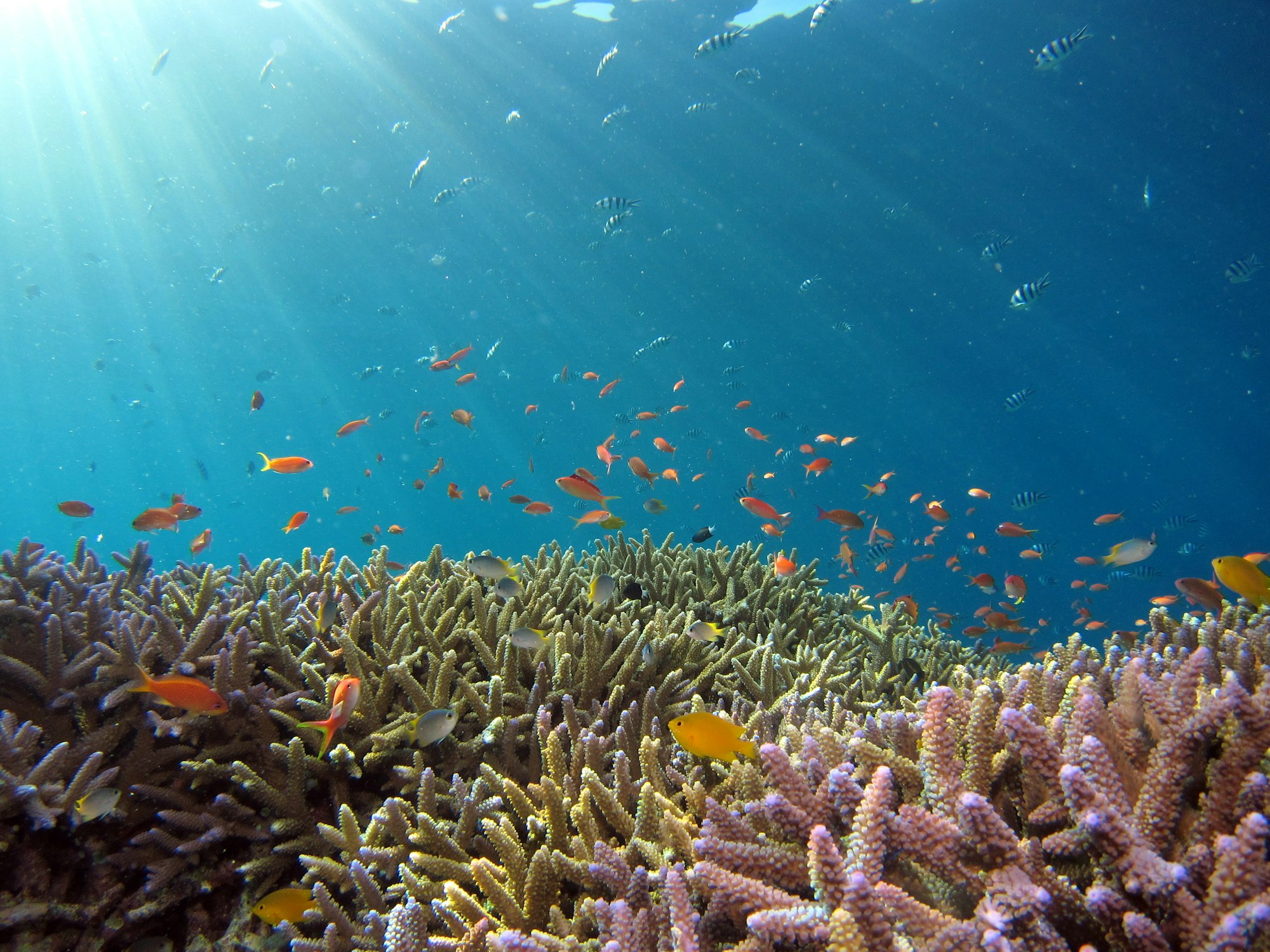
Tobia Kebir (“Large Tobia”) is the biggest of the four Tobia reefs clustered in the Safaga/Soma Bay area, approximately 25 minutes by boat from Safaga or Hurghada. The reef runs north to south and is divided into two sections by a navigable channel. The maximum depth is around 16–20 metres and currents are generally mild, making this one of the most accessible and weather-resilient dive sites in the region — divers report that it remains diveable even in strong winds that close other sites. The eastern wall of the main reef is densely colonised with hard and soft corals, and the sandy areas between the reef sections hold a productive garden eel field. To the south, coral pinnacles known as ergs rise from the sandy bottom, their cracks sheltering glassfish schools, lionfish, and hunting horse mackerel.
Site Information
- Location: Safaga area, central Egyptian Red Sea (near Soma Bay)
- Entry Type: Boat dive
- Site Type: Reef
- Difficulty Level: Intermediate
- Maximum Depth: 20 meters
- Typical Visibility: 15–23 meters
- Current: Mild; channel section can have stronger flow
- Best Time: Year-round; October to May optimal
Marine Life
The eastern reef wall hosts surgeonfish, unicornfish, large schools of anthias, and anemones with resident clownfish. Spotted eagle rays glide over the sandy channel floor. Garden eels extend from the sand between the reef sections, withdrawing in unison as divers approach — a characteristic sight at this site. The southern pinnacles shelter glassfish in crevices, hunted by horse mackerel, lionfish, and coral groupers. Moray eels occupy ledges throughout. Blue-spotted stingrays and flatfish, including Moses’s sole, rest on sandy patches. Triggerfish patrol the bottom, and dolphins have been reported passing the site in summer.
Dive Profile
Enter at the channel between the north and south sections of the reef, descending to the sandy bottom at 10–15 metres where garden eels are visible. Move along the eastern wall, following the coral ridge at 10–16 metres to view the coral coverage and resident fish. Work south to the pinnacle cluster below the main reef, where 15-20 minutes can be spent exploring the glassfish-filled crevices between ergs. Finish the dive in the shallower northern reef sections for a relaxed safety stop. Drift dives are possible on favourable current days, running from the north of the main reef toward the landing area or across the southern blocks to Tobia Soraya.
Entry and Exit
Boat from Safaga or Hurghada (25–30 minutes). The sheltered position of the reef means entry is possible in conditions that close other sites in the area. Entry by giant stride from a dive dhow. Current is minimal in most sections, making this suitable for less experienced intermediate divers. Deploy an SMB before ascending.
Tips and Recommendations
- Approach the garden eel field very slowly — stop at 5–6 metres distance from the field edge and wait; the eels partially retract at first approach but resume feeding behaviour if divers remain still
- The southern pinnacles are best explored in detail with a torch to illuminate the glassfish-filled interior crevices
- This site can be dived multiple times with different route options: channel first, then east wall; or directly to southern ergs
- Tobia Kebir pairs well with Tobia Soraya (to the south) for a two-site day trip
- Night dives at the site reveal crustaceans and hunting octopuses
Safety Considerations
Conditions are generally mild at Tobia Kebir, making it one of the safer offshore sites in the Safaga area. Titan triggerfish may be encountered on sandy bottom areas in nesting season (May–September) — give them appropriate space. Fire coral is present on the reef crest. The channel between reef sections can develop stronger current than the main reef faces; monitor your position during channel sections. Always carry an SMB.
Photography
Garden eel fields in the sandy channel are a distinctive macro and wide-angle subject — an upward-angle shot with garden eels extended from the sand in the midground and the reef wall behind creates a depth-of-field challenge worth solving. The southern pinnacle crevices reward torch-assisted macro shots of glassfish schools. Anemones with resident clownfish on the eastern wall are approachable and well-lit in morning conditions. Eagle rays crossing the sandy channel make fast-action wide-angle subjects.
Sources: Divezone - Red Sea, Dive the World - Egypt Red Sea, Red Sea Scuba Diving, PADI - Diving in Egypt. Last updated 2026-04-04.
Sea-surface temperature and wave height from Open-Meteo Marine (ERA5 reanalysis, monthly averages).
285 verified species observations (259 species) logged within ~11 km of this site between 1990 and 2023, from the Ocean Biodiversity Information System.
- Tursiops aduncus · Indian ocean bottlenose dolphin
- Stenella longirostris · Spinner dolphin
- Branchiostoma
- Balaenoptera omurai · Omurai's whale
- Hexabranchus sanguineus
- Pirenella conica
- Epimenia
- Conus
- Thuridilla hopei
- Tellinidae
- Gibberulus albus
- Atactodea striata
Scientific survey records skew toward sampled taxa (molluscs, corals) and do not reflect what you are guaranteed to see on a dive.
Source: OBIS (obis.org), aggregated Darwin Core occurrence records.
Conditions change with the tide and the season. If you have dived this site, share what it was actually like — date, visibility, current, and what you saw. Real, recent reports from divers are exactly what this guide is built to collect.
Send a conditions report ›