Tower
27.8823°N 34.3262°E · reef
Tower
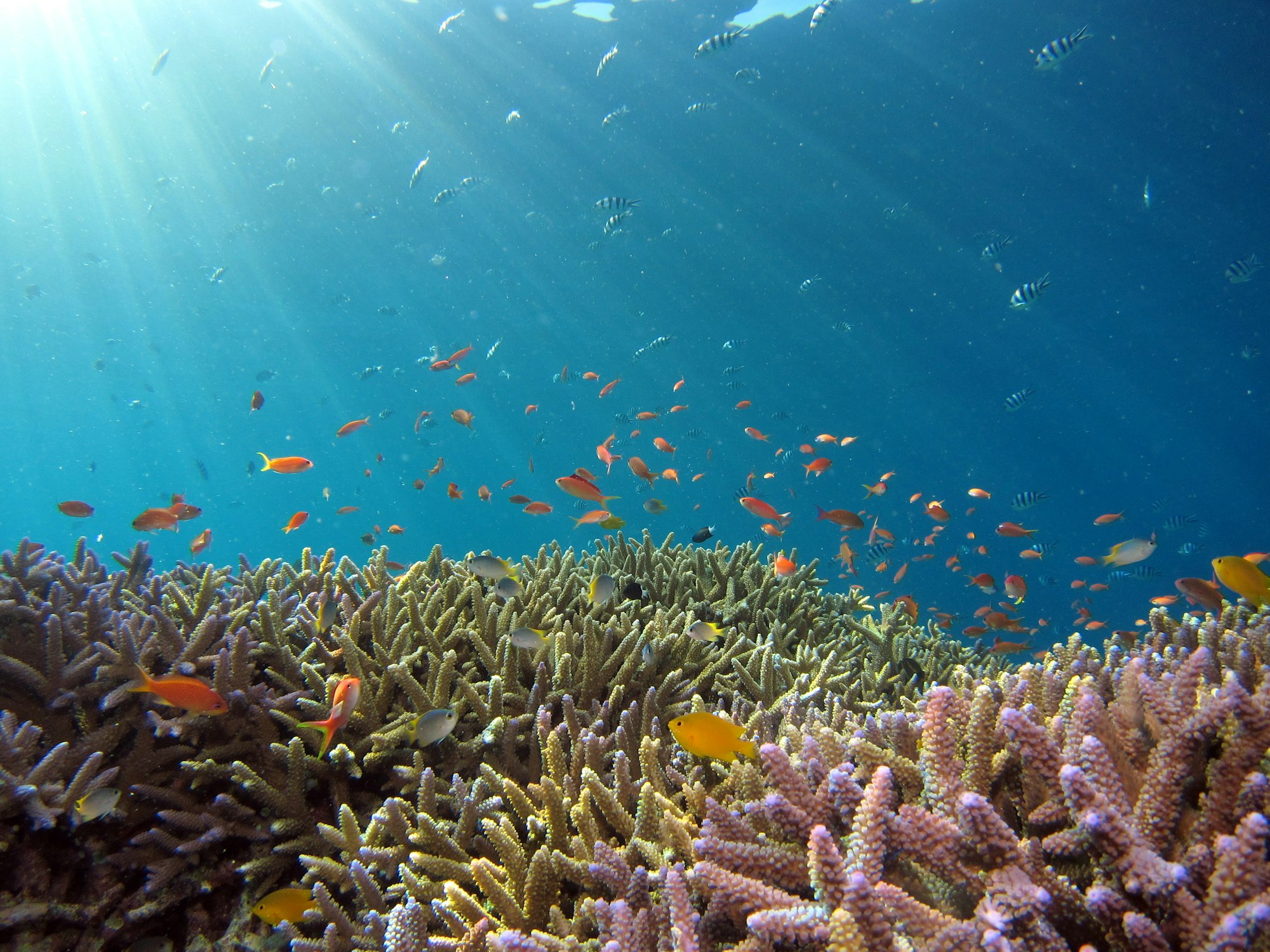
A dramatic shore dive defined by a fossil coral pinnacle marking a canyon that drops to 120 metres, with glassfish-packed overhangs, tall coral pillars, and the option to drift south into the Sodfa fan coral plateau.
Overview
Tower is a Sharm el-Sheikh local dive site with distinctive topography that sets it apart from the other Hadaba coast sites. The site is named after the large fossil coral pinnacle visible at the start of the dive — a single tower rising from the reef edge that serves as the unmistakable entry landmark. Just beyond this pinnacle, a U-shaped vertical canyon cuts into the reef, descending from the surface to beyond 100 metres. At 14 metres inside the canyon, potato groupers shelter under overhangs alongside whitetip reef sharks that are regularly found resting there. Continuing south, the canyon wall opens to a slope with tall coral pillars nearly reaching the surface — the pillars are encrusted with coral and provide shelter for lionfish, nudibranchs, and peppered moray eels. The dive typically finishes at the monstrous end pinnacle with fire sponges and blue stag coral on the top, before entering the Sodfa site’s delicate fan coral plateau for the safety stop.
Site Information
- Location: Hadaba, southern Sharm el-Sheikh, Sinai, Egypt
- Entry Type: Shore entry
- Site Type: Reef
- Difficulty Level: Intermediate
- Maximum Depth: 25 meters
- Typical Visibility: 20–30 meters
- Current: Generally drifts south; stronger in summer
- Best Time: Year-round; October to May optimal
Marine Life
Potato groupers are reliably found inside the canyon at 14 metres, where they occupy permanent positions under overhangs. Whitetip reef sharks rest in the canyon recesses and are a regular sighting. Lionfish inhabit the shadowed gaps between the coral pillars. Nudibranchs and peppered moray eels are found on the pillar surfaces with careful observation. Schools of sergeant majors colonise the tops of the large end pinnacle. Glassfish and cave sweepers pack the overhangs at 18 metres — hundreds of individuals in tight cascading schools. Hawksbill turtles pass through the site and are occasionally seen on the pillar tops. Whale sharks and manta rays have been reported in season at the corner of the site.
Dive Profile
Shore entry from the Hadaba coast. Descend to the reef edge and locate the fossil coral tower pinnacle at the start. Proceed to the U-shaped canyon opening and descend inside, keeping to 14–18 metres to see the groupers and resting sharks without entering decompression territory. Follow the canyon south as the wall opens to the pillar landscape. Navigate between the pillars at 18 metres for the best marine life concentration. Finish at the large end pinnacle, descend around its base to see the fire sponges, then ascend over the top to complete a safety stop among the sergeant major schools. The dive can continue into the adjacent Sodfa site for the fan coral finish.
Entry and Exit
Shore entry from the Hadaba cliffs section. The fossil coral tower is the surface navigation landmark for the entry. Drifting south in the current is the most common approach — arrange a drift pick-up or exit at the Sodfa end point. The site can also be done as a non-drift shore dive by returning against mild current. A buddy is essential for navigation through the canyon sections.
Tips and Recommendations
- Locate the fossil coral tower at the surface before descending — it marks the exact entry point for the canyon
- Look inside the canyon overhangs at 14 metres for resting sharks and groupers — a torch helps
- The pillar landscape between the canyon exit and the end pinnacle is the most photogenic section of the dive
- Carry a torch even for day dives — the glassfish overhangs at 18 m are dark and rewards close inspection
- The dive connects naturally with Sodfa to the south — plan air accordingly for a two-site traverse
Safety Considerations
The canyon at Tower is a genuine technical diving area below 25 metres and must not be penetrated below this depth by recreational divers. The fossil coral tower marks a steep drop — depth discipline starts immediately. Lionfish in the pillar sections require careful movement — do not reach blindly into crevices. Fire coral is present on the upper reef. Current can be unpredictable when it turns; a drift dive approach is safer than fighting it. Always carry an SMB for drift-exit ascents.
Photography
Tower is one of Sharm el-Sheikh’s finest photography dives. The U-shaped canyon interior at 14 metres creates dramatic architectural compositions — wide-angle from inside the canyon looking toward the open blue entrance. The glassfish overhangs at 18 m produce cascading silver schools against deep canyon walls. Individual coral pillars reward close-focus wide-angle shots. The fire sponges on the base of the end pinnacle are vivid red macro subjects contrasted against blue stag coral above.
Sources: Divezone - Red Sea, Dive the World - Egypt Red Sea, Red Sea Scuba Diving, PADI - Diving in Egypt. Last updated 2026-04-04.
Sea-surface temperature and wave height from Open-Meteo Marine (ERA5 reanalysis, monthly averages).
590 verified species observations (340 species) logged within ~11 km of this site between 1957 and 2015, from the Ocean Biodiversity Information System.
- Grampus griseus · Risso's dolphin
- Rhincodon typus · Whale Shark
- Stenella attenuata · Pantropical spotted dolphin
- Pempheris tominagai
- Sargocentron caudimaculatum · Tailspot Squirrelfish
- Tursiops truncatus · Common bottlenose dolphin
- Vinciguerria mabahiss
- Stenella · Spinner dolphins
- Epinephelus fasciatus · Black-tipped Cod
- Priolepis cincta
- Stenella longirostris · Spinner dolphin
- Tursiops · Bottlenose dolphins
Scientific survey records skew toward sampled taxa (molluscs, corals) and do not reflect what you are guaranteed to see on a dive.
Source: OBIS (obis.org), aggregated Darwin Core occurrence records.
Conditions change with the tide and the season. If you have dived this site, share what it was actually like — date, visibility, current, and what you saw. Real, recent reports from divers are exactly what this guide is built to collect.
Send a conditions report ›