Ulysses
27.6867°N 33.8021°E · wreck
Ulysses
A wreck dive in the southern Hurghada offshore zone — a vessel lying at 30 metres with coral colonisation on its upper structure, resident shark activity on the sandy floor, and the deeper profile that distinguishes it from the standard Hurghada reef circuit.
Overview
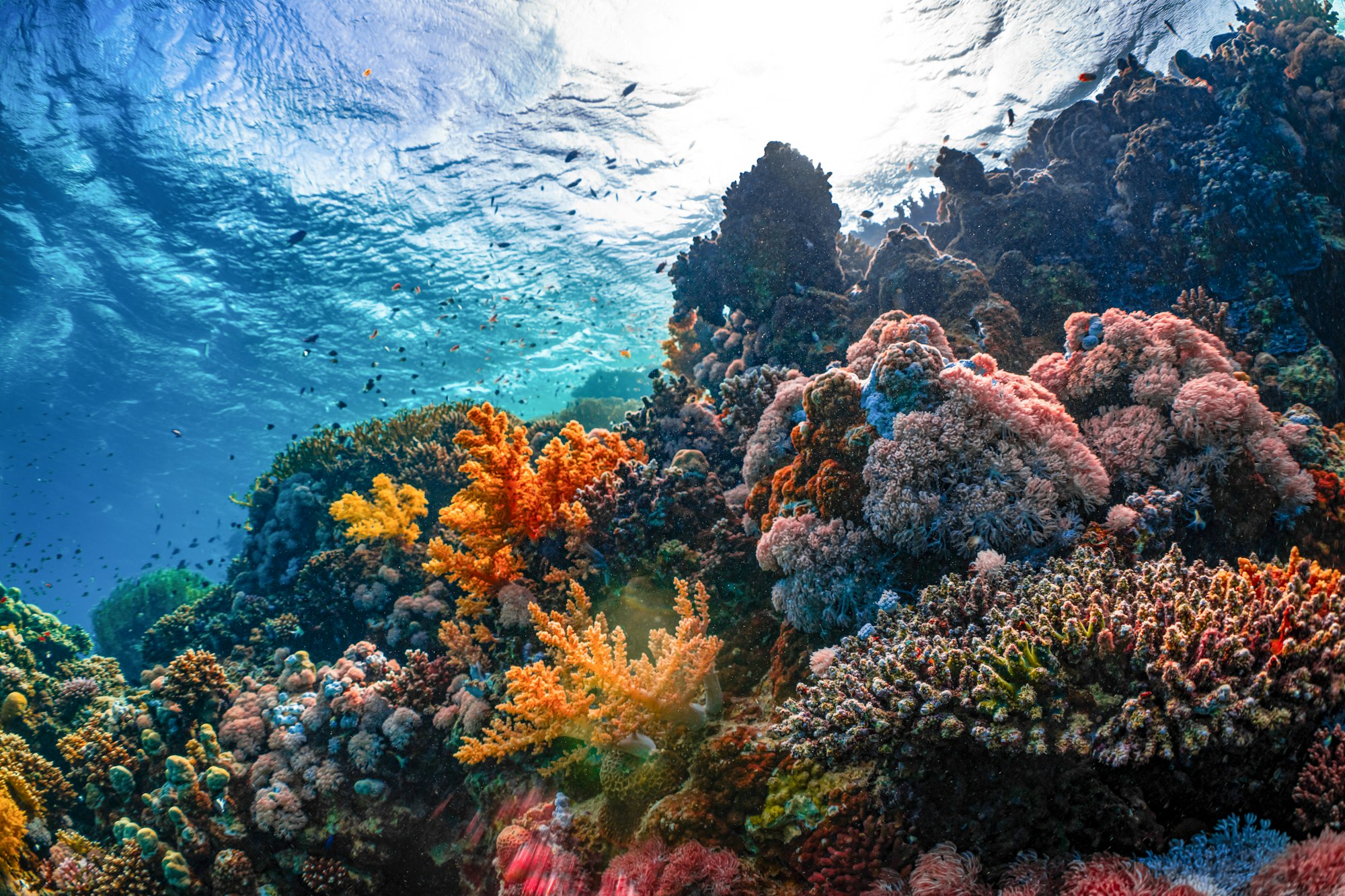
Ulysses is a wreck site at approximately 27.69°N, 33.80°E in the Hurghada offshore zone. The classical name — Ulysses (Odysseus) — follows the tradition of assigning named wrecks in this section of the Red Sea. The vessel lies at up to 30 metres in moderately clear Hurghada-area water. Compared with the shallow, reef-focused day dives of the Hurghada standard circuit, Ulysses offers a deeper wreck profile with a different character: the exploration-oriented dive along a steel hull structure, the coral and fish communities that have established on the wreck, and the opportunity to see the site’s resident whitetip reef shark population. It is operated as a day-boat site from Hurghada.
Site Information
- Location: Offshore Hurghada, central Egyptian Red Sea (~27.69°N, 33.80°E)
- Entry Type: Boat dive
- Site Type: Wreck dive
- Difficulty Level: Intermediate
- Maximum Depth: 30 meters
- Typical Visibility: 15–25 meters
- Current: Mild to moderate
- Best Time: Year-round; October to May optimal
Marine Life
Whitetip reef sharks rest on the sandy floor adjacent to the wreck — they are the wreck’s most reliable large-animal encounter. Schools of glassfish and snapper occupy the wreck’s interior accessible sections. The upper hull structure carries soft coral and gorgonian colonisation. Moray eels are resident throughout the wreck’s corroded cavities. Groupers patrol the outer hull sections. Schools of barracuda circle in the open water above the wreck.
Dive Profile
Descend directly to the deepest section of the wreck at 28–30 metres and check the sandy floor for resting whitetip reef sharks. Work along the hull at depth for 10–12 minutes before beginning the multi-level ascent. The mid-sections of the wreck at 18–25 metres carry the best coral colonisation. The shallowest sections of the upper hull at 15–18 metres are explored last. Safety stop at 5 metres in the open water adjacent to the wreck.
Entry and Exit
Day boat from Hurghada (40–60 minutes). Intermediate divers with some wreck experience recommended for the 30-metre profile. Giant stride entry. SMB deployment before ascending.
Tips and Recommendations
- Check the sandy floor at the bow or stern for resting whitetip reef sharks immediately on descent — they are typically in the same resting positions dive after dive
- Do not approach resting sharks — remain stationary and observe
- A torch is essential for examining the hull sections at depth — carry a primary and backup light
- Do not penetrate the interior without overhead-environment training
Safety Considerations
The 30-metre maximum depth requires air management awareness — begin ascent at 70 bar. No-decompression limits must be respected. No hull penetration without cave/wreck speciality training. Moray eels in the interior cavities react defensively if surprised. SMB mandatory before ascending.
Photography
Whitetip reef shark portraits on the sandy floor adjacent to the wreck are the site’s signature image — approach slowly from a distance and photograph from the horizontal plane at the shark’s eye level. The colonised upper hull structure in natural light at 15–20 metres suits wide-angle wreck shots. Interior accessible sections with glassfish schools reward torch-assisted wide-angle technique.
Sea-surface temperature and wave height from Open-Meteo Marine (ERA5 reanalysis, monthly averages).
92 verified species observations (28 species) logged within ~11 km of this site between 1928 and 2012, from the Ocean Biodiversity Information System.
- Tursiops aduncus · Indian ocean bottlenose dolphin
- Decapterus russelli · Indian Scad
- Tursiops · Bottlenose dolphins
- Etrumeus sadina · Maray
- Cephalopholis · Rockcod
- Cephalopholis miniata · Coral Cod
- Parupeneus cyclostomus · Bright Goatfish
- Variola louti · Common Lyretail-cod
- Tylosurus choram
- Etrumeus
- Engyprosopon grandisquama
- Grampus griseus · Risso's dolphin
Scientific survey records skew toward sampled taxa (molluscs, corals) and do not reflect what you are guaranteed to see on a dive.
Source: OBIS (obis.org), aggregated Darwin Core occurrence records.
Conditions change with the tide and the season. If you have dived this site, share what it was actually like — date, visibility, current, and what you saw. Real, recent reports from divers are exactly what this guide is built to collect.
Send a conditions report ›