Umm Gamar West
27.3676°N 33.9064°E · reef
Umm Gamar West
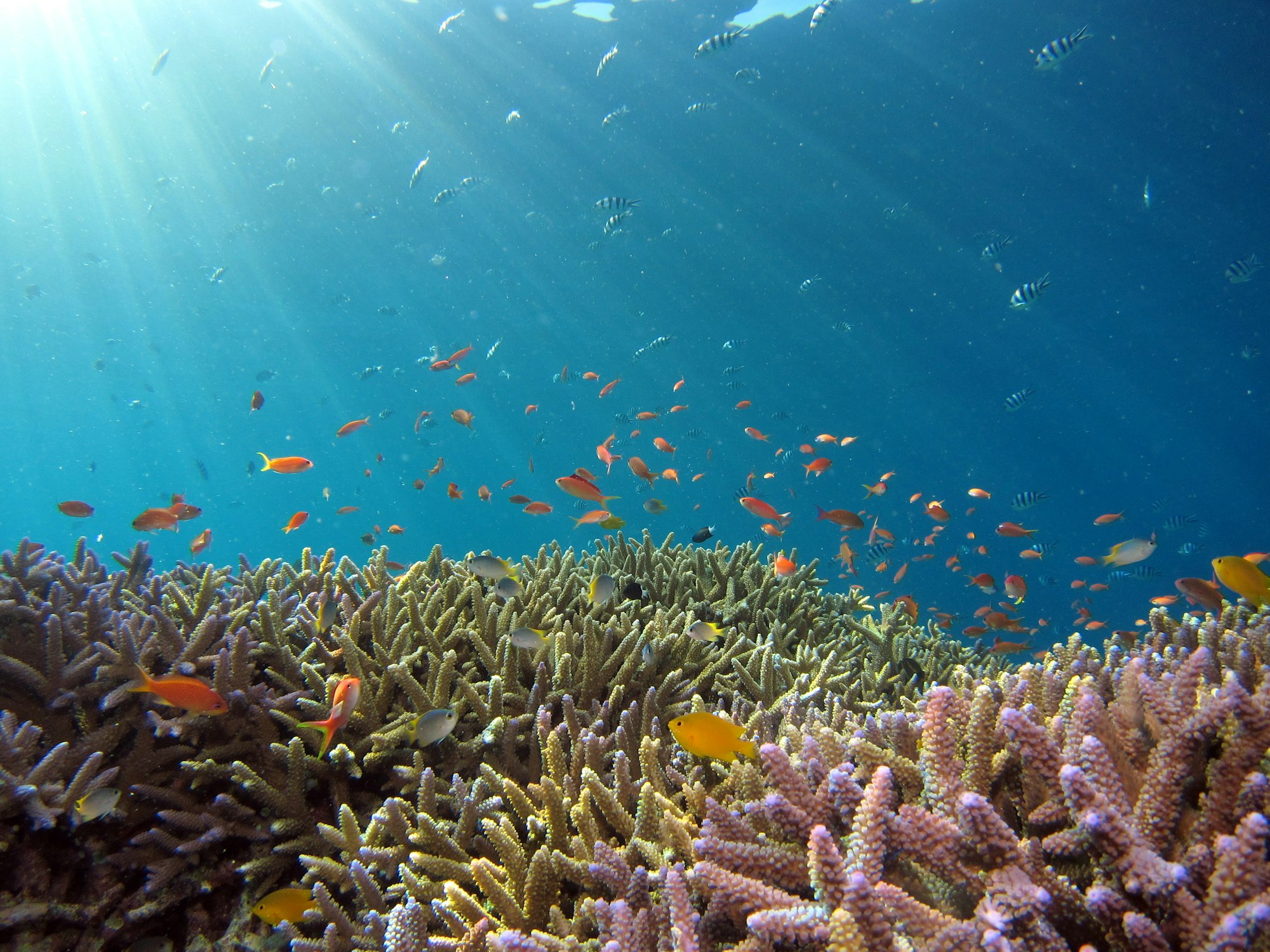
The western face of the Mother of the Moon reef — a calmer, more sheltered wall offering cave formations, drift options, and glassfish-packed coral structures in a less trafficked setting than the famous eastern side.
Overview
Umm Gamar West refers to the western side of Umm Gamar Island, an elongated reef running north-south approximately 60 minutes northeast of Hurghada. While the eastern face of Umm Gamar is the more commonly dived side — featuring the three famous coral towers — the western face offers a distinct and often less crowded experience. The western wall is generally calmer and more sheltered from prevailing currents, descending in a sloping wall profile to 20–25 metres with crevices, ledges, and cave formations. When conditions are favourable, the northern tip of the island (the halg) can be traversed to connect east and west dives. The lower diver pressure on the western side means fish behaviour is often more relaxed than on the busier eastern face.
Site Information
- Location: Western face of Umm Gamar Island, offshore Hurghada, northern Egyptian Red Sea
- Entry Type: Boat dive
- Site Type: Reef
- Difficulty Level: Intermediate
- Maximum Depth: 25 meters
- Typical Visibility: 15–25 meters
- Current: Generally mild; stronger at the northern tip in rough conditions
- Best Time: October to May
Marine Life
The western wall holds moray eels in the crevices and cave formations throughout. Blue-spotted stingrays rest on sandy patches at the base of the wall. Schools of fusiliers and hunting trevally patrol the outer water column. Hawksbill turtles are regularly observed on the reef flat, particularly on the calmer western side. The cave recesses shelter glassfish schools similar to those on the eastern face. Groupers of considerable size occupy the deeper ledges. Titan triggerfish guard sandy nesting areas in September. Manta rays visit the island system in February and March, primarily at the northern tip.
Dive Profile
Enter from the boat and descend to the reef wall at 8–10 metres on the western face. Swim north or south depending on current direction along the wall at 15–20 metres. Caves and overhangs appear periodically on this face — explore the accessible ones within the light zone. For experienced divers in good conditions, extending to the northern tip to view the coral garden before returning via the eastern side makes for a spectacular circuit dive. Safety stop at 5 metres on the reef flat.
Entry and Exit
Boat from Hurghada (approximately 60-minute transfer). The western face is accessible when the eastern face is choppy in northerly conditions — ask the dive guide whether western or eastern conditions are better on the day. Entry by giant stride. Night dives at Umm Gamar are sometimes conducted on the western face for calmer entry and exit conditions.
Tips and Recommendations
- The western face is the better choice in choppy conditions — it provides shelter from northerly winds that affect the eastern approach
- Visit the cave formations with a torch; even in daylight the recesses contain soft coral detail and glassfish
- The coral at the base of the western wall (20–25 m) is in good condition and less frequented than the eastern towers
- Connecting the western face circuit with the eastern side through the northern tip creates one of the more comprehensive Umm Gamar dive experiences
- Night dives conducted on the western face tend to be calmer for entry and exit
Safety Considerations
The northern tip and the halg (channel between Umm Gamar and Shabrur Umm Gamar) are accessible only in calm conditions — the captain determines whether this section is viable. In rough conditions, surface swells at the northern tip can be dangerous. Titan triggerfish in September nesting season require care when near sandy nesting areas. Fire coral on upper reef sections. Always carry and deploy an SMB before ascending.
Photography
The western wall offers good coral composition opportunities in calmer water than the eastern face, with less particulate and more stable shooting conditions. Cave recess shots with glassfish inside reward a wide-angle lens and patient positioning at the entrance. Blue-spotted stingrays on the sandy base and moray eels in crevices are accessible macro-to-wide subjects. Manta ray encounters at the northern tip in February–March are the western face’s headline photographic opportunity.
Sources: Divezone - Red Sea, Dive the World - Egypt Red Sea, Red Sea Scuba Diving, PADI - Diving in Egypt. Last updated 2026-04-04.
Sea-surface temperature and wave height from Open-Meteo Marine (ERA5 reanalysis, monthly averages).
115 verified species observations (78 species) logged within ~11 km of this site between 1965 and 2025, from the Ocean Biodiversity Information System.
- Tursiops aduncus · Indian ocean bottlenose dolphin
- Sousa chinensis · Chinese white dolphin
- Anyperodon leucogrammicus
- Chlorurus sordidus
- Halichoeres marginatus
- Apogonichthyoides timorensis
- Apogon coccineus
- Asterropteryx semipunctata
- Chaetodon fasciatus
- Cheilodipterus quinquelineatus
- Dendrochirus hemprichi
- Gobiodon citrinus
Scientific survey records skew toward sampled taxa (molluscs, corals) and do not reflect what you are guaranteed to see on a dive.
Source: OBIS (obis.org), aggregated Darwin Core occurrence records.
Conditions change with the tide and the season. If you have dived this site, share what it was actually like — date, visibility, current, and what you saw. Real, recent reports from divers are exactly what this guide is built to collect.
Send a conditions report ›