Wreck of Grumman HU-16 Albatros Aircraft
22.3923°N 36.5009°E · wreck
The Wreck of the Grumman HU-16 Albatros is a rare aircraft wreck in the extreme southern Egyptian Red Sea, located near Sha’ab Ohroob (Ohrob Reef) close to the Egypt–Sudan border — not the Hamata area as previously described.
Overview
Aircraft wrecks are rare in the Red Sea, making this a distinctive dive. The coordinates (22.39°N, 36.50°E) place the site at Sha’ab Ohroob in the extreme southern Egyptian Red Sea, approximately 150 km south of Marsa Alam and within reach only by liveaboard. The Grumman HU-16 Albatros was a twin-engine amphibious flying boat used for maritime patrol, search and rescue, and antisubmarine operations. The circumstances of its presence here are not confirmed by published sources. The airframe is encrusted with coral growth and integrates into the reef environment. Extended liveaboard travel is required.
Site Information
- Location: Sha’ab Ohroob (Ohrob Reef), extreme southern Red Sea, Egypt (~22.39°N, 36.50°E)
- Entry Type: Boat dive
- Site Type: Wreck dive
- Difficulty Level: Intermediate
- Maximum Depth: 20 meters
- Typical Visibility: 20-35 meters (65-115 feet)
- Current: Light to moderate
- Best Time: October to May
Marine Life
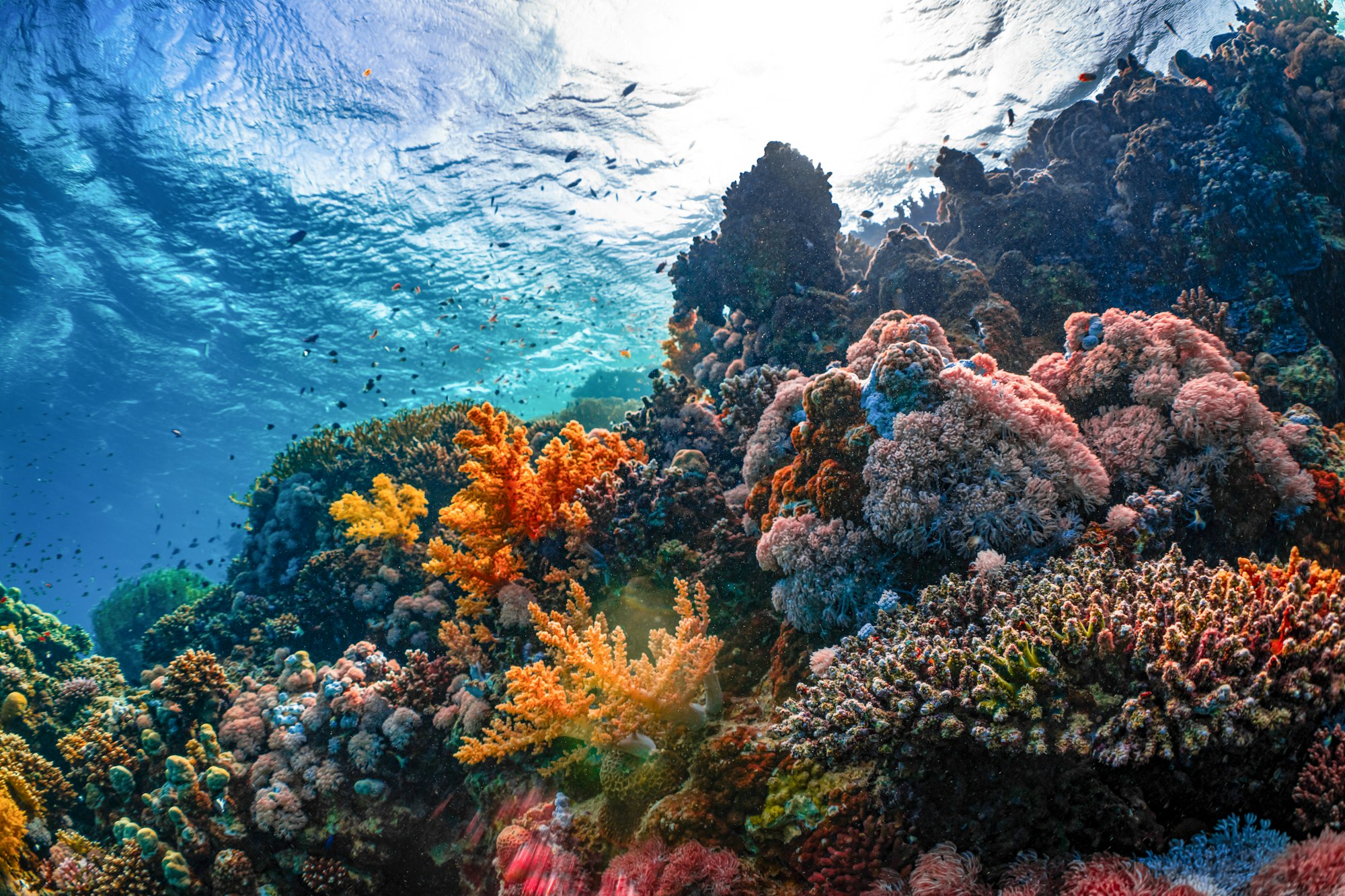
The aircraft fuselage and wings have become an artificial reef structure, with coral and sponge encrustation supporting a resident fish community. Glassfish school densely around the cockpit and wing roots. Lionfish and grouper use the engine nacelles and fuselage openings as ambush territory. The sandy bottom surrounding the wreck shelters stingrays and small flatfish. The open water beyond the wreck may produce passing reef shark sightings. Sea fans have begun colonizing the wing surfaces, adding color to the wreck exterior.
Dive Profile
Descend directly to the aircraft and begin with the cockpit and nose section. Swim along the fuselage toward the tail, noting the size of the aircraft relative to the divers. The wings extend outward on both sides and are worth examining closely for encrustation and fish life. The maximum depth is reached at the deepest extremities of the airframe. Work systematically through the site before ascending to mid-water for the safety stop. Avoid entering confined areas of the airframe.
Entry and Exit
Access is by liveaboard only — the site at Sha’ab Ohroob lies approximately 150 km south of Marsa Alam, within reach only on extended southern Red Sea itineraries. Standard back roll or giant stride entry. Deploy an SMB before ascending. The remote location means boat crew must maintain a sharp watch on the surface.
Tips and Recommendations
- Research the HU-16 Albatros before diving — understanding the aircraft’s layout makes the dive significantly more interesting
- Bring a dive torch to examine the engine compartments and cockpit interior
- Maintain careful buoyancy to avoid stirring sediment that has settled on the aircraft surfaces
- Aircraft metal edges can be sharp where corrosion has occurred — avoid contact
- Wide-angle lens gives the best perspective for capturing the full scale of the aircraft
Safety Considerations
The extreme remote location of this site — near the Egypt–Sudan border — means medical facilities are a very long distance away. Dive conservatively and ensure all team members are comfortable with the depth and conditions. Metal edges on the wreck can be sharp and may carry marine stingers; avoid physical contact with the structure. Do not attempt to enter the aircraft interior without proper wreck penetration training and equipment. Always carry and deploy an SMB.
Photography
This is primarily a wide-angle subject — the HU-16 is a large aircraft and capturing its full form requires a recirculated or dome port wide-angle setup. Swimming back from the nose or tail provides silhouette opportunities with divers framed against the airframe. The cockpit and engine nacelles offer compelling detail shots. Fish life around the wing roots and glassfish schools near the fuselage add motion and scale to compositions.
Location corrected to Sha’ab Ohroob/Ohrob Reef (22.39°N/36.50°E) based on coordinates — previous “near Hamata” description was incorrect. Aircraft history and sinking circumstances unconfirmed. No site-specific dive sources found. Last updated 2026-06-27.
Sea-surface temperature and wave height from Open-Meteo Marine (ERA5 reanalysis, monthly averages).
4 verified species observations (2 species) logged within ~11 km of this site between 2010 and 2012, from the Ocean Biodiversity Information System.
- Tursiops aduncus · Indian ocean bottlenose dolphin
- Tursiops truncatus · Common bottlenose dolphin
Scientific survey records skew toward sampled taxa (molluscs, corals) and do not reflect what you are guaranteed to see on a dive.
Source: OBIS (obis.org), aggregated Darwin Core occurrence records.
Conditions change with the tide and the season. If you have dived this site, share what it was actually like — date, visibility, current, and what you saw. Real, recent reports from divers are exactly what this guide is built to collect.
Send a conditions report ›