Yatouche
29.5039°N 34.9197°E · wreck
Yatouche is a wreck dive site located in the Gulf of Aqaba near Eilat and the Sinai Peninsula, in the northern section of the Red Sea. The site marks the resting place of a vessel that sank in relatively accessible depths, providing an interesting dive for intermediate-level wreck enthusiasts in the area.
Overview
The Yatouche wreck lies in the northern Gulf of Aqaba, one of the two northern arms of the Red Sea, where the Sinai Peninsula, Israel, and Jordan all converge. The Gulf of Aqaba is known for its deep, clear water and generally calm conditions. The wreck has been on the seabed long enough to develop a coating of encrusting marine life, including corals and sponges that have taken hold on the hull. The site can be dived from Israeli, Jordanian, or Egyptian sides depending on access and permits, and it features in the dive site rotation for several operators in the area.
Site Information
- Location: Gulf of Aqaba, Northern Red Sea
- Entry Type: Boat dive
- Site Type: Wreck dive
- Difficulty Level: Intermediate
- Maximum Depth: 20 meters
- Typical Visibility: 20-30 meters (65-100 feet)
- Current: Light
- Best Time: Year-round (best October to May)
Marine Life
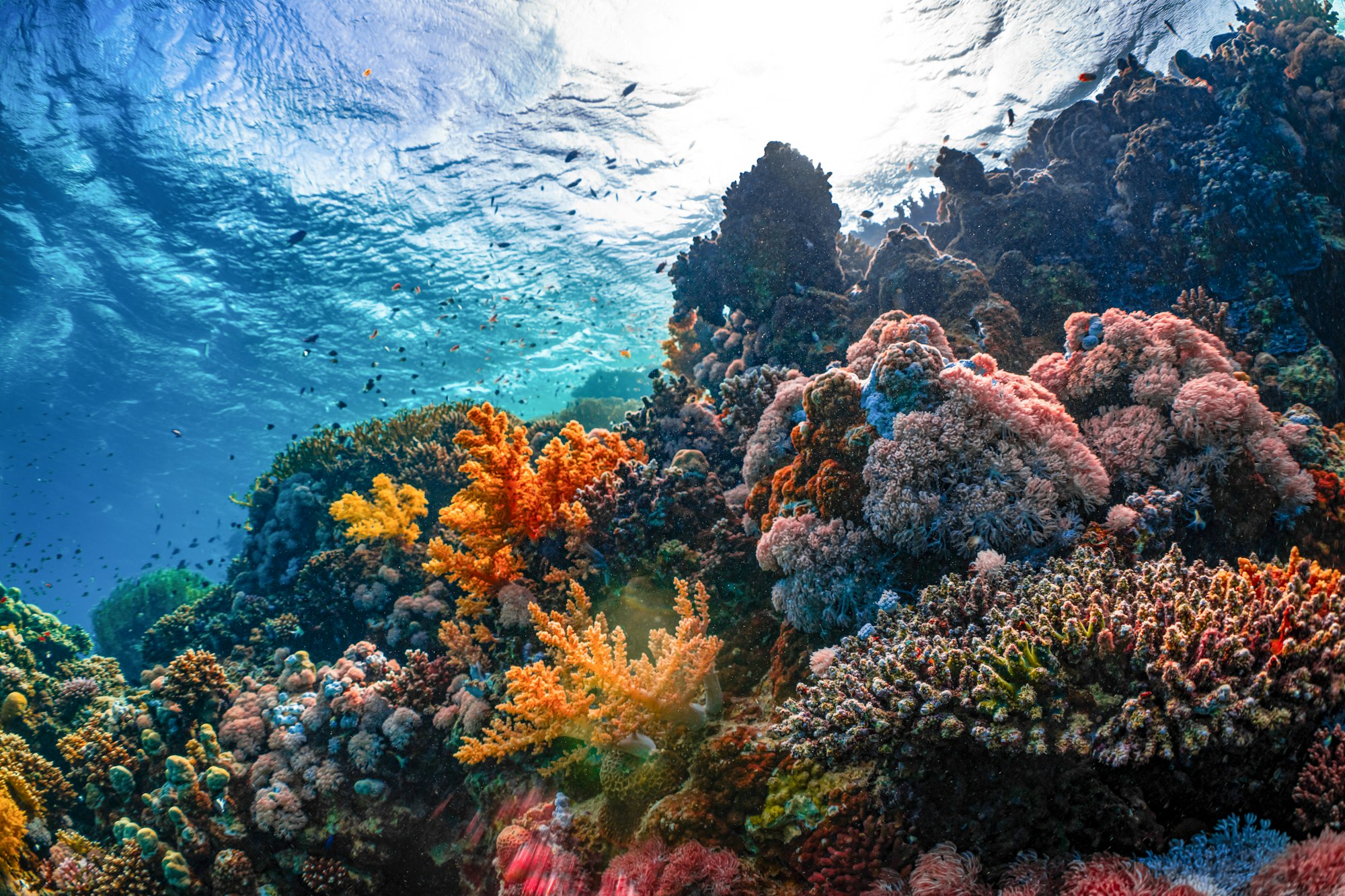
The wreck structure provides a compact artificial reef in an area where natural reefs are also accessible nearby. Schools of glassfish and glassy sweepers congregate around the hull openings and shadowed areas. Lionfish are resident in the overhangs and are a consistent sighting. Moray eels have established territory in the lower hull sections. Grouper and large wrasse patrol the exterior. Because the Gulf of Aqaba has relatively calm conditions and protected water, marine life is stable and reliable.
Dive Profile
Descend to the wreck, which sits in 15-20 meters, and explore the exterior hull systematically from bow to stern. The deck and superstructure are accessible and encrusted with growth. Penetration into the interior is possible in some sections but should only be attempted with appropriate training and a torch. Allow adequate bottom time for a thorough exterior circuit before beginning the ascent. Complete a 3-minute safety stop at 5 meters.
Entry and Exit
Boat access from local operators in the area. The Gulf of Aqaba is generally calm with minimal swell, making entries and exits from dive boats straightforward. Standard giant stride or back roll entry. Deploy an SMB for the ascent and safety stop.
Tips and Recommendations
- Bring a dive torch to explore the darker interior sections and find lionfish in overhangs
- The calm conditions in the Gulf of Aqaba make this a good site for photography
- Explore the hull perimeter carefully before attempting any interior sections
- Check with local operators for current access regulations and permit requirements
- Plan for a relaxed dive given the accessible depth
Safety Considerations
Lionfish are resident in the wreck overhangs — watch hands and fins carefully around entrances and ledges. Maintain proper buoyancy inside the wreck to avoid silting and losing visibility. Do not attempt wreck penetration without proper training, a torch, and a redundant light source. Always deploy an SMB before ascending. Dive within certification limits.
Photography
The compact size of the wreck relative to the clear visibility in the Gulf of Aqaba allows full-wreck shots with the right wide-angle setup. Lionfish and grouper portraits are reliable subjects. The encrusted hull provides colorful macro subjects including tunicates, feather stars, and small crustaceans. Interior shots with available light streaming through openings create atmospheric compositions.
Sources: Divezone - Red Sea, Dive the World - Egypt Red Sea, Red Sea Scuba Diving, PADI - Diving in Egypt. Last updated 2026-04-04.
Sea-surface temperature and wave height from Open-Meteo Marine (ERA5 reanalysis, monthly averages).
32837 verified species observations (111 species) logged within ~11 km of this site between 1956 and 2019, from the Ocean Biodiversity Information System.
- Siganus rivulatus · marbled spinefoot
- Grampus griseus · Risso's dolphin
- Pyura mirabilis
- Ascidiacea
- Parupeneus forsskali
- Neopomacentrus miryae
- Eleotris fusca
- Repomucenus olidus
- Synodus dermatogenys
- Chelon
- Hypoatherina temminckii
- Corythoichthys schultzi
Scientific survey records skew toward sampled taxa (molluscs, corals) and do not reflect what you are guaranteed to see on a dive.
Source: OBIS (obis.org), aggregated Darwin Core occurrence records.
Conditions change with the tide and the season. If you have dived this site, share what it was actually like — date, visibility, current, and what you saw. Real, recent reports from divers are exactly what this guide is built to collect.
Send a conditions report ›