Zabargad South
23.6040°N 36.2129°E · reef
The southern shore of Zabargad Island (St. John’s Island) hosts the most sheltered and commonly dived area of this remote Egyptian marine park. Known as Turtle Bay, the site takes its name from the green turtles that return each August to nest on the island’s beaches. The protected bay provides calm conditions that contrast with the exposed northern and western walls.
Overview
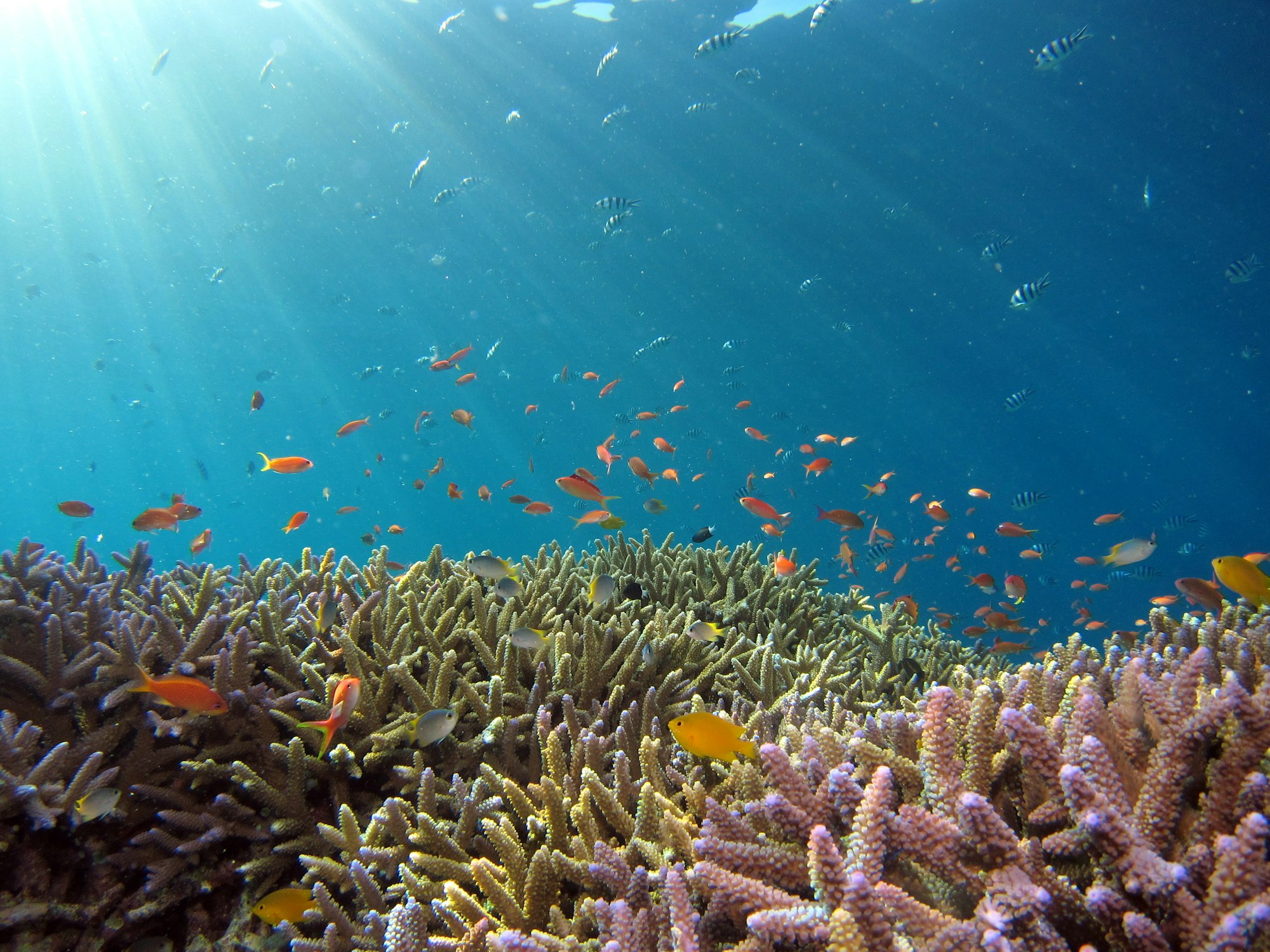
Zabargad Island sits approximately 70 km offshore in Egypt’s deep southern Red Sea, accessible only by liveaboard on “South” or “Deep South” itineraries from Port Ghalib or Marsa Alam. The southern fringing reef forms a wall that drops to 10–15 metres, then meets a sandy coral slope descending to approximately 35 metres before falling away into the abyss. The reef face is densely covered in hard and soft corals, broken by recesses, crevices, and small canyons.
Turtle Bay is notable for the resident hawksbill and green turtles that graze on soft corals along the reef. Green turtles nest on the beach in August, with the same individuals returning year after year. The sandy slope bottom supports crocodilefish, blue-spotted stingrays, octopus, and cuttlefish. Pufferfish and sweetlips shelter in coral patches. Schools of barracuda and trevally sweep the reef edge. Oceanic whitetip sharks, grey reef sharks, and hammerhead sharks are seen in the blue water, particularly on the reef’s more exposed edges.
Dive Profile
- Depth range: 5–35 m (wall at 10–15 m; sandy slope to ~35 m; deep drop-off beyond)
- Entry: Boat dive (liveaboard only)
- Currents: Sheltered bay; minimal to gentle currents — best diving on the island for less experienced divers
- Visibility: 15–30 m
- Best season: Year-round; August for turtle nesting activity on the beach
Marine Life
Hawksbill and green turtles (resident), oceanic whitetip sharks, grey reef sharks, hammerhead sharks, barracuda, trevally, crocodilefish, blue-spotted stingrays, cuttlefish, octopus, pufferfish, sweetlips, anthias, and diverse hard and soft coral formations.
Photography
Turtles, which are often unafraid of divers in remote areas, are the primary photographic subject. The coral-topped reef wall with ambient light in the 5–15 m range provides excellent natural light photography. Macro subjects include cuttlefish and crocodilefish on the sandy slope.
Site Information
- Location: Southern shore (Turtle Bay), Zabargad Island, deep southern Red Sea (~70 km offshore)
- Entry Type: Shore entry
- Site Type: Reef
- Difficulty Level: Intermediate
- Maximum Depth: 35 metres (beyond this: vertical drop-off)
Sources: Red Sea Diving — Zabargad Island, No Troubles Just Bubbles — Zabargad Island, Scuba Diving Earth — Zabargad. Last updated 2026-05-17.
Sea-surface temperature and wave height from Open-Meteo Marine (ERA5 reanalysis, monthly averages).
9 verified species observations (3 species) logged within ~11 km of this site between 2004 and 2013, from the Ocean Biodiversity Information System.
- Stenella longirostris · Spinner dolphin
- Pseudorca crassidens · False killer whale
- Tursiops · Bottlenose dolphins
Scientific survey records skew toward sampled taxa (molluscs, corals) and do not reflect what you are guaranteed to see on a dive.
Source: OBIS (obis.org), aggregated Darwin Core occurrence records.
Conditions change with the tide and the season. If you have dived this site, share what it was actually like — date, visibility, current, and what you saw. Real, recent reports from divers are exactly what this guide is built to collect.
Send a conditions report ›