Barracuda Point
2.1387°N 118.5049°E · wall
Barracuda Point is an advanced wall dive site off the western tip of Kakaban Island in the Derawan Archipelago, East Kalimantan, Indonesia — approximately 25 minutes by boat from Sangalaki.
Overview
Barracuda Point marks the western headland of Kakaban Island where a sheer vertical wall drops into blue water and a tidal point funnels strong current across a reef plateau. Asia Dive Site describes it as “an exhilarating drift dive that follows the top of a sheer wall around the point,” with powerful currents delivering a constant supply of plankton that sustains massive schools of pelagic fish. The site takes its name from the dense chevron barracuda (Sphyraena qenie) schools that patrol the wall, often joined by big-eye trevally, yellowfin tuna, and rainbow runners. Strong ripping currents are the defining characteristic — this is not a site for inexperienced divers.
Marine Life
- Chevron barracuda (Sphyraena qenie) — large resident schools
- Big-eye trevally and jackfish in dense aggregations
- Yellowfin tuna and rainbow runners in the blue
- Grey reef sharks, white-tip reef sharks, and black-tip reef sharks
- Hammerhead sharks (periodic, conditions-dependent)
- Eagle rays and manta rays passing in the current
- Leopard sharks on the reef edge
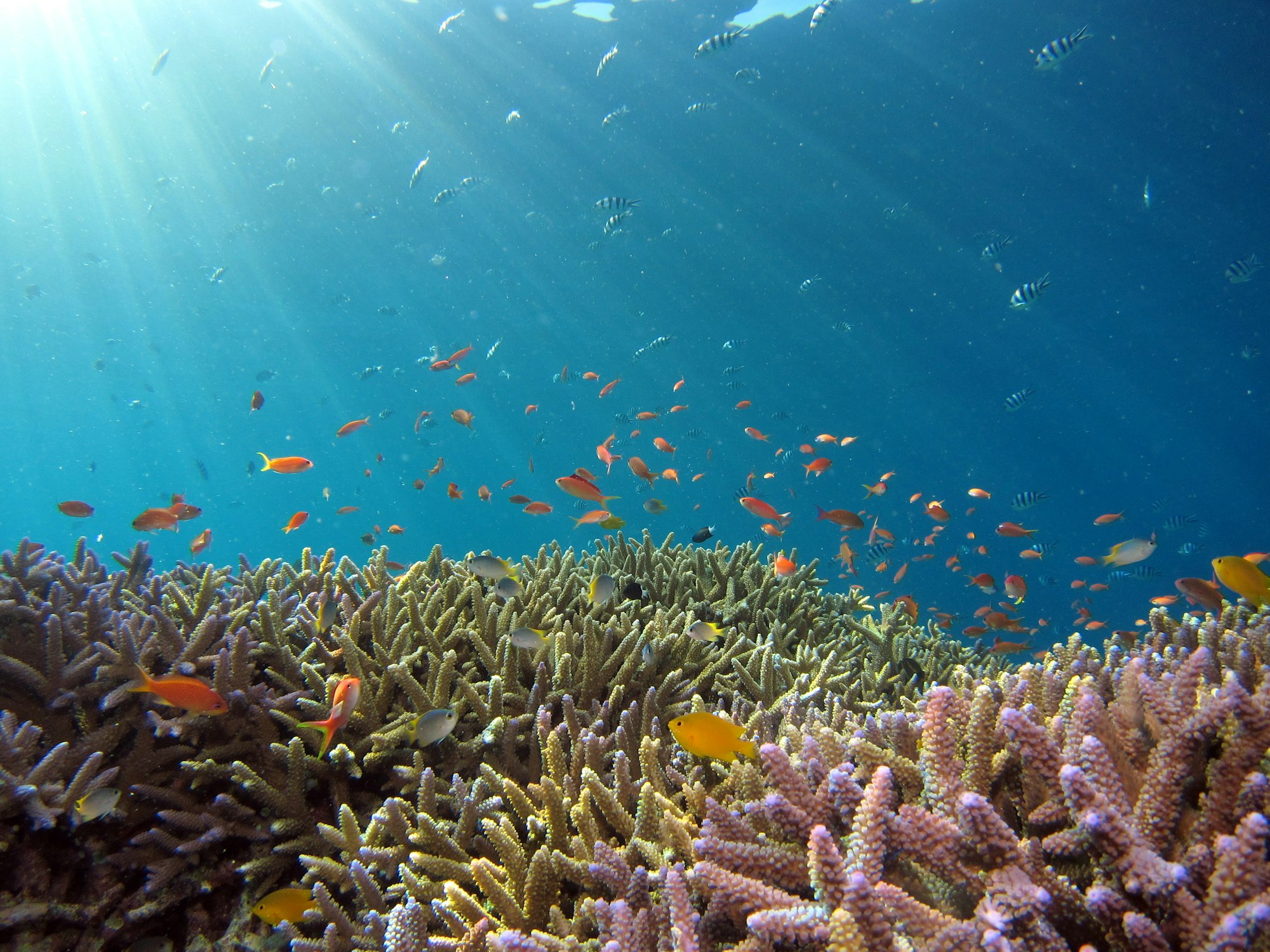
- Dense hard coral coverage on the wall with gorgonian fans
Dive Profile
The wall top sits at approximately 3–5 metres; the vertical wall drops well below sport diving limits. Most diving occurs at 15–25 metres along the wall face where the fish aggregations are densest. A permanently rigged grab line at 24 metres allows divers to station themselves in the current and observe passing schools. Bottom time is limited to 30–35 minutes at depth given the strong current and exertion. Visibility is typically good in incoming current.
Entry and Exit
Boat dive only, with a 25-minute crossing from Sangalaki. Timing the dive to tidal flow is critical — local guides assess whether the current direction and strength are appropriate before descent. Entry is with the current; exit requires returning to the boat against the wall.
Tips
- A reef hook is strongly recommended to station yourself on the plateau without fighting the current while watching schooling fish.
- Dive at high tide when currents are more predictable and pelagic action is strongest.
- Descend immediately and move to the wall face — time spent on the surface in current wastes bottom time.
- The site is not suitable for weak swimmers or those without significant drift-diving experience.
Safety Considerations
Currents can be dangerously strong and unpredictable at the point. PADI recommends Advanced Open Water certification as a minimum; Scuba Junkie Sangalaki additionally recommends a minimum of 20 logged dives with drift experience. Medical evacuation from the archipelago takes over 3 hours — do not exceed your certification or experience limits. Always carry an SMB.
Photography
Wide-angle photography of barracuda schools and silhouettes of sharks against blue water is the primary opportunity here. A reef hook allows stationary shooting while the current delivers subjects to you. Visibility and subject size make this a spectacular site for experienced underwater photographers.
Site Information
- Location: Kakaban Island, Derawan Archipelago, East Kalimantan, Indonesia
- Entry Type: Boat dive
- Site Type: Wall dive
- Difficulty Level: Advanced
- Maximum Depth: 25 meters
Additional Resources
- Last Updated: 2026-05-17
Sources: Asia Dive Site – Kakaban, PADI – Barracuda Point Kakaban, Scuba Junkie Sangalaki – Why Dive Derawan, Dive The World – Sangalaki, Asia Diving Vacation – Kakaban. Last updated 2026-06-27.
Sea-surface temperature and wave height from Open-Meteo Marine (ERA5 reanalysis, monthly averages).
257 verified species observations (106 species) logged within ~11 km of this site between 1993 and 2020, from the Ocean Biodiversity Information System.
- Stenella longirostris · Spinner dolphin
- Styela
- Ecteinascidia nexa
- Orcinus orca · Killer whale
- Acrochordus granulatus · Little File Snake, Marine File Snake, Little Wart Snake
- Goniobranchus coi
- Doriprismatica stellata
- Chromodoris annae
- Chromodoris dianae
- Chromodoris willani
- Chromodoris magnifica
- Phyllidiopsis krempfi
Scientific survey records skew toward sampled taxa (molluscs, corals) and do not reflect what you are guaranteed to see on a dive.
Source: OBIS (obis.org), aggregated Darwin Core occurrence records.
Conditions change with the tide and the season. If you have dived this site, share what it was actually like — date, visibility, current, and what you saw. Real, recent reports from divers are exactly what this guide is built to collect.
Send a conditions report ›