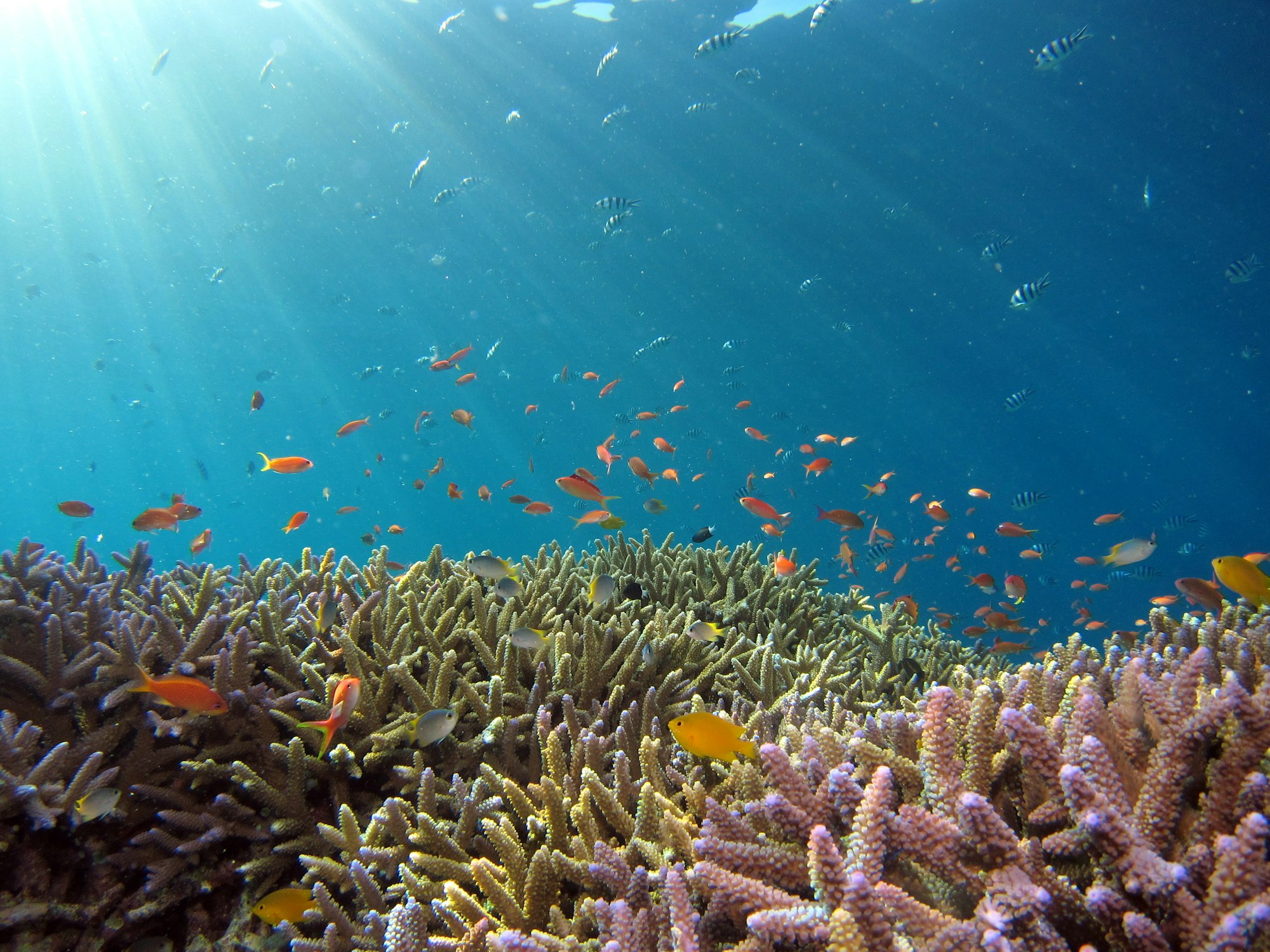
Koh Tachai Pinnacle
9.0576°N 97.8134°E · pinnacle
Koh Tachai Pinnacle is a celebrated granite dive site roughly 500 meters south of Koh Tachai island, between the Similan and Surin island groups, Similan Islands National Park, Phang Nga Province, Thailand.
Data-quality note: Multiple independent operator sources (sunrise-divers.com, hobo-ya-similan.com, khaolakscubaadventures.com, and others surfaced via web search) describe “Koh Tachai Pinnacle,” “Twin Peaks,” and “The Dome” as alternate names used by different dive operators for the same physical site — two prominent pinnacles alongside a large dome-shaped central granite boulder — rather than three separate dive locations. This destination’s dataset currently lists all three as distinct entries with distinct GPS coordinates a few hundred meters apart. That is very likely a duplicate-listing artifact rather than three genuinely different sites, and it has been flagged for maintainer review rather than merged or deleted in this pass. The description below reflects the corroborated facts about the site as a whole, applied consistently across all three entries, rather than inventing a distinct character for each name.
Overview
The formation consists of two pinnacles and a dome-shaped granite boulder. The larger, southern pinnacle tops out at 12–14 meters and is capped with hard corals; a second, smaller pinnacle sits across a sandy saddle at around 24–25 meters, surrounded by large sea fans and coral gardens. The whole structure drops to a sandy bottom variously reported between 30 and 45 meters depending on the source and which flank is being described. Current here is consistently reported as strong and highly variable, sometimes running from multiple directions in the same dive.
Site Information
- Location: ~500m south of Koh Tachai island, between the Similan and Surin island groups, Phang Nga Province, Thailand
- Entry Type: liveaboard
- Site Type: Pinnacle/seamount
- Difficulty Level: Advanced
- Maximum Depth: 45 meters
- Typical Visibility: 15–40 meters
- Current: Very strong; highly variable, can run from multiple directions
- Best Time: November to May
Marine Life
Sources consistently report: manta rays, occasional whale sharks (particularly in current-driven, plankton-rich conditions), giant and bigeye trevally, great barracuda (forming large schooling “tornadoes”), yellow-backed fusiliers, bannerfish, and hunting tuna. Between the rocks, banded sea snakes are reported, along with several moray eel species and lobsters in crevices. Smaller subjects reported include mantis shrimp, ghost pipefish, nudibranchs, and seahorses. One source additionally mentions nurse/leopard-type sharks resting near the formation, though this is less consistently corroborated than the schooling-fish and manta/whale shark reports.
Dive Profile
Liveaboards attempt this site only when current conditions are judged acceptable. The standard approach is a down-current entry at depth, drifting along the pinnacle face while observing schooling fish activity, with a prolonged shallow stop near the pinnacle crest (12–15m) if air and conditions allow.
Entry and Exit
Exclusively liveaboard access — Koh Tachai has no commercial day-trip diving. Liveaboards time dives to tidal windows and stage zodiacs for entry, following an agreed drift direction given the current.
Tips and Recommendations
- Brief thoroughly with your guide on current direction and abort procedures before every dive here — conditions change quickly and can run from multiple directions
- A reef hook, used on bare rubble, helps hold position to observe the schooling fish without fighting current
- This is a wide-angle site — bring a fisheye or ultra-wide setup for the schooling barracuda and trevally; macro opportunity is limited given the current exposure
Safety Considerations
This site demands genuine current-diving experience beyond baseline Advanced certification. Current reversals can push divers off the formation into open water; always dive with a deployed or immediately deployable SMB and agree on abort/pickup procedures with your guide before entering.
Photography
The schooling barracuda and trevally are the site’s signature wide-angle subject — a fisheye or ultra-wide lens with a fast shutter speed captures the scale and motion of the schools.
Sources: Sunrise Divers, Khao Lak Scuba Adventures, Hobo-ya Similan, Divezone, Big Blue Diving Khao Lak. Last updated 2026-07-05.
Sea-surface temperature and wave height from Open-Meteo Marine (ERA5 reanalysis, monthly averages).
69 verified species observations (44 species) logged within ~11 km of this site between 1991 and 2010, from the Ocean Biodiversity Information System.
- Rhincodon typus · Whale Shark
- Tambja affinis
- Caloria indica
- Tyrannodoris luteolineata
- Ceratophyllidia africana
- Favorinus
- Aegires
- Martadoris amakusana
- Reticulidia suzanneae
- Tambja morosa
- Phyllidiopsis cardinalis
- Phyllidiopsis
Scientific survey records skew toward sampled taxa (molluscs, corals) and do not reflect what you are guaranteed to see on a dive.
Source: OBIS (obis.org), aggregated Darwin Core occurrence records.
Conditions change with the tide and the season. If you have dived this site, share what it was actually like — date, visibility, current, and what you saw. Real, recent reports from divers are exactly what this guide is built to collect.
Send a conditions report ›