Halliburton Wreck
16.0844°N 86.8968°W · wreck
The Halliburton is the largest wreck dive around Utila — an approximately 100 ft (30 m) cargo ship intentionally sunk in May 1998 to create an artificial reef, now sitting perfectly upright on the sandy bottom in 100 ft (30 m) of water.
Overview
The Halliburton was a cargo vessel — according to one source, used to run supplies between oil platforms — that was deliberately sunk in May 1998 to provide Utila with a dedicated wreck dive site; multiple independent sources agree on the vessel’s cargo-ship identity, its approximately 30 m (100 ft) length, and the 1998 sinking date. Its build date and tonnage are not documented in any source consulted and are not stated here. The vessel lies upright on the seafloor at 100 ft (30 m), with the main deck at approximately 85 ft (26 m) and the bridge top reachable at around 65 ft (20 m). The hull rises in a near-vertical wall of steel encrusted with coral and sponges, and several sections of the wreck — including the cargo hold, wheelhouse, and engine room — are accessible for penetration dives. The wheelhouse reportedly contains a plaque reading “Jesus Was A Pirate” and dive memorabilia left by visiting professionals. Nitrox is recommended to extend bottom time at this depth. The site suits Advanced divers and is used for wreck specialty training by local operators.
Visibility in Utila regularly exceeds 100 ft (30 m), making the full profile of this wreck viewable from mid-water on descent.
Marine Life
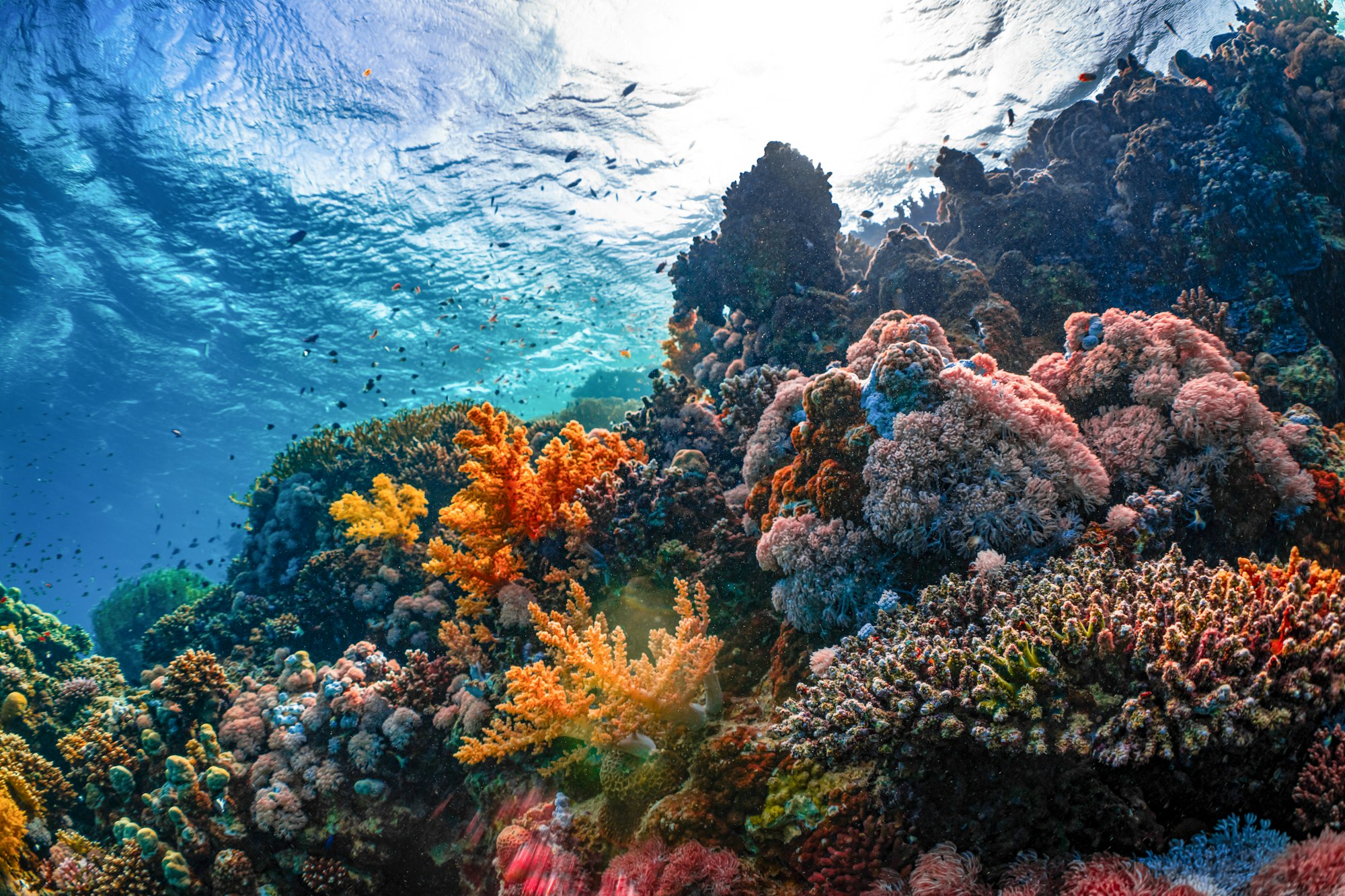
The wreck has become an established artificial reef ecosystem over more than 25 years. Documented residents include large green moray eels, fire worms, nudibranchs, sea slugs, small shrimp, and crabs in the crevices. Schools of snapper and blue runners circle the structure, and fusiliers pass through. Tiger groupers have been reported guarding the wheelhouse. Spotted eagle rays visit the surrounding sand.
Dive Profile
- Maximum depth: 100 ft (30 m) — seafloor
- Main deck: ~85 ft (26 m)
- Bridge top: ~65 ft (20 m)
- Hull top: accessible mid-water
- Penetration: cargo hold, wheelhouse, engine room — accessible but requires proper training
- Nitrox: strongly recommended for extended bottom time
Entry / Exit
Boat dive from Utila town. The wreck is moored and accessed by descent line.
Tips
- Advanced certification minimum; Wreck Diver specialty training is offered here by local operators.
- Penetration of the cargo hold and interior requires proper wreck diving training and equipment (lights, line).
- Nitrox extends bottom time at 85–100 ft significantly.
Safety
Wreck penetration carries overhead environment risks. All penetration dives should be conducted only by divers with proper training and working dive lights. Do not enter without a certified guide on first visits.
Sources: Scuba Diver Life – Halliburton Wreck, Utila, Utila Dive Center – The Halliburton Wreck, Divemaster Austin – Haliburton Wreck Dive Guide, We Dive Utila – Dive Sites. Last updated 2026-07-08 (re-audited: cross-checked vessel identity, length, and sinking date against 4 independent dive-specific sources — no Wikipedia entry exists for this wreck; all sources agree, no conflicts found; tonnage and build date remain unverified and are not stated).
Sea-surface temperature and wave height from Open-Meteo Marine (ERA5 reanalysis, monthly averages).
720 verified species observations (150 species) logged within ~11 km of this site between 1936 and 2022, from the Ocean Biodiversity Information System.
- Rhincodon typus · Whale Shark
- Pterois · lionfish
- Risor ruber · tusked goby
- Tigrigobius multifasciatus
- Anchoa lyolepis
- Lythrypnus
- Ogilbia
- Elacatinus
- Strongylura timucu
- Scorpaena albifimbria
- Priolepis hipoliti · rusty goby
- Tomicodon fasciatus
Scientific survey records skew toward sampled taxa (molluscs, corals) and do not reflect what you are guaranteed to see on a dive.
Source: OBIS (obis.org), aggregated Darwin Core occurrence records.
Conditions change with the tide and the season. If you have dived this site, share what it was actually like — date, visibility, current, and what you saw. Real, recent reports from divers are exactly what this guide is built to collect.
Send a conditions report ›