Batu Kapal
4.5300°S 129.8800°E · pinnacle
Batu Kapal (“Boat Rock” or “Ship Rock”) is a pinnacle dive site north of Pulau Pisang in the Banda Islands. The main rock breaks the surface in a shape resembling a boat hull. Submerged pinnacles extend below — a plateau at around 5 m gives way to further pinnacles at 12 m and 15 m, then drops beyond 50 m — making this one of the deeper and more current-exposed sites in the Banda archipelago.
Overview
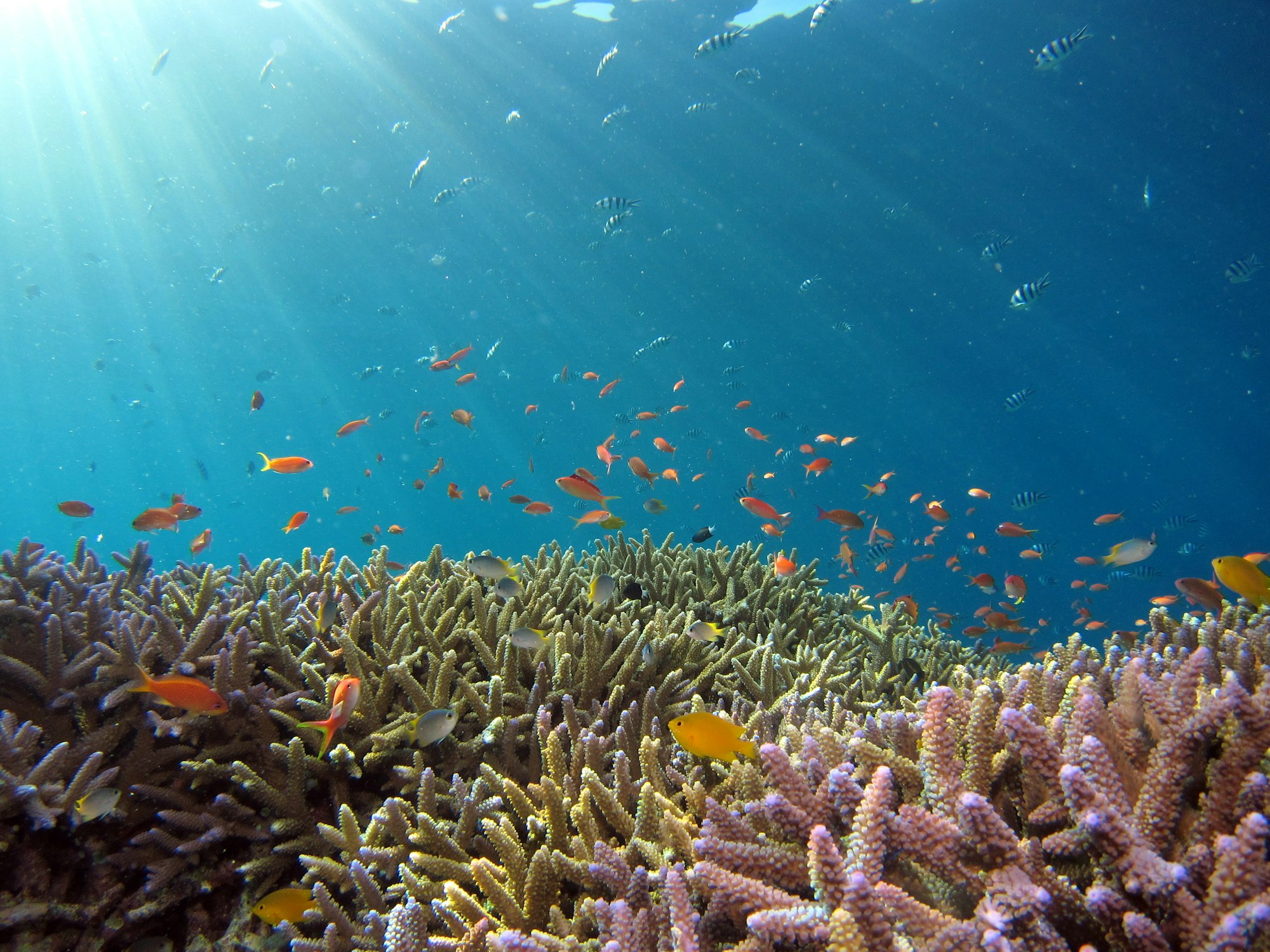
One operator (Merapi Tours) describes a roughly 15-metre-long swim-through lined with gorgonians at the site; this feature is not corroborated by the other sources consulted, so it should be treated as a single-source report rather than confirmed fact. What is consistently reported across sources is a series of pinnacles draped in orange gorgonians, barrel sponges, and deep-purple ellisella whip coral fans. Strong, shifting currents concentrate fish life on the pinnacle tops and flanks.
Visibility at Batu Kapal is exceptional — sources report 40–50 m on good days, particularly between February and May. Strong and unpredictable currents mean diving is impossible at certain tidal states, and the site demands advanced diving skills.
Dive Profile
Reef flat and plateau from 5 m, pinnacles at 12 m and 15 m dropping beyond 50 m. The 10–35 m range has the densest life. Currents change direction unpredictably — timing dives around slack water is recommended. Best visibility: February–May (40–50 m reported). Typical visibility: 20–30 m. Water temperature: 27–29°C.
Marine Life
- Redtooth triggerfish and blacklip butterflyfish (multiple sources)
- Grey reef sharks and banded sea kraits (multiple sources)
- Midnight snappers and bigeye bream
- Giant and honeycomb moray eels in crevices
- Napoleon wrasse (reported by Merapi Tours)
- Potato cod, longnose emperors, yellow-tail barracuda, rainbow runners, anemonefish, surgeonfish (Dive The World)
- Orange gorgonians, barrel sponges, and ellisella whip coral fans on the pinnacle flanks
- No source consulted confirms bumphead parrotfish, eagle rays, or turtles specifically at this site — those species are reported at other nearby Banda sites but not documented here, so they have been removed from this listing
Entry / Exit
Boat dive from liveaboard or Banda Neira day-trip vessel. Strong currents mean entry and exit timing must be planned with the guide. Negative entries may be required on some dives.
Safety
Strong and unpredictable currents — this site is rated Advanced. A surface marker buoy (SMB) is essential. Dive with an experienced local guide who knows the current patterns. Diving may be impossible at some tidal states.
Photography
The gorgonian- and sponge-covered pinnacles are a classic wide-angle subject. High-visibility periods (Feb–May) are ideal for wide-angle open-water work with schooling fish.
Sources: Bottles Up Diving - Banda Islands, Dive The World - Banda Islands, Merapi Tours - Banda Archipelago Dive Spots, Bluewater Dive Travel - Banda Sea. Last updated 2026-07-17.
Sea-surface temperature and wave height from Open-Meteo Marine (ERA5 reanalysis, monthly averages).
1724 verified species observations (336 species) logged within ~11 km of this site between 1874 and 2025, from the Ocean Biodiversity Information System.
- Anomalops katoptron · Two-fin Flashlightfish
- Eviota nigriventris
- Thalassoma amblycephalum · Moon Wrasse
- Eviota
- Pomacentrus
- Meiacanthus atrodorsalis
- Amblyglyphidodon curacao
- Epinephelus hexagonatus · Hexagon Rockcod
- Ecsenius pictus
- Eviota rubriceps
- Myripristis
- Diodon liturosus · Black-blotched Porcupinefish
Scientific survey records skew toward sampled taxa (molluscs, corals) and do not reflect what you are guaranteed to see on a dive.
Source: OBIS (obis.org), aggregated Darwin Core occurrence records.
Conditions change with the tide and the season. If you have dived this site, share what it was actually like — date, visibility, current, and what you saw. Real, recent reports from divers are exactly what this guide is built to collect.
Send a conditions report ›