Karang Hatta
4.6110°S 130.1070°E · reef
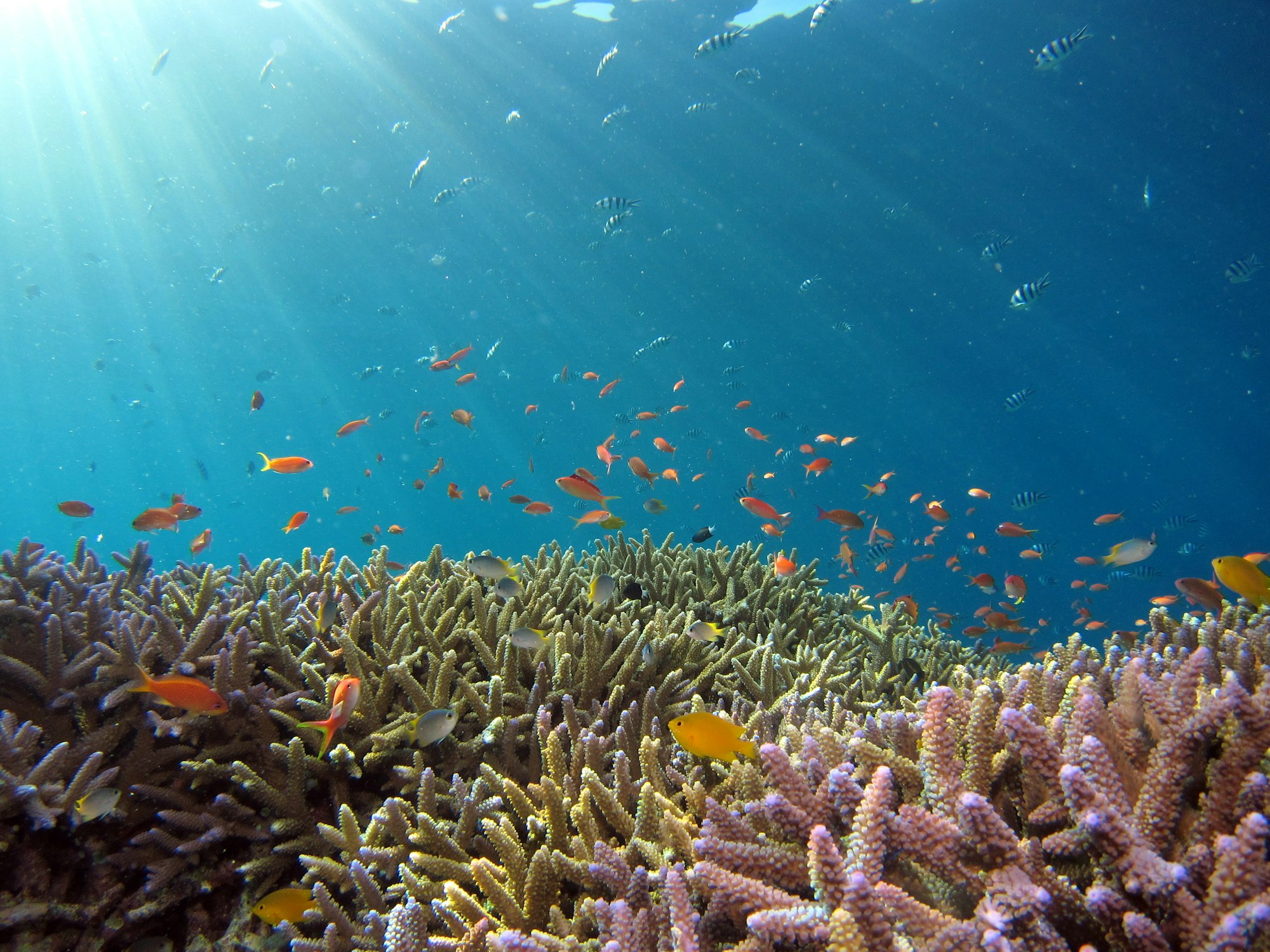
Karang Hatta (also called Sekaru — meaning “shallow area” in local usage) is a submerged reef system located a few kilometres off the south coast of Pulau Hatta. It sits closest to the Banda Trench (sources report depths of approximately 5,900–6,000 m) of any commonly dived site in the archipelago, which concentrates an exceptional range of pelagic species over its sloping reefs.
Overview
The reef slopes gradually from around 5 m down to beyond 40 m. Multiple sources place the productive action zone at around 25 m, where dense neon fusilier schools — yellow and blue, running so thick at times that they block the view — sweep down the reef slope. Large dogtooth tuna, eagle rays, giant barracuda, and schooling trevally follow the fusiliers. Blacktip and whitetip reef sharks, grey reef sharks, and green turtles are reported at this site. Hammerhead sharks are also reported here by multiple sources, most often when upwelling currents are active; their presence is unpredictable rather than routine.
The deeper wall sections feature large sea fans and elephant ear sponges, per multiple sources.
Dive Profile
Gently sloping reef from 5 m to 25–30 m sweet spot, then dropping more steeply. Typical dive depth 15–35 m. Current variable — upwelling pushes concentrate fish on the reef edge. Advanced divers can follow the deeper wall sections; rated Advanced overall, consistent with the destination’s remote, liveaboard-only character.
Marine Life
- Schooling fusiliers (yellow and blue; extremely dense aggregations)
- Dogtooth tuna, giant barracuda, schooling trevally
- Eagle rays, green turtles
- Blacktip and whitetip reef sharks, grey reef sharks; hammerhead sharks (current-dependent, unpredictable, reported by multiple sources)
- Groupers, triggerfish, butterflyfish, snappers
- Moray eels and octopuses
- Large elephant ear sponges and sea fans on deeper sections
Entry / Exit
Boat dive from liveaboard. Hatta Island is approximately 25 km from Banda Neira. Calmer conditions are typical but current can pick up along the outer reef.
Tips
- Best combined with Goa Hatta for a full day on Hatta Island
- Best season for pelagics: September–November and March–April when currents are stronger
- Check current direction with your guide before entry
Photography
Outstanding wide-angle destination. The fusilier schools combined with the deep blue background make for dramatic open-water compositions. Bring a large dome port for reef-and-blue shots.
Sources: Merapi Tours - Banda Archipelago Dive Spots, Dive The World - Banda Islands, X-Ray Mag - Indonesia’s Banda Sea, Bluewater Dive Travel - Banda Sea, Calico Jack Charters - Banda Sea Dive Spots, Bottles Up Diving - Banda Islands. Last updated 2026-07-17.
Sea-surface temperature and wave height from Open-Meteo Marine (ERA5 reanalysis, monthly averages).
25 verified species observations (22 species) logged within ~11 km of this site between 1990 and 2002, from the Ocean Biodiversity Information System.
- Ecsenius trilineatus
- Pleurosicya mossambica
- Bryaninops amplus · English: Gorgonian Goby (2)
- Pleurosicya micheli · English: Michel's Ghost Goby (2)
- Trimma macrophthalmum
- Fusigobius duospilus · English: Twospot Sand Goby (1), Twospot Sandgoby (1)
- Parapercis clathrata
- Phyllidia
- Gastropoda · Gastropods, Slugs, And Snails
- Discodoris cebuensis
- Martadoris limaciformis
- Kaloplocamus ramosus
Scientific survey records skew toward sampled taxa (molluscs, corals) and do not reflect what you are guaranteed to see on a dive.
Source: OBIS (obis.org), aggregated Darwin Core occurrence records.
Conditions change with the tide and the season. If you have dived this site, share what it was actually like — date, visibility, current, and what you saw. Real, recent reports from divers are exactly what this guide is built to collect.
Send a conditions report ›