Manuk Island
5.5330°S 130.2930°E · wall
Manuk Island is a remote, uninhabited volcanic island roughly 100 miles (approximately 160 km) south of the Banda Islands, accessible only by liveaboard. Known as “Snake Island,” it is one of the most unusual dive destinations in the Banda Sea, combining active geothermal vents with extraordinary concentrations of sea snakes.
Overview
Manuk’s walls and sandy volcanic seabed host thriving populations of banded sea kraits (Laticauda colubrina) and olive sea snakes, drawn to the reef by the warm geothermal environment. Divers routinely encounter numerous sea snakes on a single dive, coiling through corals, hunting in crevices, and swimming openly through the water column. Though venomous, sea kraits are not aggressive toward divers, but should not be handled or cornered. Multiple independent naturalist sources confirm cooperative hunting behaviour between trevally and sea snakes at Manuk: jacks flush small fish out of crevices for the snakes to strike, or the snakes drive prey out for the jacks — the roles vary by account, but the tandem hunting itself is well documented.
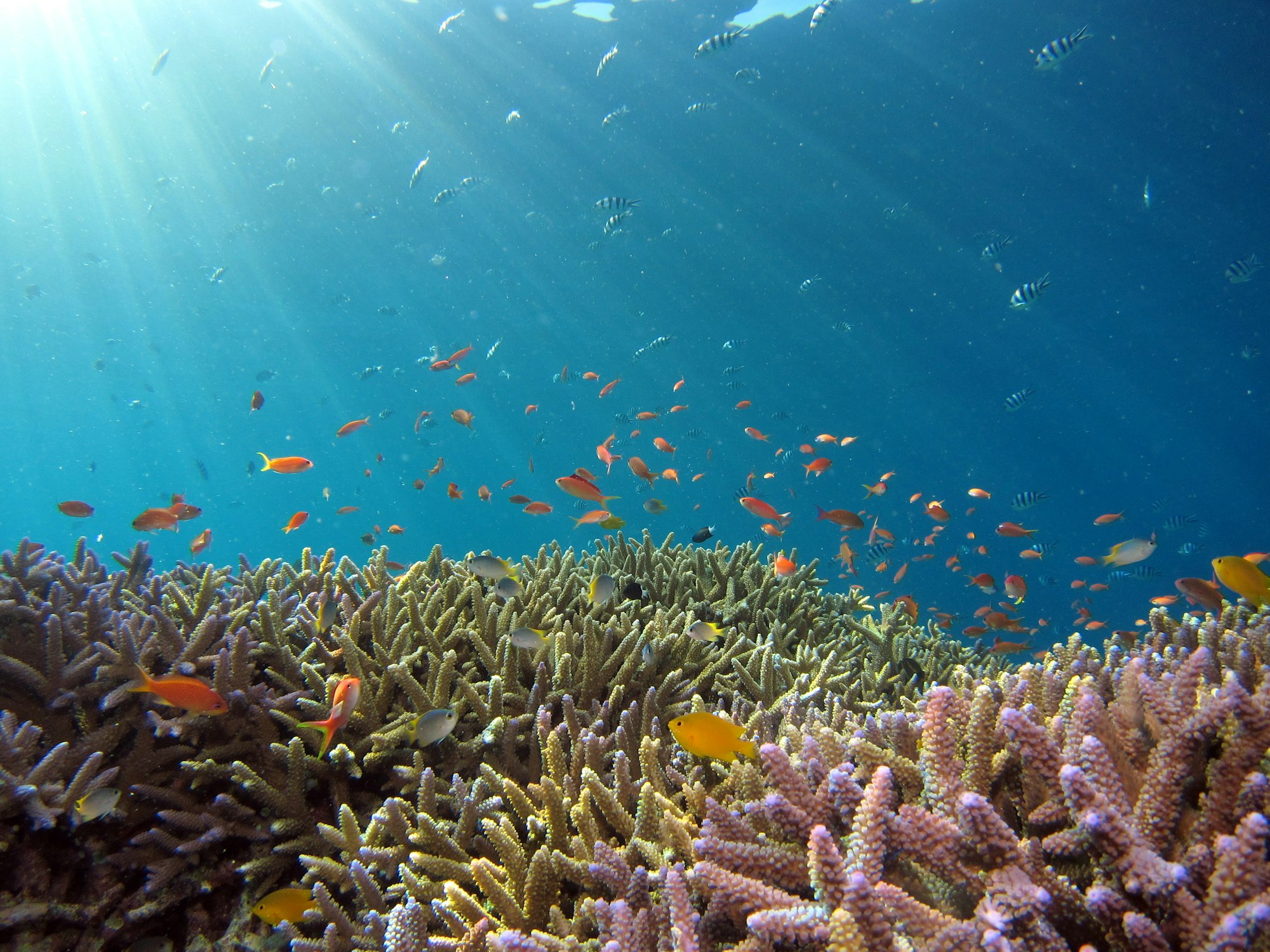
Beyond the snakes, the reef walls are covered in cabbage corals, porites, and barrel sponges. Pelagic action includes chevron barracuda, jacks, rainbow runners, and large tuna. Hammerhead sharks have been reported at Manuk Ridge and Palm Point when upwelling currents are active.
Dive Profile
Walls drop steeply from the surface. Most diving occurs in the 10–35 m range along volcanic rock walls and over dark volcanic sand at the base. Water temperatures can reach 28–31°C near geothermal vent areas; surface seas can be rough due to the island’s exposed location. Visibility is typically 20–30 m.
Marine Life
- Banded sea kraits and olive sea snakes (exceptionally dense population)
- Scalloped hammerhead sharks (Manuk Ridge, Palm Point; current-dependent)
- Chevron barracuda, jacks, rainbow runners
- Large tuna
- Barrel sponges, cabbage corals, porites
Entry / Exit
Boat dive from liveaboard. Manuk is approximately 100 miles from the Banda Islands — the sea conditions and distance make it an infrequent and weather-dependent stop on Banda Sea itineraries. Only liveaboard vessels reach this site.
Tips
- Best season: October to April
- Respect sea snakes — maintain distance, do not block their path to the surface to breathe
- Excellent buoyancy control is essential to avoid disturbing the fragile coral formations and the snakes
Safety
Currents can be moderate to strong. Advanced diving skills required. Sea snakes are venomous; do not handle or corner them. The remote location has no emergency resources — liveaboard guide and DAN insurance essential.
Photography
Exceptional for wide-angle sea snake photography. The dark volcanic sand provides strong contrast for close-focus wide-angle shots. Bring both wide-angle and macro setups.
Sources: Solitude World - Diving in Manuk Island, X-Ray Mag - Indonesia’s Banda Sea, Original Diving - Mermaid II Banda Sea Trip Report, All Star Liveaboards - Banda Sea Guide, Bluewater Dive Travel - Banda Sea, Simon Mustoe - Manuk Island’s Famous Sea Snakes. Last updated 2026-07-17.
Sea-surface temperature and wave height from Open-Meteo Marine (ERA5 reanalysis, monthly averages).
55 verified species observations (19 species) logged within ~11 km of this site between 1990 and 1993, from the Ocean Biodiversity Information System.
- Helcogramma vulcana
- Fusigobius humeralis
- Enneapterygius similis
- Gnatholepis
- Acropora austera
- Acropora yongei
- Acropora divaricata
- Acropora gemmifera
- Acropora digitifera
- Acropora tenuis
- Acropora florida
- Acropora millepora
Scientific survey records skew toward sampled taxa (molluscs, corals) and do not reflect what you are guaranteed to see on a dive.
Source: OBIS (obis.org), aggregated Darwin Core occurrence records.
Conditions change with the tide and the season. If you have dived this site, share what it was actually like — date, visibility, current, and what you saw. Real, recent reports from divers are exactly what this guide is built to collect.
Send a conditions report ›