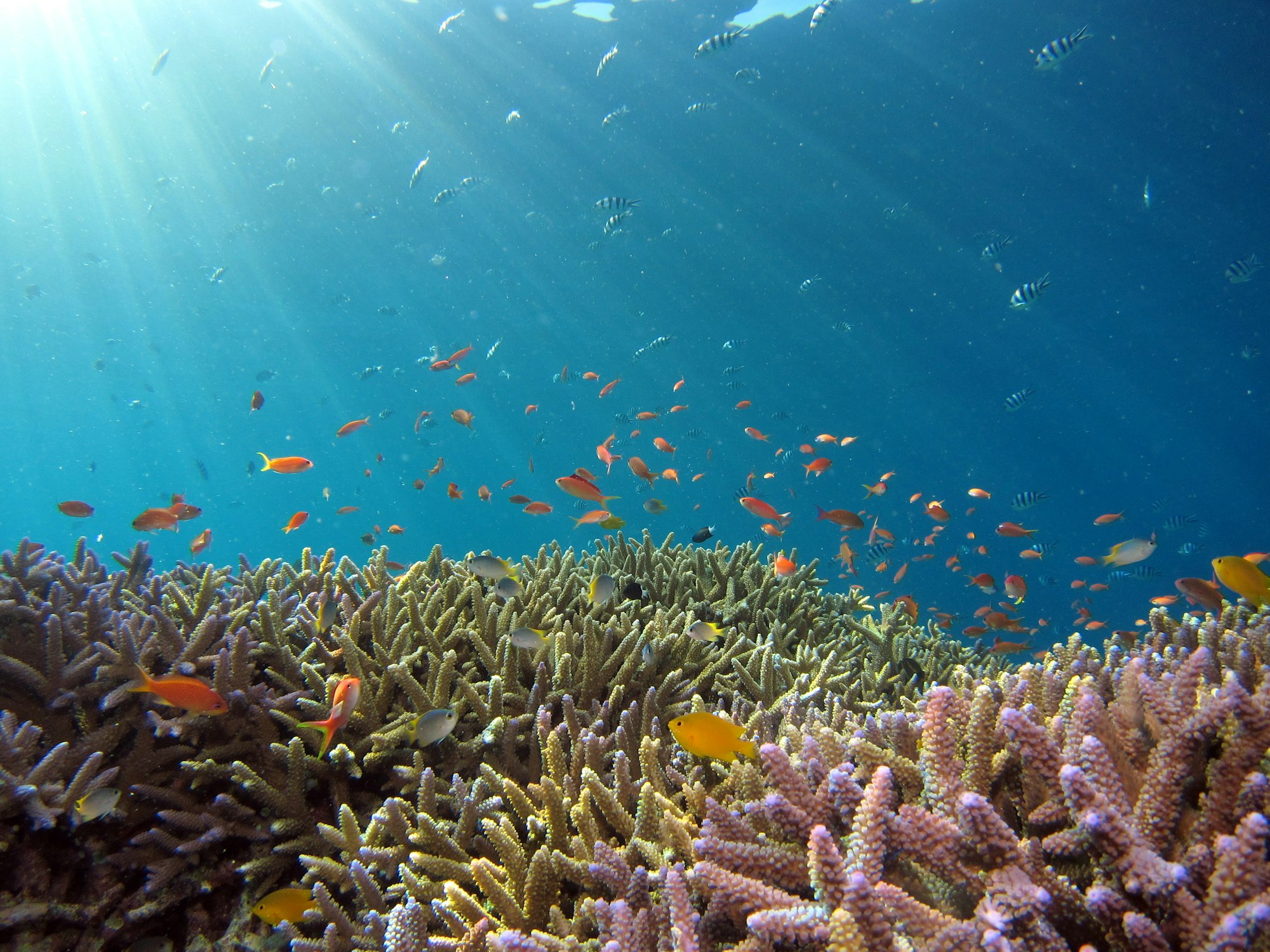
Nailaka Wall
4.5450°S 129.6220°E · wall
Nailaka Wall is a wall dive adjacent to Pulau Nailaka, a tiny sandbar island just off the western tip of Pulau Run (Rhun). Pulau Run is historically significant as one of the original nutmeg-producing Banda Islands, traded by the Dutch to the English in exchange for Manhattan Island in 1667. The remote location — approximately 2 hours by boat from Banda Neira — has kept the reefs in excellent condition.
Overview
The wall descends from around 10 m at the reef crest to 30 m along a vertical face draped in large barrel sponges and sea fans. A resident herd of bumphead parrotfish — one source counted at least 18 individuals on a single dive — is reported here, and hawksbill turtles are reported in the broader Run/Nailaka area.
The outer wall is notably healthy compared to more accessible sites closer to Banda Neira. Currents can be strong on exposed sections, making this a productive drift dive; the sandy shallows between Nailaka and Run offer a calmer alternative when current is running on the wall.
Dive Profile
Wall from 10 m to 30 m, with strong currents on exposed sections making it a strong drift dive. Advanced rating reflects the remote location and currents rather than depth alone. Visibility: 20–30 m. Water temperature: 27–29°C.
Marine Life
- Bumphead parrotfish (resident herd; at least 18 counted on one dive per Bottles Up Diving)
- Hawksbill turtles (reported for the Run/Nailaka area)
- Large barrel sponges and sea fans on the wall face
- Moray eels in barrel sponge crevices
- No source consulted separately confirms Napoleon wrasse, leather corals, or a distinct 45 m north section specifically at Nailaka — those details have been removed as unconfirmed for this specific site
Entry / Exit
Boat dive from liveaboard. Pulau Run/Nailaka requires approximately a 2-hour transit from Banda Neira and is typically only reached by liveaboard or dedicated day-trip charter.
Tips
- Best combined with Run Island’s other sites on the same day’s transit
- Check current conditions before committing to the wall — the sandy shallows provide a productive alternative on stronger-current days
- A strong drift dive — plan entry, exit, and pickup with your guide
Photography
Wide-angle barrel sponge and sea fan photography on the wall. The bumphead parrotfish herd provides an excellent action subject. Clear water and healthy coral growth support ambient-light wide-angle work.
Sources: Bottles Up Diving - Banda Islands, Dive The World - Banda Islands, Merapi Tours - Banda Archipelago Dive Spots. Last updated 2026-07-17.
Sea-surface temperature and wave height from Open-Meteo Marine (ERA5 reanalysis, monthly averages).
242 verified species observations (128 species) logged within ~11 km of this site between 1849 and 2025, from the Ocean Biodiversity Information System.
- Trimma
- Chromis ternatensis
- Chromis
- Eviota
- Pisces
- Doliolidae
- Appendicularia
- Pycnochromis atripes
- Pygoplites diacanthus
- Acanthuridae
- Fowleria
- Gymnocaesio gymnoptera
Scientific survey records skew toward sampled taxa (molluscs, corals) and do not reflect what you are guaranteed to see on a dive.
Source: OBIS (obis.org), aggregated Darwin Core occurrence records.
Conditions change with the tide and the season. If you have dived this site, share what it was actually like — date, visibility, current, and what you saw. Real, recent reports from divers are exactly what this guide is built to collect.
Send a conditions report ›