Tanjung Cengkeh
4.5370°S 129.9120°E · wall
Tanjung Cengkeh (“Clove Cape”) is a wall dive site on Banda Besar, named after the clove trees that historically covered this cape — the Banda Islands were for centuries the world’s only source of cloves and nutmeg. The site features a steep slope draped in large gorgonians and sponges, with consistent mild currents and good visibility.
Overview
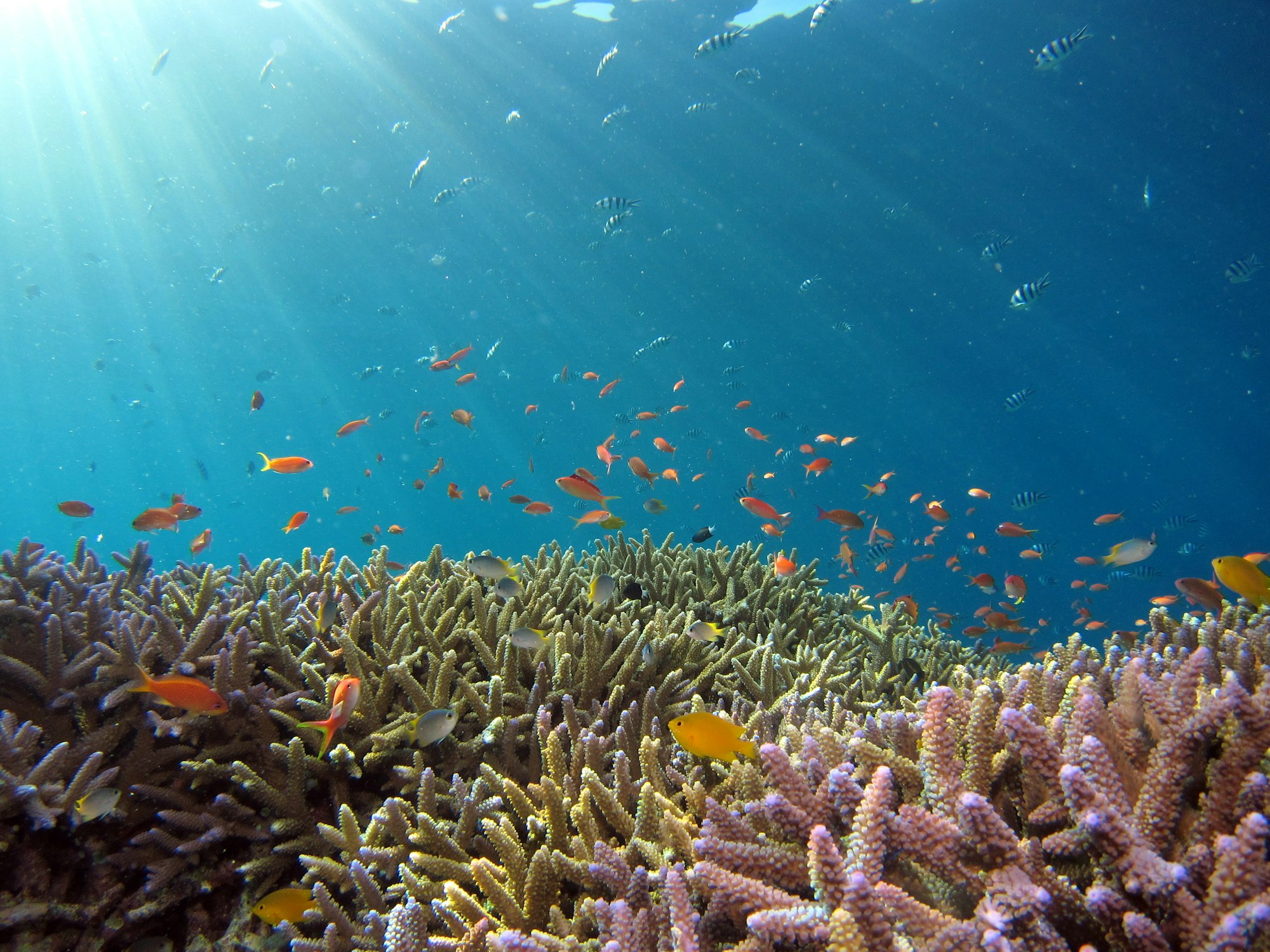
The wall drops steeply from shallow water to beyond 35 m, covered in a dense display of colourful gorgonians, barrel sponges, and soft corals. The site is noted for relatively calm conditions compared to more exposed Banda Sea sites, making it a good choice after more challenging dives. Royal angelfish, goldenrim surgeonfish, redlip parrotfish, and various butterflyfish species are resident throughout the wall.
Napoleon wrasse and bumphead parrotfish make regular appearances. The gorgonians harbour hawkfish and smaller reef associates. The mild current keeps the water clear, and visibility is typically good — sources report 28°C water temperature and mild currents at this site.
Dive Profile
Steep slope and wall from shallow to 35 m+. Mild to moderate currents. Water temperature approximately 28°C. Good visibility, typically 20–30 m. Rated Advanced in line with the destination’s remote, liveaboard-only character, though this is one of the calmer walls in the Banda Islands.
Marine Life
- Napoleon wrasse and bumphead parrotfish (regular)
- Royal angelfish, goldenrim surgeonfish, redlip parrotfish
- Various butterflyfish species
- Gorgonian fans with resident hawkfish
- Barrel sponges and soft corals throughout
Entry / Exit
Boat dive from liveaboard or Banda Neira day-trip vessel. Banda Besar is a short transit from Banda Neira harbour.
Tips
- A good choice for a calmer wall dive after more challenging sites like Batu Kapal or Pohon Miring
- The gorgonians are most impressive in the 10–20 m depth range
- A reliable second or third dive of the day when exposed sites are not diveable
Photography
Well-suited to close-focus wide-angle work on the gorgonian fans. Napoleon wrasse encounters lend themselves to wide-angle fish portraits. Clear water improves ambient-light compositions.
Sources: Bottles Up Diving - Banda Islands, Dive The World - Banda Islands, Merapi Tours - Banda Archipelago Dive Spots. Last updated 2026-07-17.
Sea-surface temperature and wave height from Open-Meteo Marine (ERA5 reanalysis, monthly averages).
1727 verified species observations (337 species) logged within ~11 km of this site between 1874 and 2025, from the Ocean Biodiversity Information System.
- Anomalops katoptron · Two-fin Flashlightfish
- Eviota nigriventris
- Thalassoma amblycephalum · Moon Wrasse
- Eviota
- Pomacentrus
- Meiacanthus atrodorsalis
- Amblyglyphidodon curacao
- Epinephelus hexagonatus · Hexagon Rockcod
- Ecsenius pictus
- Eviota rubriceps
- Myripristis
- Diodon liturosus · Black-blotched Porcupinefish
Scientific survey records skew toward sampled taxa (molluscs, corals) and do not reflect what you are guaranteed to see on a dive.
Source: OBIS (obis.org), aggregated Darwin Core occurrence records.
Conditions change with the tide and the season. If you have dived this site, share what it was actually like — date, visibility, current, and what you saw. Real, recent reports from divers are exactly what this guide is built to collect.
Send a conditions report ›