Las Palamas
20.3845°N 87.0406°W · reef
Las Palamas
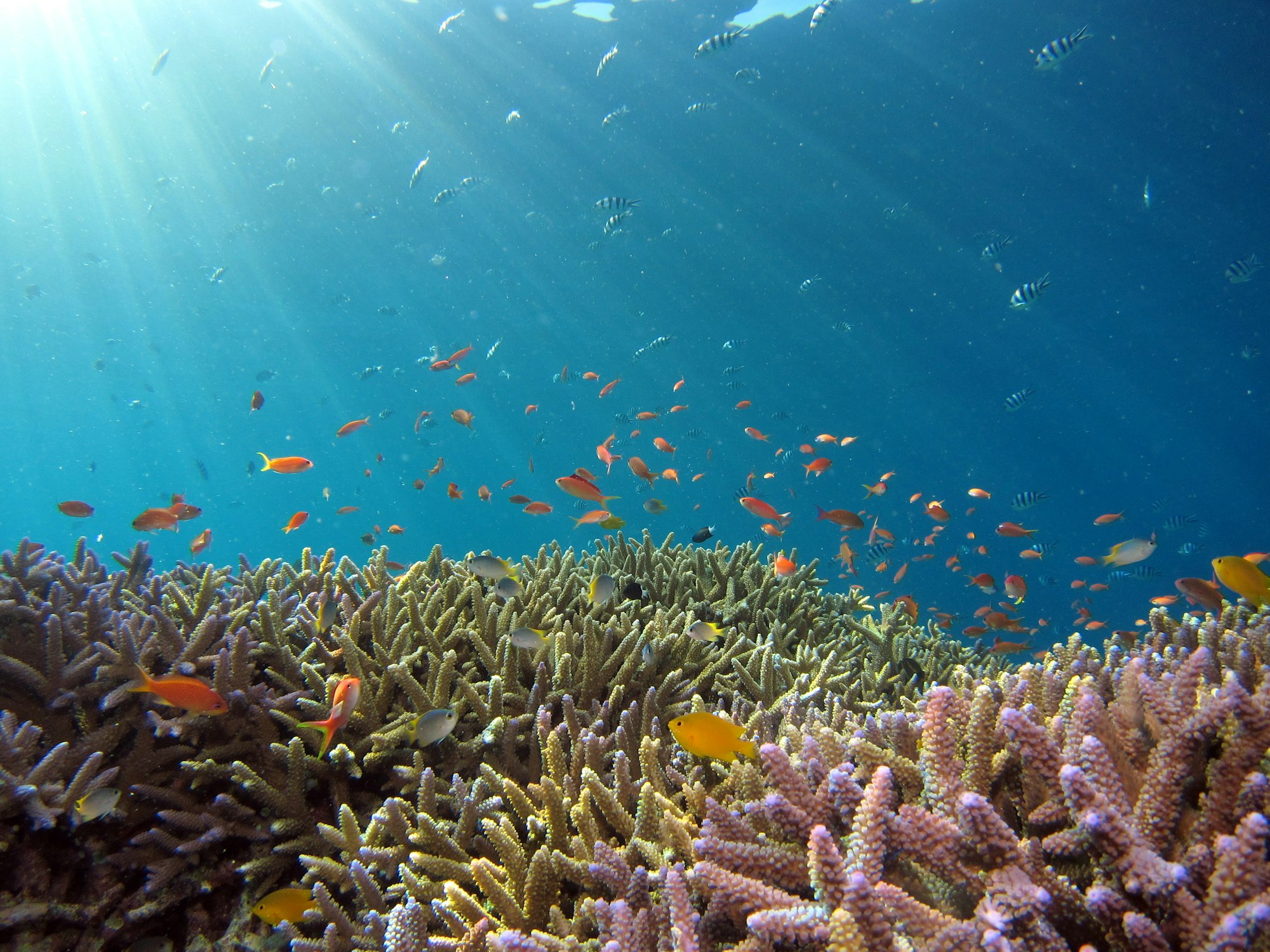
A mid-coast Cozumel reef (known as Las Palmas Reef in local usage) with a gentle slope dotted with sponges, small coral heads, and soft corals — an ideal site for beginners and snorkellers.
Overview
Las Palamas (known as Las Palmas Reef in local dive guides) sits in the central portion of Cozumel’s leeward dive corridor. The site is a sloping drop-off decorated with rough tube sponges, brain coral, rope sponge, gorgonians, and soft corals. It was damaged by Hurricane Rita but has been recovering well. Depths are commonly dived in the 50–70 foot (15–21 meter) range among scattered coral heads, with a sloping drop-off from 70 to about 100 feet (21–30 meters). Sources describe the maximum diveable range at around 45 feet (14 meters) for the primary reef section, making it good for beginners and snorkellers. The central location makes it a convenient choice for operators across the island.
Note on OSM name: The name appears in OSM as “Las Palamas” — a likely typo. The established site name in all local dive references is Las Palmas Reef.
Site Information
- Location: Central leeward coast, Cozumel, Quintana Roo, Mexico
- Entry Type: Boat dive
- Site Type: Reef
- Difficulty Level: Beginner
- Maximum Depth: 20 meters
- Typical Visibility: 20–35 meters (65–115 feet)
- Current: Light to moderate northward drift
- Best Time: November to April; diveable year-round
Marine Life
The mixed reef and sand environment at Las Palamas supports a diverse population of Caribbean reef species. Large southern stingrays are regularly encountered in the channels. Hawksbill turtles are reliable here — the combination of sponge-encrusted coral heads and sea fans provides consistent grazing. French angelfish and grey angelfish patrol the reef in pairs. The Caribbean spiny lobster is a common resident in the coral crevices. Schools of blue-striped grunts and French grunts shelter in dense aggregations under ledges, while Creole wrasse drift through the water column above the reef crest. Nurse sharks rest in sandy pockets at depth.
Dive Profile
Begin drifting from the mooring buoy location, following the spur-and-groove structure seaward. The reef crest at 5–10 meters transitions to the spur bases at 15–20 meters in the outer channels. Allocate time at both depth ranges — the shallower crest offers excellent light and dense fish activity, while the deeper channels host the rays and resting sharks. A typical dive covers 300–500 meters of reef before ascending for the safety stop and boat pickup.
Entry and Exit
Centrally located on the leeward coast makes this one of the shorter boat rides — approximately 15–20 minutes from San Miguel. Mooring buoys used throughout the national park. Standard giant stride entry and SMB deployment before ascending from depth.
Tips
- Las Palamas works exceptionally well as a second dive after a deeper morning site at Palancar or a southern wall
- The central location means this site rarely suffers from the stronger currents that can make northern sites challenging
- If splitting a day between north and south sites, Las Palamas is a natural midpoint that operators frequently include
- Allocate time near the sandy channel bases to observe stingray foraging behaviour — they actively excavate the sand searching for buried invertebrates
- Check sea fan stems at depth for flamingo tongue cowries, which are abundant throughout this section of reef
Safety
Standard intermediate precautions: fire coral on coral structures, sea urchins in sandy areas, and always carry and deploy an SMB before ascending. Boat traffic is moderate at this central site — surfacing without an SMB is inadvisable. Recompression facilities are a short distance away in San Miguel.
Photography
Las Palamas offers well-balanced photography across wide-angle reef and macro subjects. The dense grunt aggregations under coral ledges create classic Caribbean schooling shots. Southern stingrays in the sandy channels are approachable and make excellent subjects for both portraits and environmental images. The consistently clear central reef visibility with sunlit coral heads is particularly good in morning light.
Additional Resources
- Arrecifes de Cozumel National Park: Site within protected zone
- Last Updated: 2026-03-28
Sources: The Reefs of Cozumel — Las Palmas Reef, Blue Note Scuba — Cozumel Dive Sites, Scuba Diving Cozumel — Las Palmas. Last updated 2026-05-23.
Sea-surface temperature and wave height from Open-Meteo Marine (ERA5 reanalysis, monthly averages).
508 verified species observations (319 species) logged within ~11 km of this site between 1885 and 2025, from the Ocean Biodiversity Information System.
- Pterois · lionfish
- Gnatholepis thompsoni
- Canthigaster rostrata
- Coryphopterus hyalinus
- Liopropoma mowbrayi
- Lipogramma trilineata
- Halichoeres garnoti
- Starksia
- Pseudoraja fischeri
- Apogon maculatus
- Priolepis hipoliti
- Pleuronichthys cornutus
Scientific survey records skew toward sampled taxa (molluscs, corals) and do not reflect what you are guaranteed to see on a dive.
Source: OBIS (obis.org), aggregated Darwin Core occurrence records.
Conditions change with the tide and the season. If you have dived this site, share what it was actually like — date, visibility, current, and what you saw. Real, recent reports from divers are exactly what this guide is built to collect.
Send a conditions report ›