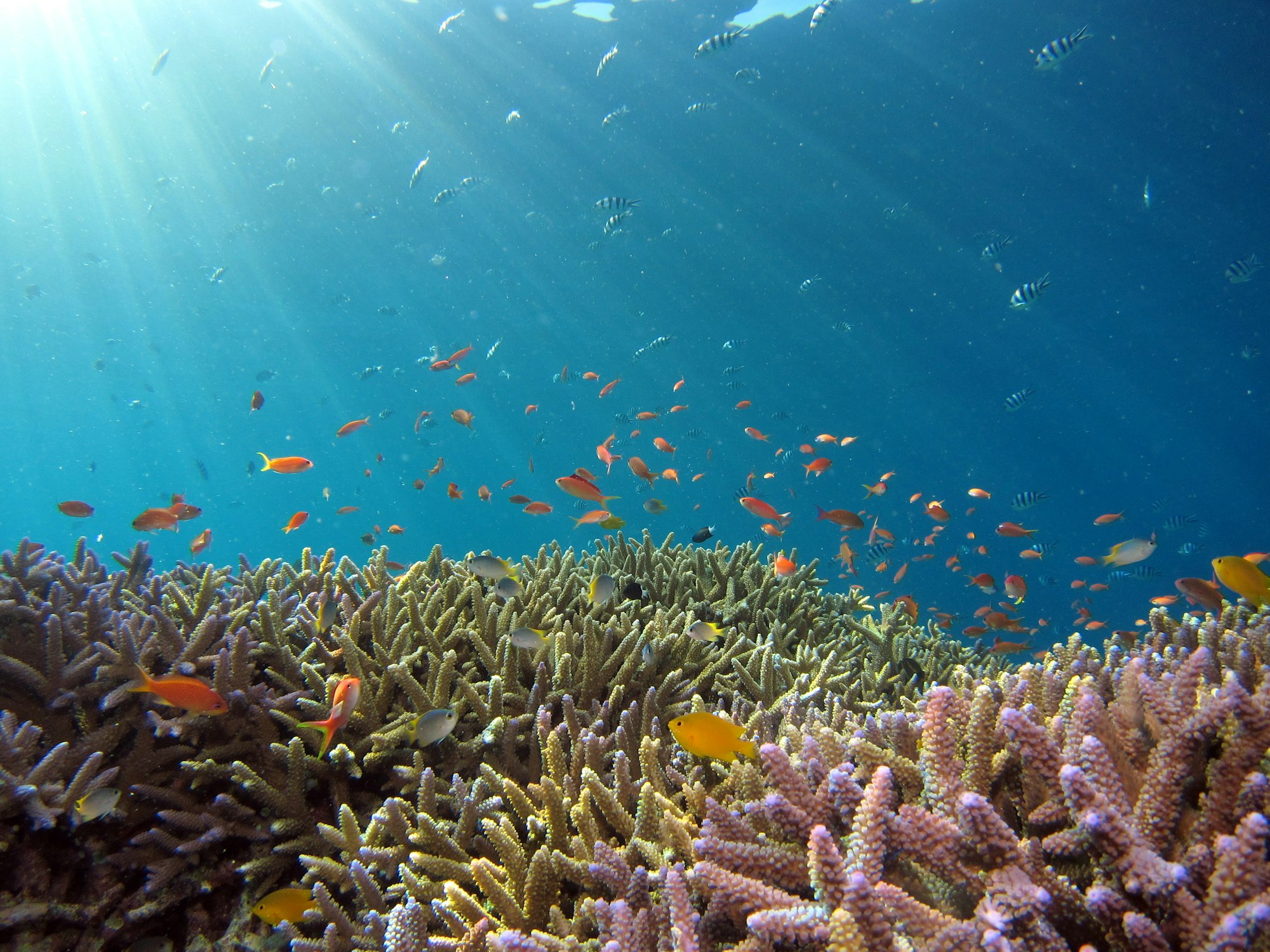
Palancar Reef
20.2970°N 87.0320°W · reef
Palancar Reef
One of the most celebrated dive sites in the Caribbean, a vast coral labyrinth swept by gentle drift currents along Cozumel’s southwest coast.
Overview
Palancar Reef is Cozumel’s crown jewel — a sprawling reef system stretching several kilometers along the island’s leeward southwest coast, protected within the Arrecifes de Cozumel National Park. The site is divided into named sections including Palancar Gardens, Palancar Caves, Palancar Bricks, and Palancar Horseshoe, each offering distinct terrain. Palancar Gardens features shallow coral gardens dense with brain corals and star corals. Palancar Caves is defined by dramatic swim-throughs, archways, and spur-and-groove canyons descending to 30 meters. The Mesoamerican Barrier Reef’s influence means immaculate water clarity of 25–40 meters and warm Caribbean temperatures of 26–29°C year-round. Cozumel’s north-to-south current system makes nearly every dive here a relaxed drift, requiring minimal finning as the reef slides past.
Site Information
- Location: Southwest Cozumel, Quintana Roo, Mexico
- Entry Type: Boat dive
- Site Type: Reef
- Difficulty Level: Intermediate
- Maximum Depth: 30 meters
- Typical Visibility: 25–40 meters (80–130 feet)
- Current: Moderate north-to-south drift — the site is designed for drift diving
- Best Time: November to April for calmest seas; diving is excellent year-round
Marine Life
Palancar is renowned for its resident population of spotted eagle rays, often seen in formation cruising over the sandy channels between spurs. Hawksbill and green sea turtles are almost guaranteed sightings, frequently resting on coral heads or grazing on sponges. The endemic splendid toadfish (Sanopus splendidus) hides under coral ledges — found nowhere else on Earth. Large Atlantic spotted groupers patrol the deeper sections, while queen angelfish and French angelfish are common throughout. Blacktip reef sharks and nurse sharks rest in sandy channels. The reef itself is carpeted with massive star corals, brain corals, pillar corals, and sea fans, with enormous barrel sponges at depth. Schools of blue tangs, Bermuda chubs, and horse-eye jacks sweep through regularly.
Dive Profile
The standard Palancar drift begins at the mooring site chosen by your captain based on current direction. Descend to the reef top at 10–15 meters and allow the current to carry you through the gardens and into the cave systems. The caves and canyons range from 15 to 30 meters — explore the swim-throughs but stay aware of depth. Most wildlife activity concentrates between 12–25 meters. Ascend gradually to the reef top for the final minutes, then deploy your SMB for boat pickup in open water during your 5-meter safety stop.
Entry and Exit
All access is by boat with Cozumel dive operators. Boats tie to established mooring buoys — no anchoring is permitted within the national park. Entry is via giant stride or back roll. Because this is drift diving, divers surface wherever the current carries them; deploying an SMB before ascending is mandatory so the boat can track you. Follow your divemaster’s briefing regarding the specific section being dived and the current speed on that day.
Tips
- Dive Palancar Caves specifically for the dramatic archways and swim-throughs — allow extra air for exploration
- Search ledge undersides at 15–20 meters for the splendid toadfish, especially near coral overhangs
- Pair a deeper cave dive with a shallower garden dive in the afternoon when light penetrates at a beautiful angle
- The Horseshoe section offers a stunning amphitheater formation great for wide-angle photography
- Visit November through April for the smoothest sea conditions between Cozumel town and the outer reef
Safety
Drift currents can strengthen unexpectedly at Palancar. Always carry and deploy an SMB before surfacing — the boat relies on it to find you. Avoid diving the outer wall without advanced training; the wall drops beyond sport diving limits quickly. Fire coral is present on many structures — maintain neutral buoyancy to avoid accidental contact. The nearest recompression chamber is at Cozumel’s SSS-Cozumel facility in San Miguel.
Photography
Palancar is one of the world’s top wide-angle reef photography destinations. The scale of the coral formations, the swim-throughs lit by shafts of Caribbean light, and the density of reef fish create compelling compositions. Use a 10–17mm fisheye or wide rectilinear lens for the cave interiors. Morning dives catch sunlight filtering through openings in the caves. For macro, check ledges and sponge bases for the splendid toadfish — a unique and photogenic endemic subject.
Additional Resources
- Arrecifes de Cozumel National Park: Managed by CONANP; mooring fees collected
- Last Updated: 2026-03-28
Sources: The Reefs of Cozumel — Reef Guide, Barefoot Dive Center — Palancar Reef, Blue Note Scuba — Palancar Reef Cozumel, Divepoint Mexico — Palancar Reef, Cozumel Scuba — Palancar Reef. Last updated 2026-05-23.
Sea-surface temperature and wave height from Open-Meteo Marine (ERA5 reanalysis, monthly averages).
388 verified species observations (266 species) logged within ~11 km of this site between 1885 and 2025, from the Ocean Biodiversity Information System.
- Pterois · lionfish
- Gnatholepis thompsoni
- Canthigaster rostrata
- Coryphopterus hyalinus
- Liopropoma mowbrayi
- Lipogramma trilineata
- Halichoeres garnoti
- Leucoraja yucatanensis
- Starksia
- Pseudoraja fischeri
- Apogon maculatus
- Priolepis hipoliti
Scientific survey records skew toward sampled taxa (molluscs, corals) and do not reflect what you are guaranteed to see on a dive.
Source: OBIS (obis.org), aggregated Darwin Core occurrence records.
Conditions change with the tide and the season. If you have dived this site, share what it was actually like — date, visibility, current, and what you saw. Real, recent reports from divers are exactly what this guide is built to collect.
Send a conditions report ›