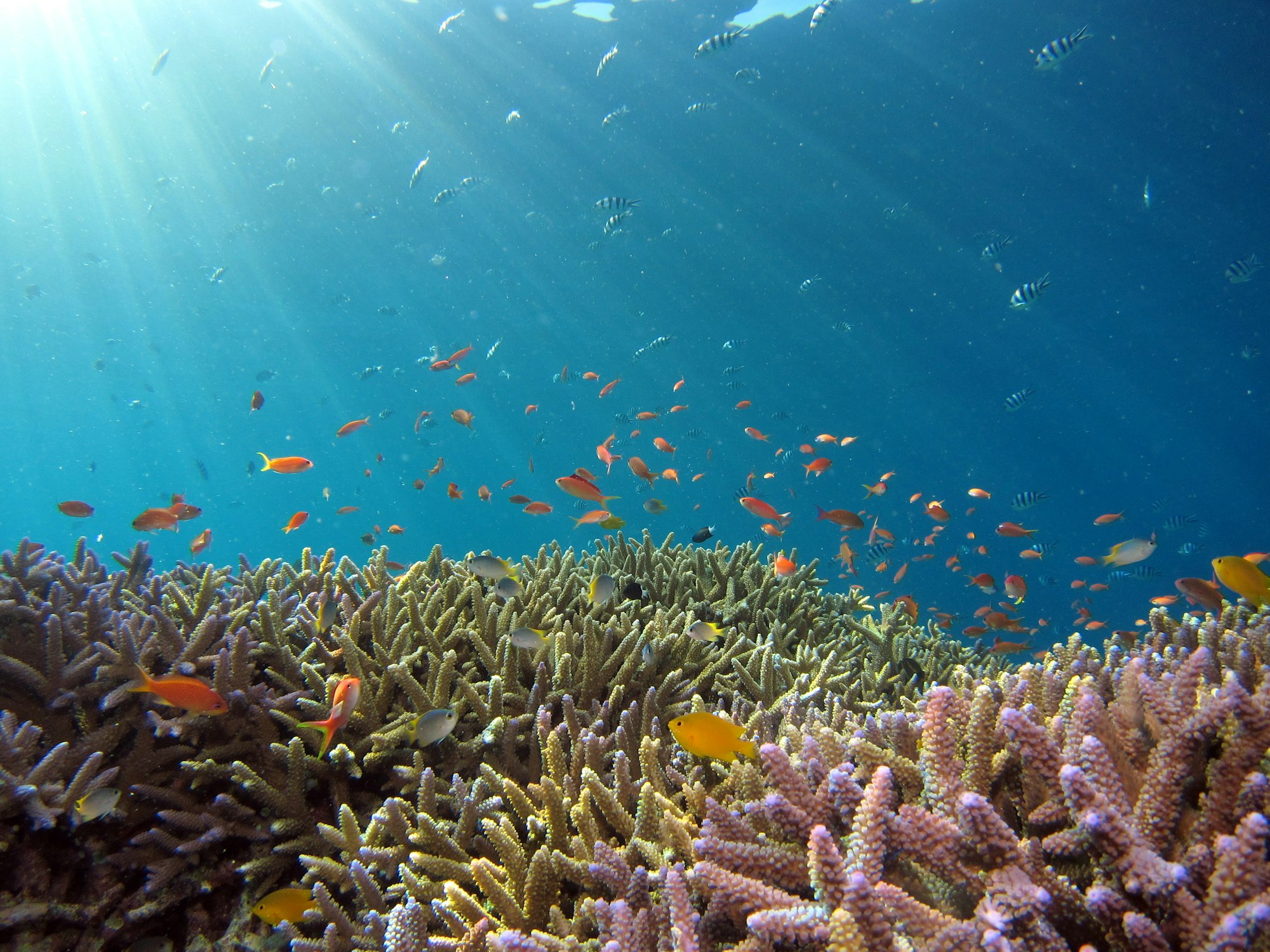
Punta Tunich Wall
20.3556°N 87.0461°W · wall
Punta Tunich Wall
A rarely-visited advanced wall at a headland point where converging currents create exceptional visibility and large-animal encounters.
Overview
Punta Tunich is a headland on Cozumel’s central southwest coast where the geography of the point intensifies the island’s characteristic drift current, creating conditions preferred by large pelagic fish. The wall here begins at the reef crest around 8 meters and drops vertically through the recreational range to 30 meters before continuing into the deep. The wall face is heavily undercut in places, with overhangs and small caverns providing shelter for resting nurse sharks and large groupers. Because the site requires stronger current management than the calmer central reefs, it attracts a more experienced diving crowd and sees less traffic — the reef condition is notably pristine compared to heavily-visited sites nearby.
Site Information
- Location: Central-south leeward coast, Cozumel, Quintana Roo, Mexico
- Entry Type: Boat dive
- Site Type: Wall dive
- Difficulty Level: Advanced
- Maximum Depth: 30 meters
- Typical Visibility: 25–40 meters (80–130 feet)
- Current: Moderate to strong drift — headland point amplifies island current
- Best Time: November to April; current can be unpredictable in summer months
Marine Life
The point’s current concentration attracts spotted eagle rays in significant numbers; groups of five to ten individuals are regularly reported. Caribbean reef sharks appear consistently at the wall edge. The overhangs shelter nurse sharks that rest during the day. Large black grouper occupy ledges on the wall face between 15 and 25 meters. The wall sponge community is dense, with massive barrel sponges and elephant ear sponges providing visual landmarks. Hawksbill turtles are common, often found grazing on sponges on the mid-wall section. The deep blue beyond the wall edge occasionally yields sightings of dog snapper in large schools.
Dive Profile
Entry is timed by the boat captain to match the current cycle. Descend quickly to the reef crest and begin drifting with the current along the wall face. Explore the overhangs between 15 and 25 meters where the most interesting geological features and resting animals are found. Depth management requires active attention at a vertical wall — it is easy to drift deeper than planned. Begin the ascent with adequate air reserve (minimum 70 bar) and deploy the SMB before ascending in the water column rather than against the wall.
Entry and Exit
Boat-only, with the captain following the drift throughout. Longer ride from San Miguel than the central sites — typically 25–35 minutes. SMB deployment and water-column ascents are standard here; practice deploying your SMB before this dive if unfamiliar with the technique.
Tips
- This is not a training site — come with prior drift wall experience before attempting Punta Tunich
- The overhangs between 18 and 25 meters are the biological highlight; budget time to investigate them carefully
- Position yourself slightly into the blue at the wall edge to increase the chances of eagle ray encounters
- The current can shift direction at the point; follow your divemaster’s lead throughout
- Carry a dive computer to monitor depth continuously — the wall’s vertical nature makes depth creep a real hazard
Safety
Strong current diving demands specific skills: efficient buoyancy to avoid dragging on the wall, the ability to deploy an SMB while neutrally buoyant, and the discipline to abort if conditions exceed your capability. Nitrogen narcosis can compound judgment errors at the lower end of the depth range; plan conservatively. The nearest recompression chamber is in San Miguel town.
Photography
Punta Tunich’s clear water and large-animal encounters create outstanding wide-angle opportunities. Eagle ray formations against the deep blue require a wide-angle zoom at the wall edge. The overhangs are lit by natural light from below in the morning, creating dramatic silhouette opportunities with divers exploring the ceiling. Sponge macro shooting is productive on the wall face — look for blennies and hawkfish among the barrel sponge rims.
Additional Resources
- Arrecifes de Cozumel National Park: Site within protected zone
- Last Updated: 2026-03-28
Sources: Pro Dive International — Punta Tunich, ScubaTony’s Cozumel Guide — Punta Tunich, Scuba Diving Place — Punta Tunich. Last updated 2026-05-23.
Sea-surface temperature and wave height from Open-Meteo Marine (ERA5 reanalysis, monthly averages).
447 verified species observations (289 species) logged within ~11 km of this site between 1885 and 2025, from the Ocean Biodiversity Information System.
- Pterois · lionfish
- Gnatholepis thompsoni
- Canthigaster rostrata
- Coryphopterus hyalinus
- Liopropoma mowbrayi
- Lipogramma trilineata
- Halichoeres garnoti
- Leucoraja yucatanensis
- Starksia
- Pseudoraja fischeri
- Apogon maculatus
- Priolepis hipoliti
Scientific survey records skew toward sampled taxa (molluscs, corals) and do not reflect what you are guaranteed to see on a dive.
Source: OBIS (obis.org), aggregated Darwin Core occurrence records.
Conditions change with the tide and the season. If you have dived this site, share what it was actually like — date, visibility, current, and what you saw. Real, recent reports from divers are exactly what this guide is built to collect.
Send a conditions report ›