San Juan Reef
20.5502°N 86.9499°W · reef
San Juan Reef
An Advanced-rated northern Cozumel reef notorious for extremely strong and unpredictable currents, positioned outside the marine park at the north end of the island.
Overview
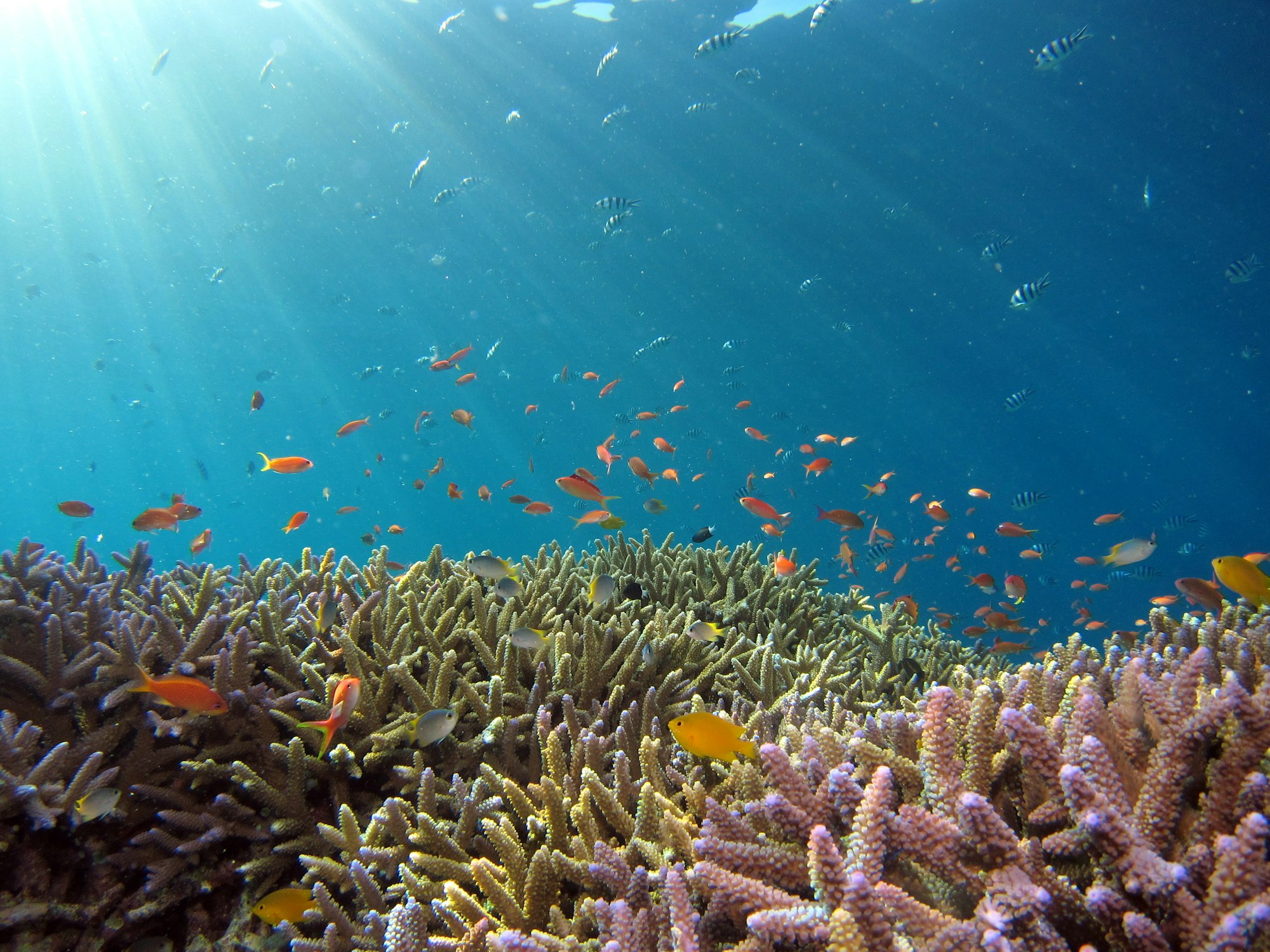
San Juan Reef sits at the northern end of Cozumel, outside the boundaries of the Arrecifes de Cozumel National Park. The site is seldom visited precisely because of its reputation for current — operators describe conditions as extremely strong and unpredictable, with real risk of divers being separated from the group and swept past the island’s northern tip. When conditions allow, the reef offers a flat terrain with majestic finger corals, lettuce corals, and vibrant sand sponges alongside ledges and overhangs that shelter French grunts, schoolmasters, and moray eels. The site is typically dived as a second dive following Barracuda or Cantarel, and only when the Port Captain and local operators assess current as manageable.
Site Information
- Location: North end of Cozumel, Quintana Roo, Mexico (outside national park)
- Entry Type: Boat dive
- Site Type: Reef
- Difficulty Level: Advanced
- Maximum Depth: 18 meters
- Typical Visibility: 20–35 meters when conditions permit
- Current: Extremely strong and unpredictable; site seldom dived due to current risks
- Best Time: When conditions are assessed as safe by local operators only
Marine Life
When diveable, San Juan offers green moray eels, drumfish, lobsters, turtles, nurse sharks, and eagle rays reported by visiting divers. The flat reef with finger corals and lettuce corals hosts French grunts and schoolmasters in large numbers. TripAdvisor reviewers report schooling spotted eagle rays as a highlight.
Dive Profile
The dive follows a flat reef with the current dictating direction and speed. Group descent and ascent procedures are critical here — the current can carry a separated diver past the island’s northern tip into open water. Dive is often completed in under 45 minutes due to current-induced air consumption. Stay close to the reef, close to your guide, and close to your buddy.
Entry and Exit
Boat access from San Miguel; northern location requires 30–40 minutes transit. No mooring buoys outside the park boundary — captain drops on the site. Entry is a controlled descent; surface in open water with SMB deployed before ascending. Listen carefully to the pre-dive briefing regarding current assessment and emergency pickup procedures.
Tips
- Only attempt this site with an operator who dives the north regularly and assesses conditions on the day
- This is typically a second dive after a deeper north-end site such as Barracuda or Cantarel
- Carry a high-visibility SMB and audible signalling device in case of separation
- Do not attempt this site on your first day at Cozumel — assess current-diving comfort at the leeward sites first
Safety
San Juan is one of Cozumel’s most demanding sites due to current. Separation from the group means drifting past the island into open water — a serious emergency scenario. The Port Captain and operators may refuse to dive the site under certain conditions. Never dive here without an experienced local guide who knows the north end. An SMB is mandatory, and a GPS beacon or personal locator beacon is advisable.
Photography
The undisturbed nature of the site — consequence of it being so seldom visited — means large, relaxed marine life. Eagle ray schools are a notable photographic reward for divers who make the effort. Wide-angle for the coral formations; the finger coral fields have an architectural quality distinct from the leeward drift reefs.
Sources: The Reefs of Cozumel — San Juan, Pro Dive International — San Juan Reef, Coleman Concierge — Cozumel Dive Guide, Living Underwater — Cozumel Dive Sites, TripAdvisor — San Juan Reef. Difficulty corrected from Intermediate to Advanced based on multiple-source confirmation of extreme current conditions. Last updated 2026-06-16.
Sea-surface temperature and wave height from Open-Meteo Marine (ERA5 reanalysis, monthly averages).
380 verified species observations (226 species) logged within ~11 km of this site between 1885 and 2015, from the Ocean Biodiversity Information System.
- Anguilla rostrata
- Pterois · lionfish
- Canthigaster rostrata
- Priolepis hipoliti
- Equetus punctatus
- Apogon lachneri
- Bathygobius soporator
- Gnatholepis thompsoni
- Phaeoptyx pigmentaria
- Liopropoma mowbrayi
- Kaupichthys hyoproroides
- Ariosoma balearicum
Scientific survey records skew toward sampled taxa (molluscs, corals) and do not reflect what you are guaranteed to see on a dive.
Source: OBIS (obis.org), aggregated Darwin Core occurrence records.
Conditions change with the tide and the season. If you have dived this site, share what it was actually like — date, visibility, current, and what you saw. Real, recent reports from divers are exactly what this guide is built to collect.
Send a conditions report ›