Wreck C-53
20.4467°N 86.9989°W · wreck
Wreck C-53
An intentionally sunk Mexican Navy minesweeper that has become one of Cozumel’s most diver-friendly artificial reefs.
Overview
The Felipe Xicoténcatl (hull number C-53) is a former United States Navy Admirable-class minesweeper originally designated USS Scuffle (AM-298). She was built in 1943 by Wilson Marine Shipworks in Tampa, Florida, and saw active service in WWII Pacific theatre operations including mine sweeps at Lingayen Gulf and Subic Bay. She was decommissioned from US Navy service in 1946.
In 1962 she was transferred to the Mexican Navy, converted, and renamed Felipe Xicoténcatl C-53 — named after a Mexican Army General who served under President Santa Anna. She served the Mexican Navy for 37 years, patrolling the Gulf of Mexico and Caribbean, before being decommissioned in 1999.
The vessel was deliberately scuttled in June 2000 off Cozumel’s west coast near Chankanaab Park to create an artificial reef. Before sinking, she was stripped of all hazardous materials, doors, wiring, piping, and toxins, and large holes were cut to allow diver access. She measures 184 feet (56 meters) long and 33 feet (10 meters) wide. The vessel sits upright on a sandy bottom at approximately 24 meters, making it a classic recreational wreck dive. The hull has been heavily colonised over more than two decades of immersion, with coral encrustation, sponge growth, and algae creating a vivid artificial reef environment. The interior compartments are accessible to qualified wreck divers.
Site Information
- Location: Northwest Cozumel, Quintana Roo, Mexico
- Entry Type: Boat dive
- Site Type: Wreck dive
- Difficulty Level: Intermediate
- Maximum Depth: 24 meters
- Typical Visibility: 20–35 meters (65–115 feet)
- Current: Typically mild; can increase in afternoon
- Best Time: November to April; accessible year-round
Marine Life
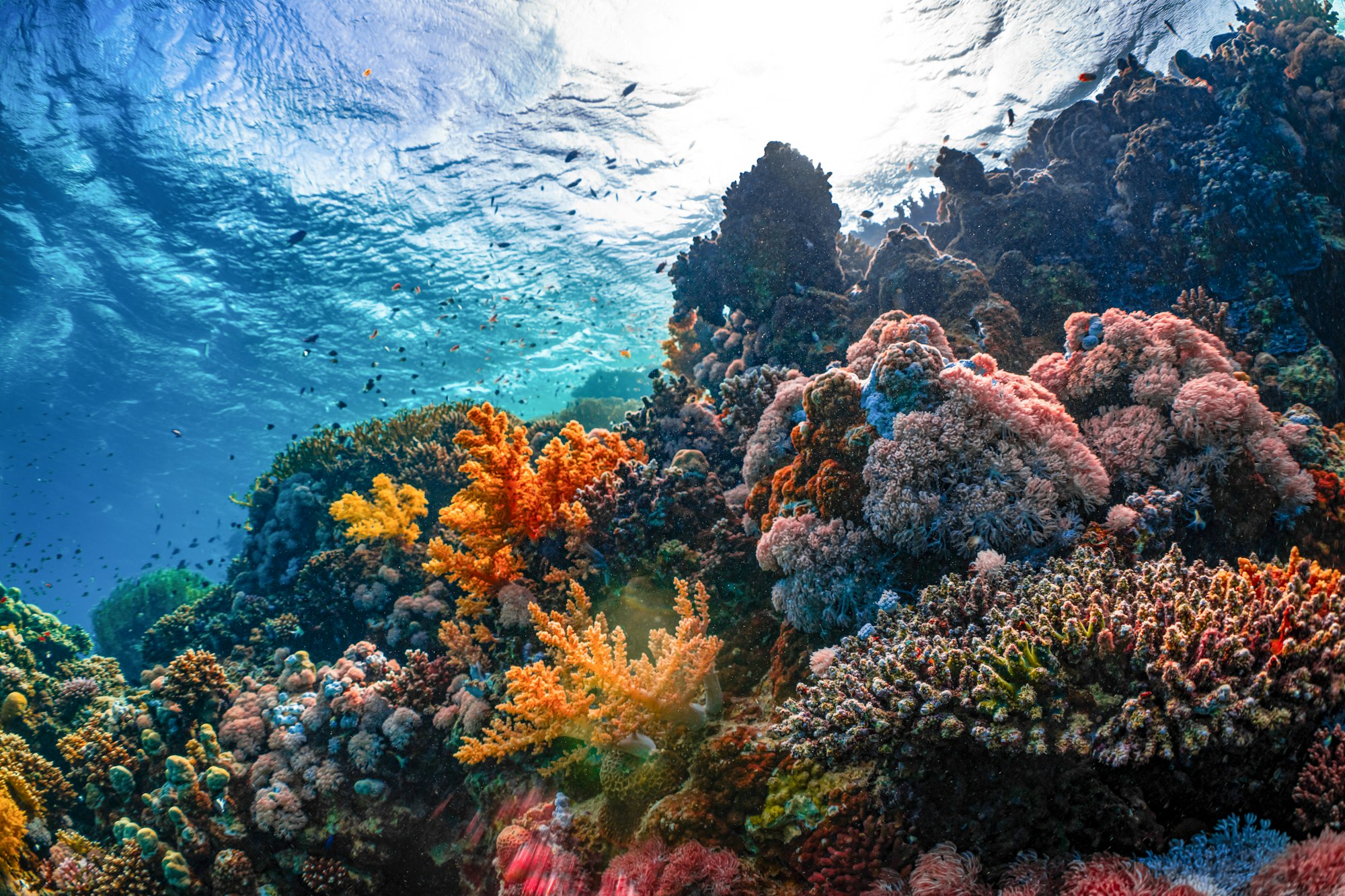
The C-53 has evolved into a genuine artificial reef ecosystem. Large Atlantic spotted groupers have taken up residence around the superstructure. Moray eels occupy the anchor chain housing and porthole cavities. Schools of glassy sweepers and silversides fill the hold spaces, creating shimmering curtains of fish that part around divers. Juvenile Caribbean reef sharks have been sighted around the wreck perimeter. Hawksbill turtles are occasional visitors resting on the hull. The encrusting sponges — orange, purple, yellow — make the wreck as colourful as a natural reef. Flamingo tongue cowries inhabit sea fans growing from the deck fittings.
Dive Profile
Descend to the sand beside the hull (typically on the port side where the mooring is attached) and orient yourself to the ship’s layout. The deck is at around 16 meters, the sand at 24 meters at the keel. A full exterior circuit of the hull takes approximately 20 minutes, leaving ample time for interior exploration of the main holds and accessible passageways. Penetration of the interior’s deeper sections is for certified wreck divers with torches only. Ascend along the hull to the deck level, then proceed to your safety stop in the water column.
Entry and Exit
Boat access from San Miguel; the C-53 is approximately 10–15 minutes from the main dive piers. A mooring buoy marks the wreck. Entry by giant stride; exit via boat ladder after SMB deployment at the safety stop.
Tips
- Carry a dive torch even for the exterior — the encrusted surfaces reveal far more detail with artificial light
- Certified wreck divers can penetrate the engine room and main hold; consult with your operator about current guidelines
- The C-53 is excellent for a second dive following a shallower reef site
- Look inside every porthole and opening for resident moray eels and crustaceans
- Early morning light entering through the open forward hatch creates beautiful interior shots
Safety
Wreck penetration without proper training carries serious risk; the interior of the C-53 is accessible but proper wreck diving protocols must be followed. Maintain neutral buoyancy throughout to avoid disturbing the silt that has settled on interior surfaces, which can rapidly reduce visibility to near-zero. Do not exceed your certification level for penetration. Carry a torch whenever entering any enclosed space. Fire coral has established itself on portions of the hull.
Photography
The C-53 rewards both wide-angle and macro approaches. The full-hull exterior shot from the sand looking up at the silhouette is a classic Cozumel wreck image requiring a fisheye or ultra-wide lens. The glassy sweeper schools in the hold create extraordinary backlit images when light enters from exterior openings. For macro, the encrusted hull surfaces are rich with flamingo tongues, nudibranchs, and encrusting sponge patterns.
Sources: California Diver Magazine — C-53 WWII History, Triton Diving — C-53 2025 Guide, The Reefs of Cozumel — Shipwreck C-53, Reef Smart Guides — C53. Last updated 2026-05-23.
Sea-surface temperature and wave height from Open-Meteo Marine (ERA5 reanalysis, monthly averages).
763 verified species observations (302 species) logged within ~11 km of this site between 1885 and 2025, from the Ocean Biodiversity Information System.
- Pterois · lionfish
- Anguilla rostrata
- Canthigaster rostrata
- Priolepis hipoliti
- Gnatholepis thompsoni
- Equetus punctatus
- Liopropoma mowbrayi
- Kaupichthys hyoproroides
- Apogon lachneri
- Gramma linki
- Heteroconger longissimus
- Bathygobius soporator
Scientific survey records skew toward sampled taxa (molluscs, corals) and do not reflect what you are guaranteed to see on a dive.
Source: OBIS (obis.org), aggregated Darwin Core occurrence records.
Conditions change with the tide and the season. If you have dived this site, share what it was actually like — date, visibility, current, and what you saw. Real, recent reports from divers are exactly what this guide is built to collect.
Send a conditions report ›