Indihiang
8.6521°S 119.4961°E · wall
Indihiang is an advanced wall dive in the western section of Komodo National Park, a site where strong currents along a vertically sculpted reef face produce rich marine life and the challenging, dynamic diving that defines Komodo’s best wall experiences.
Overview
Located in western Komodo, Indihiang presents a wall that catches the main tidal flows running through the park’s central channels. The wall drops from a shallow reef crest to 25 meters before continuing more steeply beyond, with the most interesting terrain concentrated between 8 and 25 meters. The current here can be substantial, which qualifies the site as advanced — passive drift along the wall is the typical approach, requiring divers to stay close together and maintain good buoyancy in the flow. The wall face features a combination of hard coral terraces, sponge-crusted vertical sections, and creviced overhangs that create habitat diversity throughout the dive.
Site Information
- Location: Komodo National Park, East Nusa Tenggara, Indonesia (western park area)
- Entry Type: Boat dive
- Site Type: Wall dive
- Difficulty Level: Advanced
- Maximum Depth: 25 meters
- Typical Visibility: 15–25 meters
- Current: Strong; runs along and occasionally across the wall face
- Best Time: April to November
Marine Life
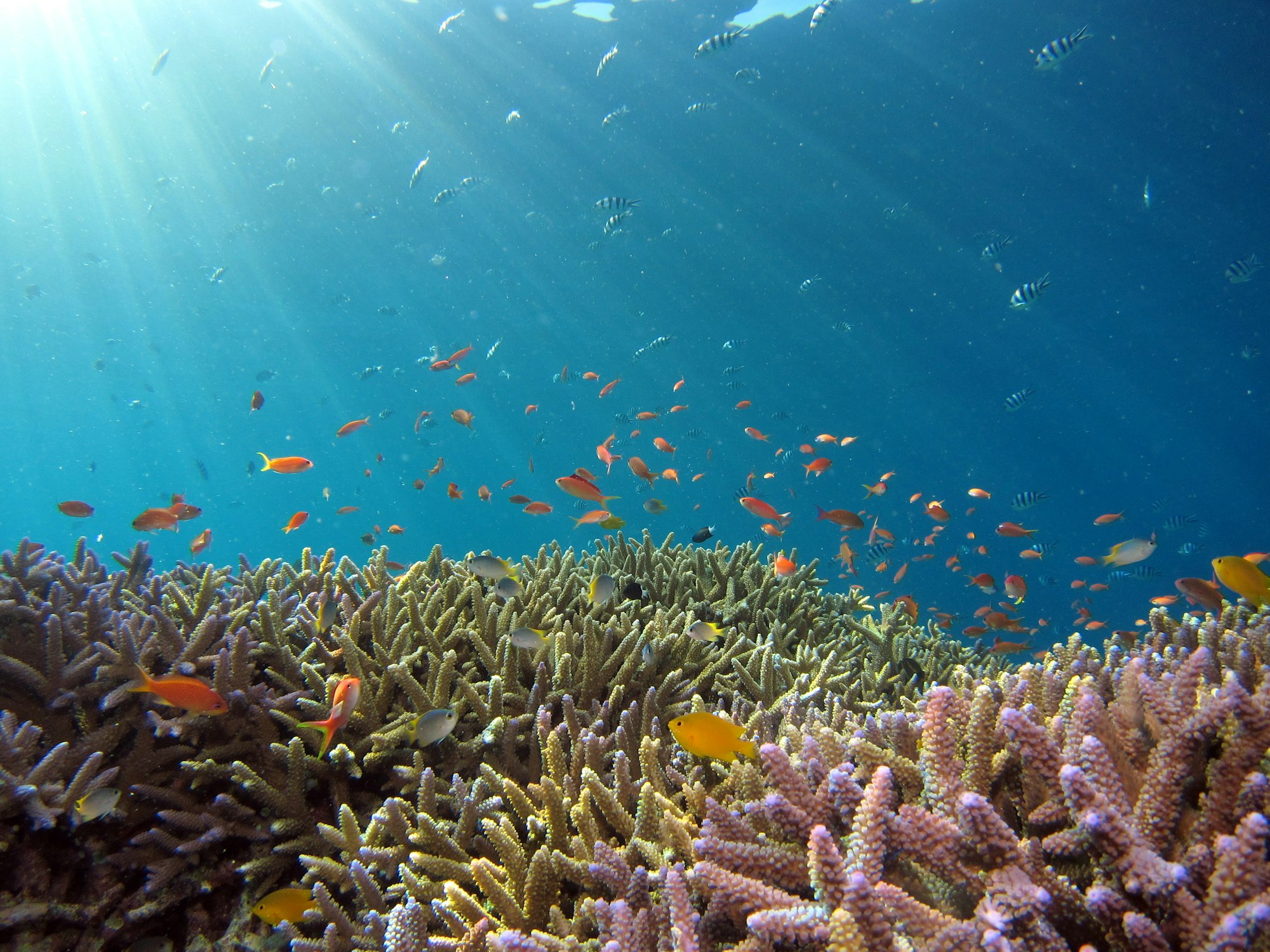
The current-swept wall supports excellent coral growth, with gorgonian fans on the deeper sections and lush soft coral on the upper wall. Reef sharks patrol the open water beyond the wall edge, visible from the face as silhouettes against blue water. Sweetlips and snapper cluster under ledges on the sheltered sections. Sea turtles rest on the broader ledges. The creviced sections of the wall are productive for moray eels, lionfish, and the occasional reef octopus changing colour against the substrate. Schools of fusiliers and chromis hover in the current above the reef crest.
Dive Profile
Enter upstream and descend to the wall face at 15–20 meters, letting the current carry the group along the face. Work between the deeper terrace and the upper crevice zone, pausing at overhangs and crevices to observe sheltering species. The drift along the wall leads naturally to shallower reef at the site’s end; ascend gradually and finish with a safety stop at 5 meters on the reef top or in blue water.
Entry and Exit
Boat access from Labuan Bajo liveaboard or day boat. Giant stride entry upstream of the wall. Blue-water safety stop with SMB deployment is standard given the current. The boat tracks the group’s position throughout.
Tips and Recommendations
- Position yourself on the wall face rather than hovering in the open water, where current control is more difficult
- Look carefully into crevices and under overhangs — the most interesting species shelter here away from the main current
- Wide-angle and macro setups both work well; bring the one that matches the morning’s conditions and objectives
- Carry a reef hook for managing the current during observation pauses
- A 3mm wetsuit minimum; currents can bring in cooler water unexpectedly
Safety Considerations
Strong currents along and across the wall face require active buoyancy management. A strong cross-current can push divers away from the wall and into open water unexpectedly. Stay within 2 meters of the wall face where possible. Monitor air consumption — current diving burns air faster than calm conditions. Always carry an SMB and deploy it at the start of your safety stop.
Photography
The wall face with its varied texture of corals, sponges, and crevices makes excellent wide-angle subjects when a diver is framed against it. Seek out the overhangs where sweetlips cluster for classic reef-school shots. Reef shark silhouettes visible off the wall provide dramatic open-water compositions. Macro shooters can find nudibranchs and flatworms on the encrusting organisms in sheltered crevice sections.
Sources: Divescover – Indihiang, South East Asia Dreams – Komodo Dive Sites Part 2, Divezone – Komodo. Last updated 2026-06-10.
Sea-surface temperature and wave height from Open-Meteo Marine (ERA5 reanalysis, monthly averages).
1010 verified species observations (341 species) logged within ~11 km of this site between 1970 and 2015, from the Ocean Biodiversity Information System.
- Pseudochromis
- Gymnothorax
- Fowleria vaiulae
- Ostorhinchus cyanosoma · English: Yellowstriped Cardinalfish (1)
- Pseudochromis perspicillatus
- Pygoplites diacanthus
- Parapercis cylindrica
- Fowleria
- Centropyge tibicen · English: Keyhole angelfish (1)
- Norfolkia brachylepis · Scaly-head Threefin
- Synodus dermatogenys · English: Clearfin Lizardfish (1)
- Halichoeres chloropterus
Scientific survey records skew toward sampled taxa (molluscs, corals) and do not reflect what you are guaranteed to see on a dive.
Source: OBIS (obis.org), aggregated Darwin Core occurrence records.
Conditions change with the tide and the season. If you have dived this site, share what it was actually like — date, visibility, current, and what you saw. Real, recent reports from divers are exactly what this guide is built to collect.
Send a conditions report ›