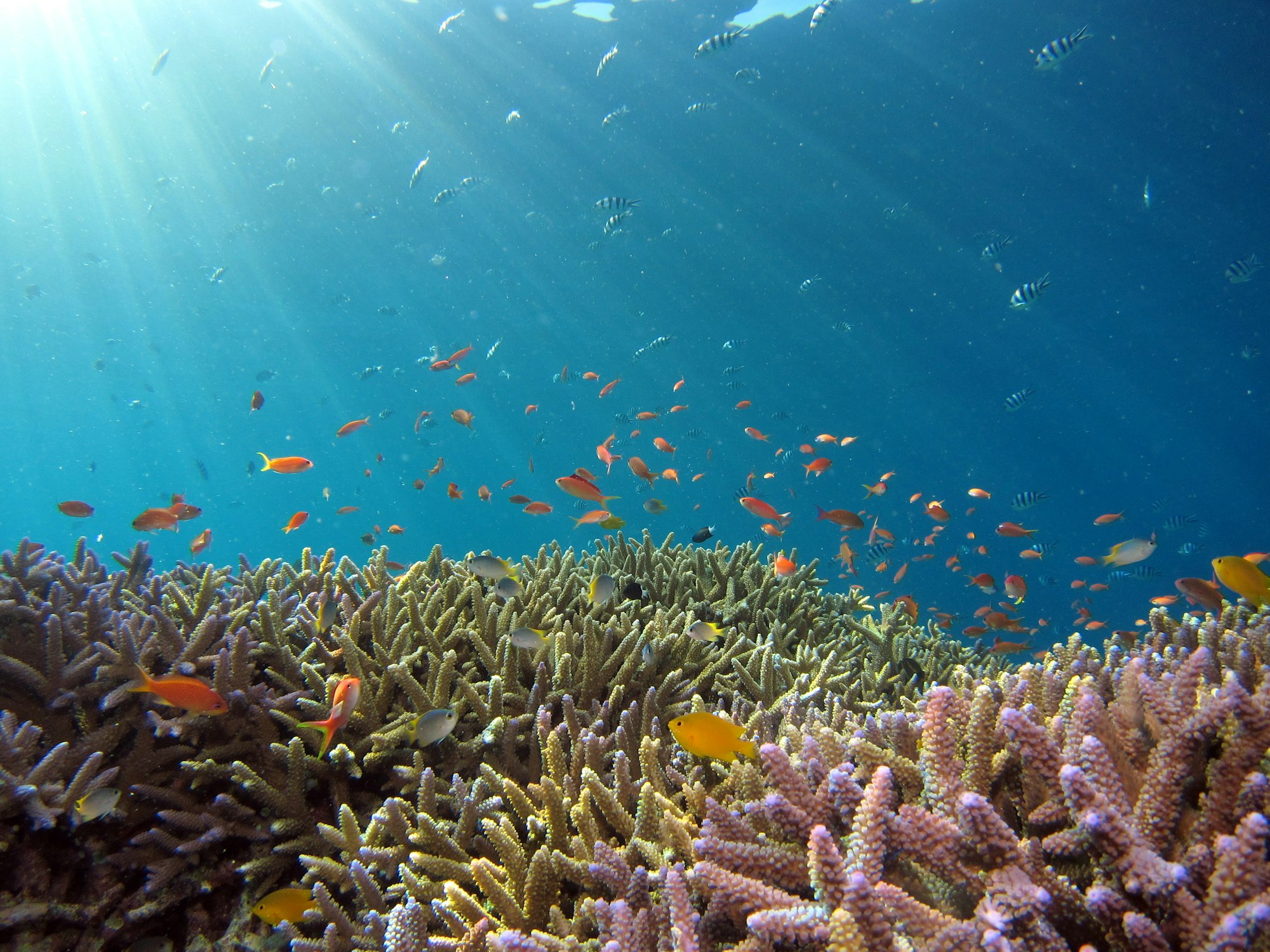
Manta Point dive site
8.5416°S 119.5997°E · drift
Manta Point is the southern Komodo manta experience — a purpose-built cleaning and feeding station off the coast of Komodo Island where reef mantas (Mobula alfredi) gather in reliable numbers, gliding within arm’s reach of divers kneeling quietly on sandy bottom.
Overview
Situated in the southern waters of Komodo National Park near Komodo Island, Manta Point sits in a shallow bay where upwellings of cold, plankton-rich water draw reef mantas to feed and be cleaned. The site is a gently sloping sandy bottom with scattered coral bommies, running from about 3 meters to 15 meters. Currents vary from none to moderate — the same conditions that concentrate mantas. This is one of the most accessible manta sites in Komodo, suitable for beginners due to the shallow depth and generally calm water, making it a highlight of many day trips from Labuan Bajo.
Site Information
- Location: Komodo National Park, East Nusa Tenggara, Indonesia (southern Komodo Island coast)
- Entry Type: Boat dive
- Site Type: Drift dive
- Difficulty Level: Beginner
- Maximum Depth: 15 meters
- Typical Visibility: 10–25 meters
- Current: Light to moderate; can occasionally be strong
- Best Time: February to November; peak manta season March to May and August to October
Marine Life
Reef mantas (Mobula alfredi) are the headline attraction — sightings of five or more individuals in a single dive are common during peak season, with the cleaning station bommies at 8–12 meters the focus of activity. Mantas queue to have parasites removed by cleaner wrasses; they approach slowly and circle repeatedly, allowing extended close observation. The sandy areas also host blue-spotted ribbontail rays and the occasional eagle ray. Reef fish are abundant around the coral bommies, and sea turtles rest on the bottom or graze on sea grass at the site’s shallower edges.
Dive Profile
Descend to the main cleaning station at 10–12 meters and settle in a kneeling position on sandy bottom, maintaining neutral buoyancy to avoid stirring sediment. The protocol is to stay low, move slowly, and let the mantas approach. Most guides will position divers in a line along the bottom facing the cleaning station. Extend your dive by slowly drifting toward the shallower areas to watch mantas feeding at the surface before ascending. The dive is well within no-decompression limits at this depth.
Entry and Exit
Access by day-trip boat from Labuan Bajo (approximately 2.5–3 hours) or liveaboard. Entry is by giant stride. The boat typically anchors nearby or drifts, and exit is via the ladder. Carry your SMB but deployment is rarely needed here given the sheltered conditions.
Tips and Recommendations
- Stay still and low — mantas will approach if divers do not chase them
- Do not touch mantas; oils from hands disrupt their protective mucus layer
- Early morning dives tend to have the best manta activity before day-trip crowds arrive
- Bring a wide-angle lens or go-pro for close-up encounters
- Snorkelling is also excellent here when mantas are feeding at the surface
- Peak season (March–May) can see aggregations of 10 or more mantas simultaneously
Safety Considerations
Currents can develop suddenly at Manta Point, particularly on the ebb tide. Always monitor conditions and follow the guide’s hand signals for any current-related changes. The site is generally calm, but occasional thermoclines can bring a surprise drop in water temperature to 22–24°C — bring a wetsuit of at least 3mm. Always carry an SMB.
Photography
Manta Point offers some of the best manta photography in the world. Shoot from below with the manta silhouetted against the light for dramatic results, or get level with the animal as it circles the cleaning station. Wide-angle setups dominate, but a 60mm macro on the cleaning station bommies captures the cleaner wrasses in action. Blue-spotted rays on the sand make attractive secondary subjects.
Sources: Dragon Dive Komodo – Manta Point, Manta Dive Komodo – Dive Sites, PADI – Manta Point Komodo. Last updated 2026-06-10.
Sea-surface temperature and wave height from Open-Meteo Marine (ERA5 reanalysis, monthly averages).
921 verified species observations (304 species) logged within ~11 km of this site between 1970 and 2023, from the Ocean Biodiversity Information System.
- Fowleria vaiulae · Dwarf Cardinalfish
- Pseudochromis
- Pseudochromis flavopunctatus
- Gymnothorax
- Nectamia fusca · Dusky Cardinal
- Ostorhinchus cyanosoma · English: Yellowstriped Cardinalfish (1)
- Pseudochromis perspicillatus
- Pygoplites diacanthus
- Parapercis cylindrica
- Scorpaenodes
- Fowleria
- Centropyge tibicen · English: Keyhole angelfish (1)
Scientific survey records skew toward sampled taxa (molluscs, corals) and do not reflect what you are guaranteed to see on a dive.
Source: OBIS (obis.org), aggregated Darwin Core occurrence records.
Conditions change with the tide and the season. If you have dived this site, share what it was actually like — date, visibility, current, and what you saw. Real, recent reports from divers are exactly what this guide is built to collect.
Send a conditions report ›