Tanjung Loh Sera dive site
8.7432°S 119.4721°E · pinnacle
Tanjung Loh Sera dive site is a pinnacle dive site in Komodo National Park, East Nusa Tenggara, Indonesia.
Overview
Tanjung Loh Sera (“Cape Loh Sera”) marks a prominent headland on the southwestern coast of Komodo Island, a section of the park characterised by exposed topography, strong oceanic currents, and the upwellings that give Komodo its legendary marine productivity. The site sits close to the Loh Sera bay dive site but presents a distinct character: where the Loh Sera wall follows the coastline, Tanjung Loh Sera is defined by the headland’s submerged pinnacle structure that juts into the current-swept channel.
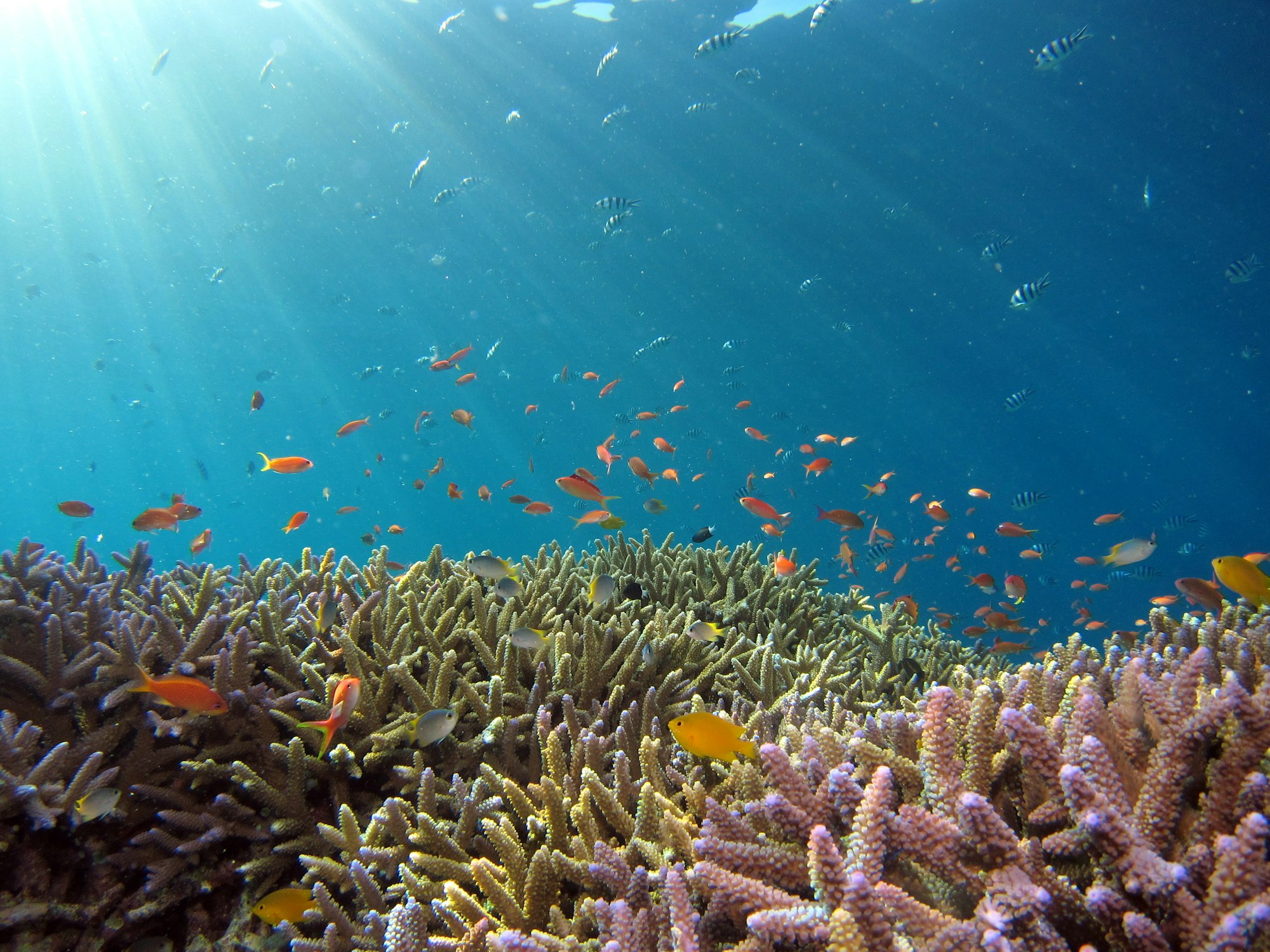
The pinnacles at Tanjung Loh Sera rise from depth to within 5–8 metres of the surface, their flanks heavily encrusted with soft corals, large sea fans, and encrusting sponges that filter nutrients from the powerful tidal surge. The pinnacle tops provide a dynamic environment where schooling fish mass in the current — fusiliers, anthias, and jacks form dense clouds that attract hunting trevally and occasional pelagic visitors. Reef sharks are a regular presence, circling the deeper pinnacle bases in the blue water below. The structure’s exposed position and the channelling effect of the headland mean current strength is unpredictable: conditions can be negligible on neap tides and genuinely demanding on spring tides.
The site’s remoteness on the southwestern coast of Komodo means it appears primarily on extended liveaboard itineraries covering the southern park zone. It is not accessible as a day trip from Labuan Bajo under normal circumstances. Divers who reach it are rewarded with undisturbed reef life and consistently impressive pelagic encounters, but must be prepared for challenging conditions including thermoclines and surge.
Key Species
- Schooling jacks and trevally hunting around the pinnacle tops
- Whitetip and grey reef sharks at the pinnacle bases
- Dense soft coral and gorgonian coverage on pinnacle flanks
- Fusilier and anthias clouds in the water column
- Occasional pelagic species (dogtooth tuna, rainbow runners) in the channel
Dive Profile
The dive begins with a descent onto the pinnacle crest (5–8 m), followed by a circumnavigation of the structure working down to 18–20 m on the deeper flanks. The current is used to circle the pinnacle rather than fight it; reading the flow and positioning against the structure is essential. Ascent is made along the pinnacle wall, using the top as a current refuge for the safety stop.
Conditions
| Attribute | Details |
|---|---|
| Depth range | 5–20+ m |
| Visibility | 10–20 m (affected by upwellings and cold water intrusions) |
| Current | Strong and variable — advanced divers only |
| Water temperature | 21–28°C (thermoclines common; cold water expected) |
| Best season | April–November; spring tides require expert current management |
| Entry/Exit | Boat — precise timing and positioning required |
Tips for Divers
Tanjung Loh Sera demands respect: the headland creates current convergences that can shift direction with little warning. Always dive with an experienced guide who knows the site’s tidal behaviour, and have a surface marker buoy ready from the start of the dive. A 5 mm wetsuit is strongly advised given reliable thermoclines. The combination of Tanjung Loh Sera and the adjacent Loh Sera wall in a single morning gives a complete picture of this remote southwestern zone’s diving character.
Sources: Asia Dive Site – Tanjung Loh Sera, Divescover – Tanjung Loh Sera, Komodo Island Tour – Tanjung Loh Sera. Last updated 2026-06-10.
Sea-surface temperature and wave height from Open-Meteo Marine (ERA5 reanalysis, monthly averages).
25 verified species observations (19 species) logged within ~11 km of this site between 1995 and 2017, from the Ocean Biodiversity Information System.
- Helcogramma randalli
- Pomacentrus komodoensis
- Pseudochromis
- Apogon
- Chelonia mydas · Green turtle
- Norfolkia brachylepis · Scaly-head Threefin
- Neosynchiropus ocellatus · Marble Dragonet
- Helcogramma striata · Neon Threefin
- Ceratobregma helenae · Helen's Triplefin
- Trimma macrophthalmum · Flame Goby
- Enneapterygius hemimelas · Half-black Triplefin
- Cymbacephalus
Scientific survey records skew toward sampled taxa (molluscs, corals) and do not reflect what you are guaranteed to see on a dive.
Source: OBIS (obis.org), aggregated Darwin Core occurrence records.
Conditions change with the tide and the season. If you have dived this site, share what it was actually like — date, visibility, current, and what you saw. Real, recent reports from divers are exactly what this guide is built to collect.
Send a conditions report ›