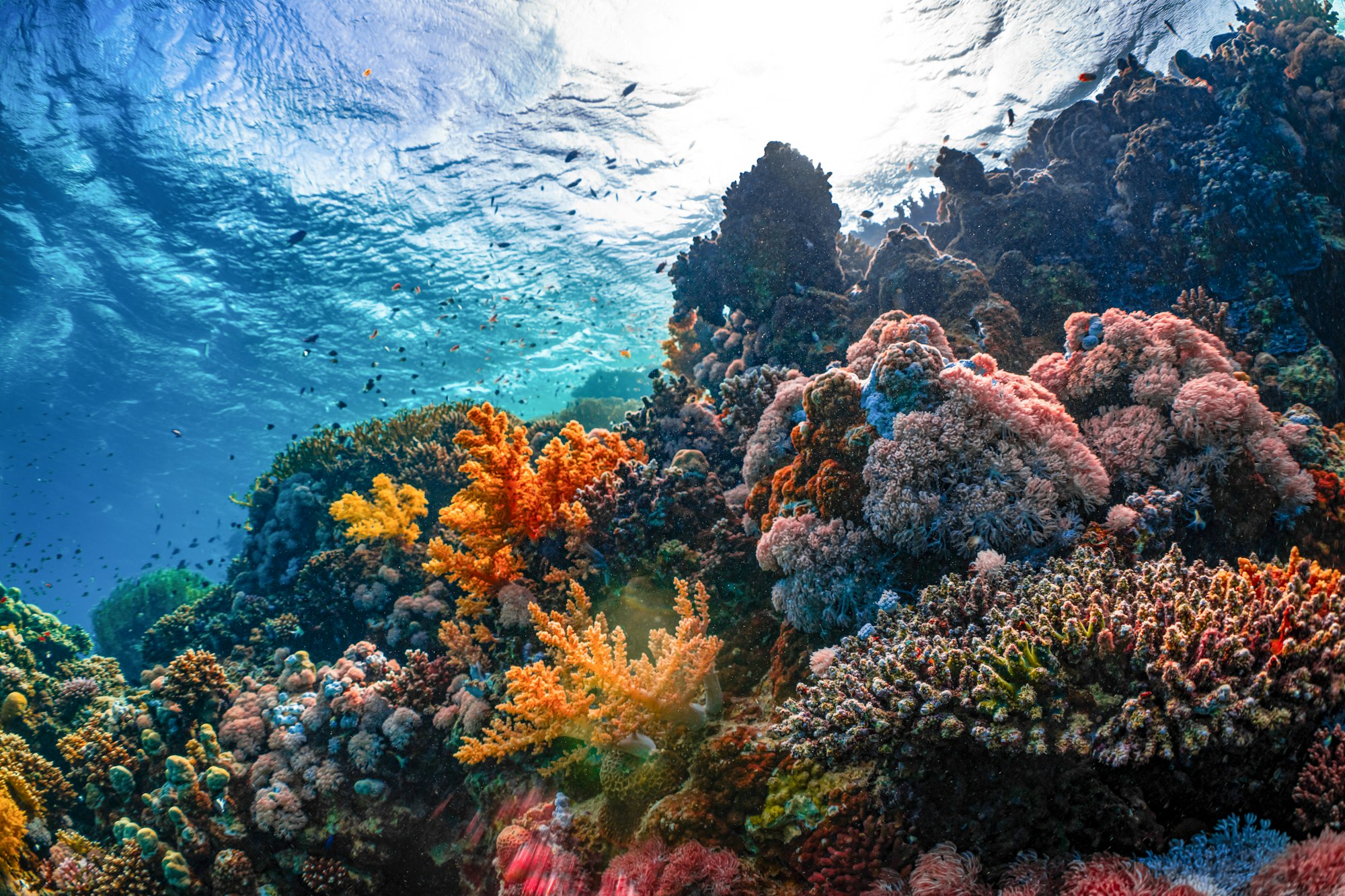
Boamas Kandu
3.6791°N 73.3996°E · drift
Overview
Boamas Kandu is a channel dive — a kandu — cutting through the outer rim of South Malé Atoll. Kandus are the defining dive experience of the Maldives: channels that funnel tidal water between the open ocean and the atoll interior, creating powerful currents and concentrating marine life in spectacular numbers. Boamas Kandu has well-developed channel walls with ledges, overhangs, and coral formations that serve as congregation points for sharks and pelagic species.
Diving
The dive is a drift through the channel on the incoming tide, when ocean water floods into the atoll carrying nutrients and baitfish. Divers enter from the ocean side and follow the current into the atoll, keeping close to the channel walls to use eddies and shelter from the strongest flow. Grey reef sharks patrol the channel corners in groups, and eagle rays glide effortlessly through the current above the reef.
The channel walls are decorated with sea fans, barrel sponges, and feather stars. Napoleon wrasse move unhurriedly through the current, and schools of snapper and fusilier stream past in the midwater. Hammerhead sharks have been observed in the deeper channel sections during cooler months.
Practical Notes
Kandu dives require intermediate-level drift experience. Strong currents are possible; dive with a guide who knows the tidal timing. Best dived on incoming tide. Visibility typically 20–30 m in channel conditions. Boat pickup at the atoll-side exit.
Sea-surface temperature and wave height from Open-Meteo Marine (ERA5 reanalysis, monthly averages).
14 verified species observations (13 species) logged within ~11 km of this site between 1991 and 2023, from the Ocean Biodiversity Information System.
- Diala albugo
- Zafra
- Phyllidia marindica
- Philinopsis speciosa
- Aplysia
- Parashiela
- Cerithium zebrum
- Elysia mercieri
- Caecum
- Lucidestea
- Clibanarius boschmai
- Calcinus pulcher
Scientific survey records skew toward sampled taxa (molluscs, corals) and do not reflect what you are guaranteed to see on a dive.
Source: OBIS (obis.org), aggregated Darwin Core occurrence records.
Conditions change with the tide and the season. If you have dived this site, share what it was actually like — date, visibility, current, and what you saw. Real, recent reports from divers are exactly what this guide is built to collect.
Send a conditions report ›