Black Coral Faru
4.0149°N 73.3640°E · reef
Overview
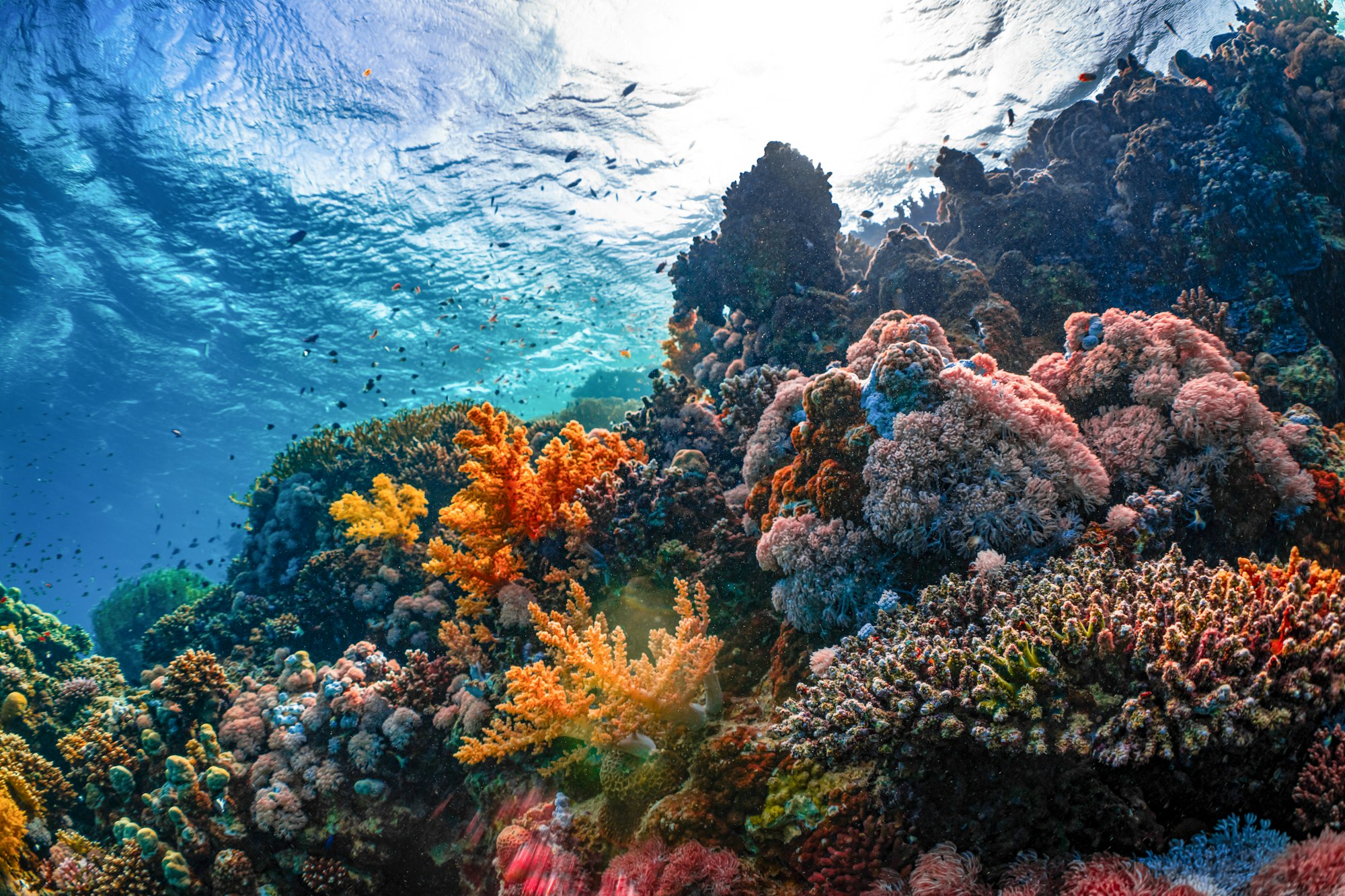
Black Coral Faru takes its name from the black coral colonies — Antipatharia — that grow from the reef walls and overhangs at depth. Black corals are protected in the Maldives, and this site serves as a reminder of the country’s conservation significance. The faru presents a well-structured outer reef with sloping walls, sandy channels, and a shallow reef top alive with light and colour.
Diving
Diving begins at the reef’s outer corner, where the transition from atoll flat to outer reef is marked by a change in current pattern and coral type. The mid-depth zone (12–20 m) is where the black coral colonies are most visible, branching from overhangs and crevices in the reef wall. Hawksbill turtles frequently graze on the sponges and soft corals in this zone.
Shallower, the reef crest is densely colonised by hard corals and visited by clouds of reef fish. The sandy patches below 20 m host whitetip reef sharks and blue-spotted stingrays resting between the coral formations.
Practical Notes
A straightforward reef dive suitable for intermediate divers. Black coral colonies should be observed without contact — touching or disturbing these protected species is illegal. Visibility typically 15–25 m. Boat access from South Malé Atoll resorts.
Sea-surface temperature and wave height from Open-Meteo Marine (ERA5 reanalysis, monthly averages).
337 verified species observations (186 species) logged within ~11 km of this site between 1984 and 2023, from the Ocean Biodiversity Information System.
- Cheilodipterus quinquelineatus
- Gnatholepis
- Styelidae
- Trimma emeryi
- Trimma flammeum
- Trimma striatum
- Eviota nebulosa
- Trimma naudei
- Ascidiacea
- Gerres oblongus
- Paragobiodon
- Sargocentron diadema
Scientific survey records skew toward sampled taxa (molluscs, corals) and do not reflect what you are guaranteed to see on a dive.
Source: OBIS (obis.org), aggregated Darwin Core occurrence records.
Conditions change with the tide and the season. If you have dived this site, share what it was actually like — date, visibility, current, and what you saw. Real, recent reports from divers are exactly what this guide is built to collect.
Send a conditions report ›