Adam Faru
3.8638°N 73.3678°E · reef
Overview
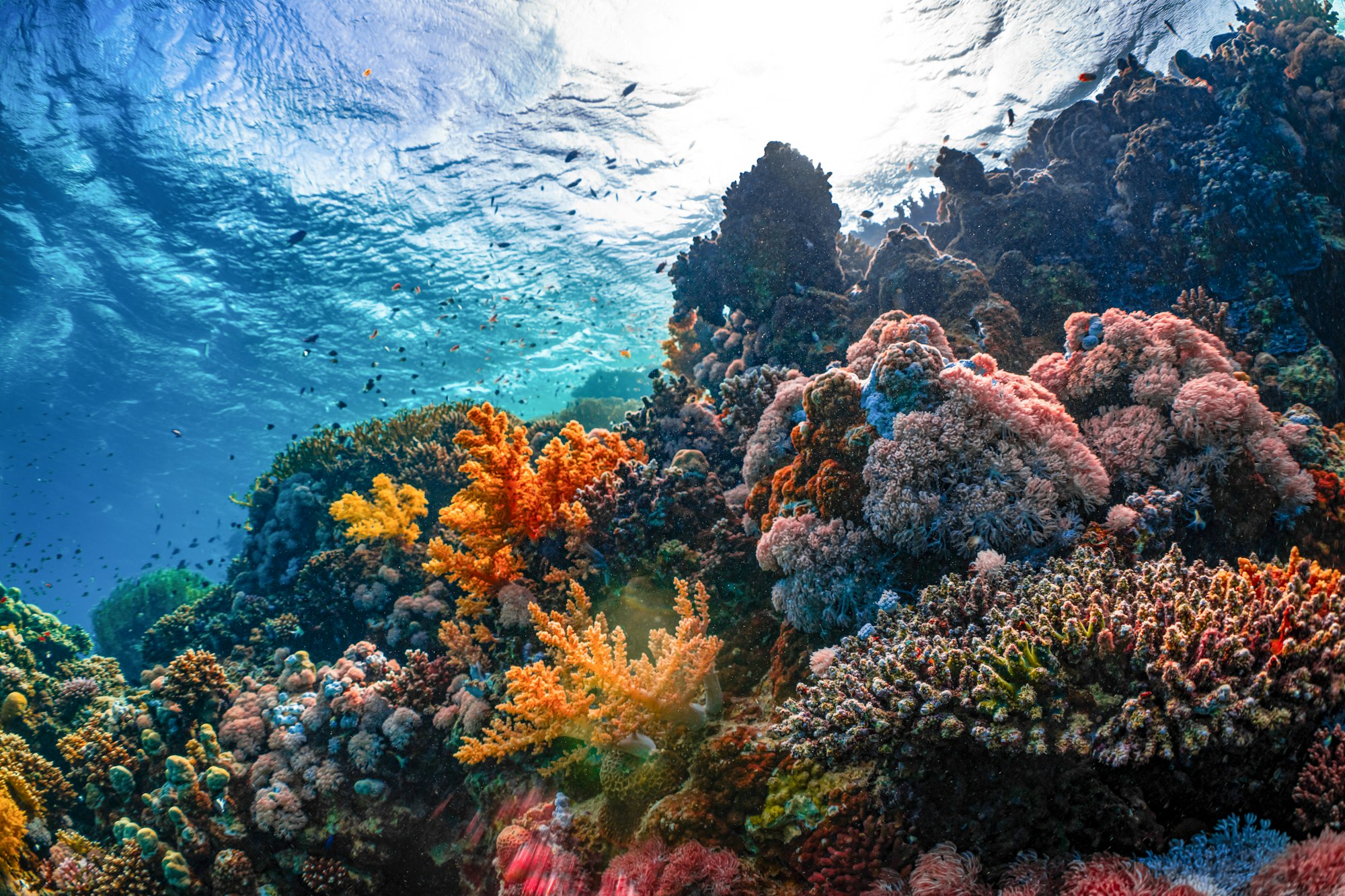
Adam Faru is a faru — a circular or elongated reef formation — situated in South Ari Atoll. The reef rises from the sandy atoll floor and features an outer wall draped in hard and soft coral growth, with a shallower top where sunlight filters through to illuminate vibrant table corals and brain corals. The name “faru” reflects the traditional Maldivian classification for these reef structures, which form the backbone of the atoll’s ecosystem.
Diving
Dives typically begin on the outer edge of the faru, where the reef wall drops away to sand at around 20–25 m. Grey reef sharks and whitetip reef sharks are frequently spotted patrolling the base, while Napoleon wrasse move through the midwater. The reef top is an ideal second-stage area, rich with butterflyfish, moorish idols, and parrotfish grazing on encrusting corals. Turtle sightings are common throughout the dive.
Currents are generally mild but can pick up depending on tide and season. During incoming current, the reef corner becomes a productive spot to observe fusiliers and pyramid butterflyfish schooling in the water column.
Practical Notes
Best dived from a day boat operating out of South Ari Atoll resorts. Visibility is typically 15–25 m, with conditions improving during the dry northeast monsoon season (November–April). Suitable for intermediate divers comfortable with open-water reef dives.
Sea-surface temperature and wave height from Open-Meteo Marine (ERA5 reanalysis, monthly averages).
37 verified species observations (22 species) logged within ~11 km of this site between 1984 and 1987, from the Ocean Biodiversity Information System.
- Cyphastrea microphthalma
- Favites pentagona
- Coscinaraea monile
- Galaxea astreata
- Actinodendron arboreum
- Goniastrea pectinata
- Leptodius sanguineus
- Leptodius gracilis
- Leptodius nudipes
- Xanthias lamarckii
- Ocypode ceratophthalmus
- Ocypode cordimana
Scientific survey records skew toward sampled taxa (molluscs, corals) and do not reflect what you are guaranteed to see on a dive.
Source: OBIS (obis.org), aggregated Darwin Core occurrence records.
Conditions change with the tide and the season. If you have dived this site, share what it was actually like — date, visibility, current, and what you saw. Real, recent reports from divers are exactly what this guide is built to collect.
Send a conditions report ›