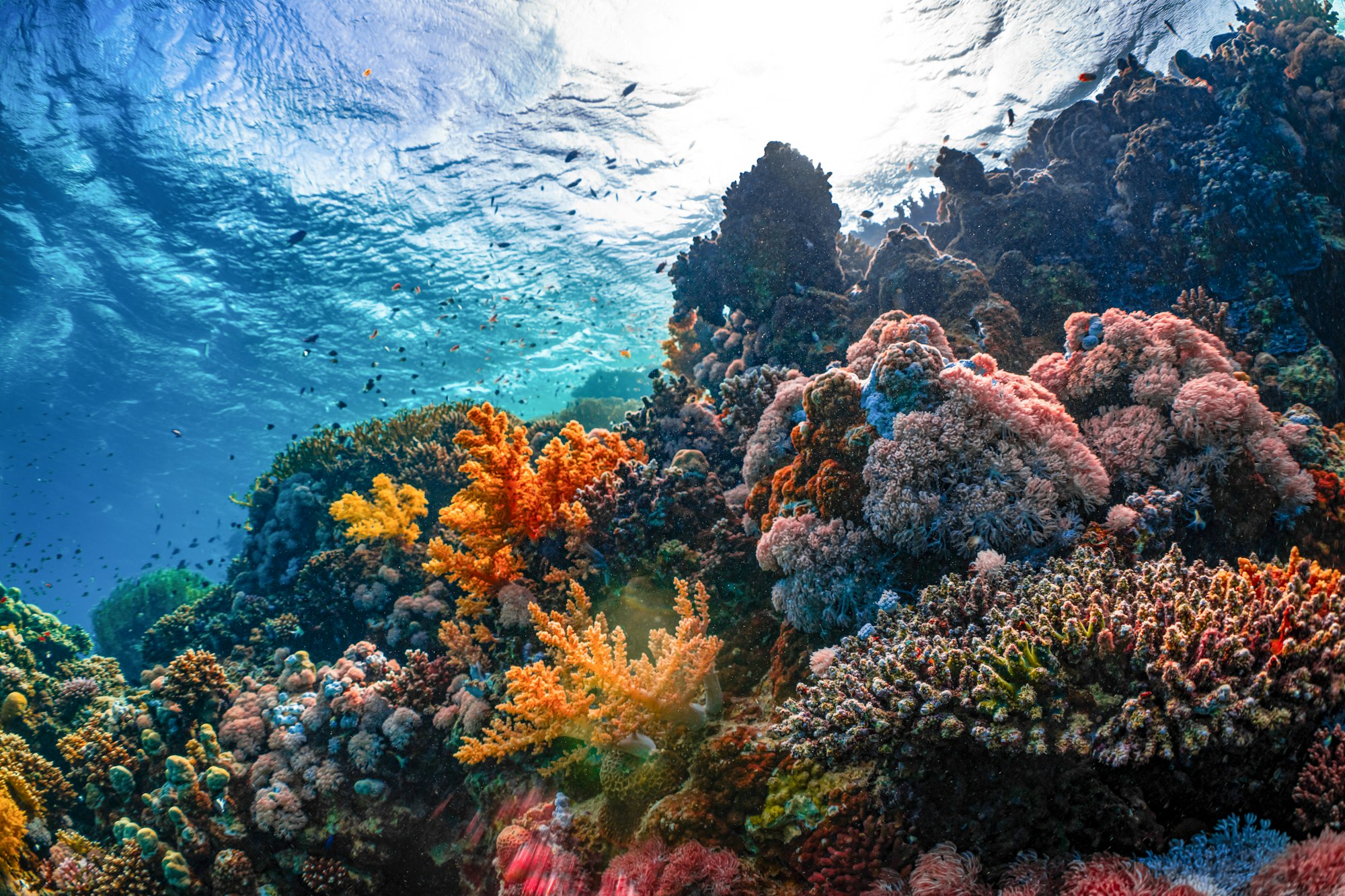
Gangehi North Kandu - manta cleaning station
4.2815°N 72.7812°E · channel
Gangehi North Kandu is a fast drift channel on the northern rim of North Ari Atoll and a scientifically documented reef-manta cleaning station — surveys logged mantas on every visit. Reef sharks patrol the flow while mantas queue over the shallow reef to be cleaned, best on the northeast monsoon, roughly December to April.
Overview
Gangehi North Kandu sits at the northern tip of North Ari Atoll, where the long Gangehi channel cuts through the atoll rim and opens to the open ocean. It’s best known for two things: strong, fast water — and reef mantas. The channel and its lagoon (Gangehi Falhu) have been recognised as an Important Shark and Ray Area for reef manta rays, one of the most regular manta feeding and cleaning spots documented in North Ari. On a survey series here (2014–2022), mantas were recorded on every single trip, with cleaning activity of roughly 5–14 animals each time. That kind of consistency is rare, and it’s what makes this channel special.
The dive
This is a drift dive through a current channel (kandu), done only when the current is flowing into the atoll so you drift in toward the cleaning station rather than out into the blue. Divers drop along the reef, hook or hang in the flow, and let the mantas come to them over the shallower reef and lagoon edge (the cleaning station sits shallow, around 10 m, while the channel drops to roughly 25–30 m and the outer wall falls away into deep water). The pelagic action — sharks and rays in the current — happens deeper in the flow. It is a genuinely current-heavy site, so it rewards good buoyancy, a reef hook and an SMB for the ascent.
Marine life
Reef mantas are the headline: they gather here to feed when tides and circulation concentrate plankton, and they queue over the reef to be cleaned by wrasse. The lagoon is also a documented manta nursery, with young-of-the-year animals recorded — a reason to treat the whole area gently. Beyond mantas, Gangehi Kandu has a strong reputation for sharks: grey reef and whitetip reef sharks patrol the channel, with the occasional leopard shark on the sand. Eagle rays, tuna and trevally ride the current, Napoleon (humphead) wrasse and groupers work the reef, and turtles, morays, triggerfish and glassfish fill out the scene among sea fans and soft corals. Whale sharks are an Ari Atoll animal overall but are far more reliable down in South Ari — don’t come here expecting them.
Conditions & when to go
Two honest cautions. First, this is an advanced site: currents can run hard (reported up to around 4 knots), they can be unpredictable, and the channel should only be dived on the incoming tide — it’s not a beginner’s drift. Second, mantas are seasonal, not guaranteed. Reef mantas across the Maldives follow the monsoon, shifting to the western sides of the atolls on the northeast monsoon; at Gangehi, on the atoll’s northwest, feeding aggregations are strongest and most abundant on the northeast monsoon — the dry season, roughly December to April, which is also when the sea here is calmest and most predictable. (This runs opposite to Baa Atoll’s May–November manta season.) Visibility is commonly around 25–30 m and water sits near 26–29 °C year-round.
Getting there
Gangehi Kandu lies off Gangehi in the far north of Ari Atoll, reached by boat from the Gangehi-area resort dive centre or, more often, as a stop on North Ari and central-atoll liveaboard routes. Because it’s a protected, scientifically important manta area — a feeding site and a nursery — treat it accordingly: stay low, never chase or touch the mantas, let them approach and pass, and keep your fins and bubbles off the cleaning station so the cleaning can carry on.
Sea-surface temperature and wave height from Open-Meteo Marine (ERA5 reanalysis, monthly averages).
10 verified species observations (6 species) logged within ~11 km of this site between 1992 and 2018, from the Ocean Biodiversity Information System.
- Dasyscopelus brachygnathos
- Myctophum lychnobium
- Carcharhinus
- Philinopsis speciosa
- Thalassia hemprichii
- Cymodocea rotundata
Scientific survey records skew toward sampled taxa (molluscs, corals) and do not reflect what you are guaranteed to see on a dive.
Source: OBIS (obis.org), aggregated Darwin Core occurrence records.
Conditions change with the tide and the season. If you have dived this site, share what it was actually like — date, visibility, current, and what you saw. Real, recent reports from divers are exactly what this guide is built to collect.
Send a conditions report ›