Jack Faru
3.8942°N 73.3558°E · reef
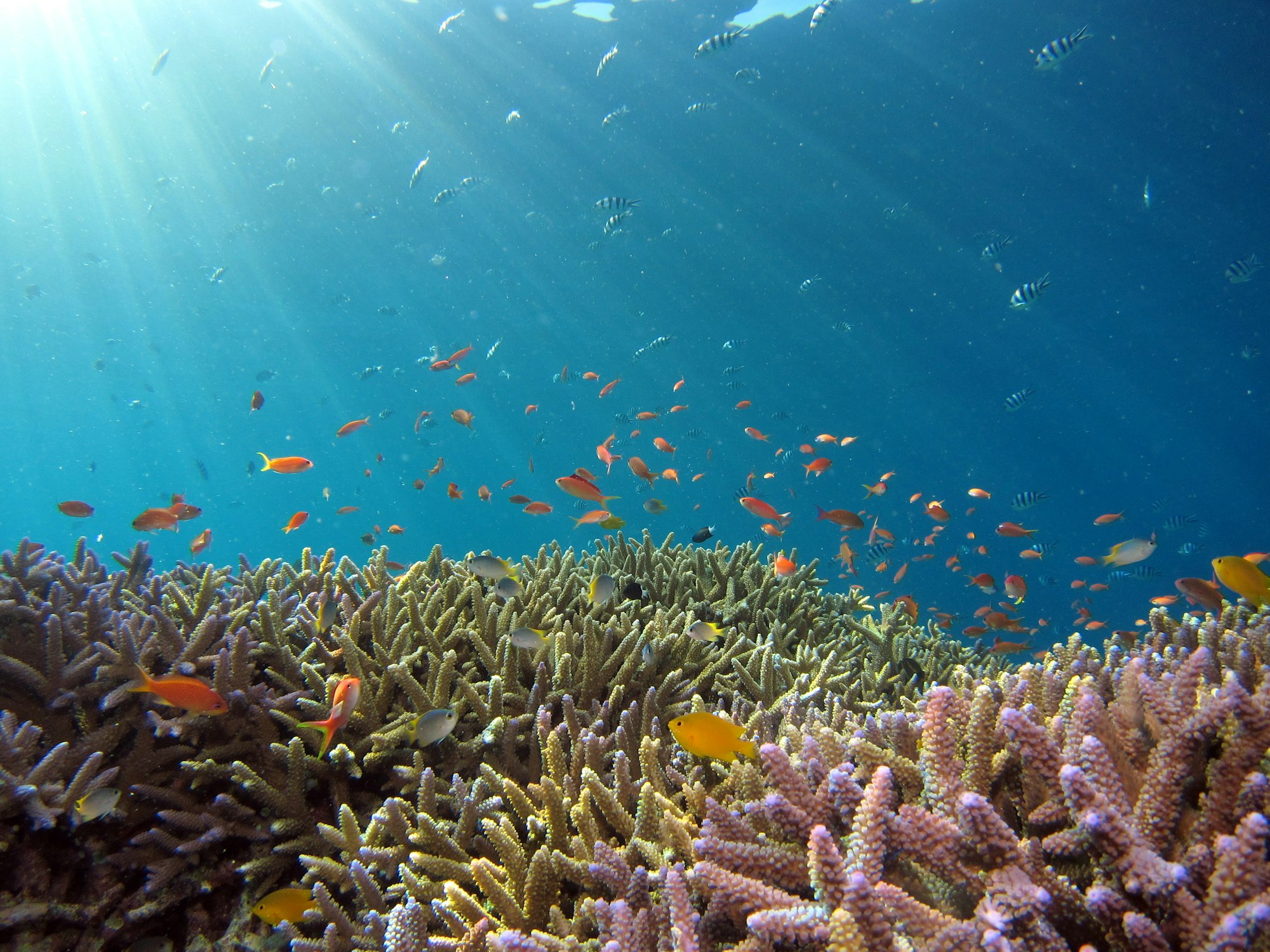
Jack Faru is a reef formation in South Male Atoll — the name “Jack” referencing the jack fish (trevally) that school conspicuously here, and “faru” (Dhivehi for reef) describing the elongated reef structure they inhabit.
Overview
Named after the big-eye and giant trevally (locally called “jack”) that congregate in impressive schools, Jack Faru is a reef dive where the fish life is the main attraction. The reef runs as a gentle wall and slope from 5 metres to around 25 metres, with a particularly productive upper crest where schools of hundreds of bigeye trevally often hover in the current. Deeper sections of the reef feature overhangs sheltering soldierfish and squirrelfish, while grouper and Napoleon wrasse claim territory around the larger coral heads at mid-depth. Hawksbill turtles are regular visitors, and whitetip reef sharks can be found resting on the sandy patches at the reef base. The faru (reef flat) in the shallows offers a natural safe harbour for the safety stop, with abundant damselfish and anthias in the coral gardens. Visibility ranges from 15 to 25 metres. Water temperature is 27–29°C.
Site Information
- Location: Maldives, Asia
- Entry Type: Boat dive
- Depth: Up to 25m
- Difficulty: Intermediate
- Site Type: Reef
Marine Life
Bigeye trevally and giant trevally (in schools), Napoleon wrasse, grouper, hawksbill turtles, whitetip reef sharks, soldierfish, moray eels, and anthias.
Diving Conditions
| Condition | Details |
|---|---|
| Visibility | 15–25m |
| Current | Light to moderate |
| Water Temp | 27–29°C |
| Best Season | Year-round |
Tips for Divers
Position yourself near the upper reef crest in moderate current for the best trevally aggregations — the fish schools are thickest when the current runs. Wide-angle photography works well here when the trevally schools are in the water column above the reef.
Sea-surface temperature and wave height from Open-Meteo Marine (ERA5 reanalysis, monthly averages).
17 verified species observations (17 species) logged within ~11 km of this site between 1984 and 2010, from the Ocean Biodiversity Information System.
- Phyllidia alyta
- Pteraeolidia ianthina
- Phyllidia ocellata
- Cyphastrea microphthalma
- Favites pentagona
- Coscinaraea monile
- Galaxea astreata
- Actinodendron arboreum
- Goniastrea pectinata
- Ocypode ceratophthalmus
- Leptodius gracilis
- Etisus bifrontalis
Scientific survey records skew toward sampled taxa (molluscs, corals) and do not reflect what you are guaranteed to see on a dive.
Source: OBIS (obis.org), aggregated Darwin Core occurrence records.
Conditions change with the tide and the season. If you have dived this site, share what it was actually like — date, visibility, current, and what you saw. Real, recent reports from divers are exactly what this guide is built to collect.
Send a conditions report ›