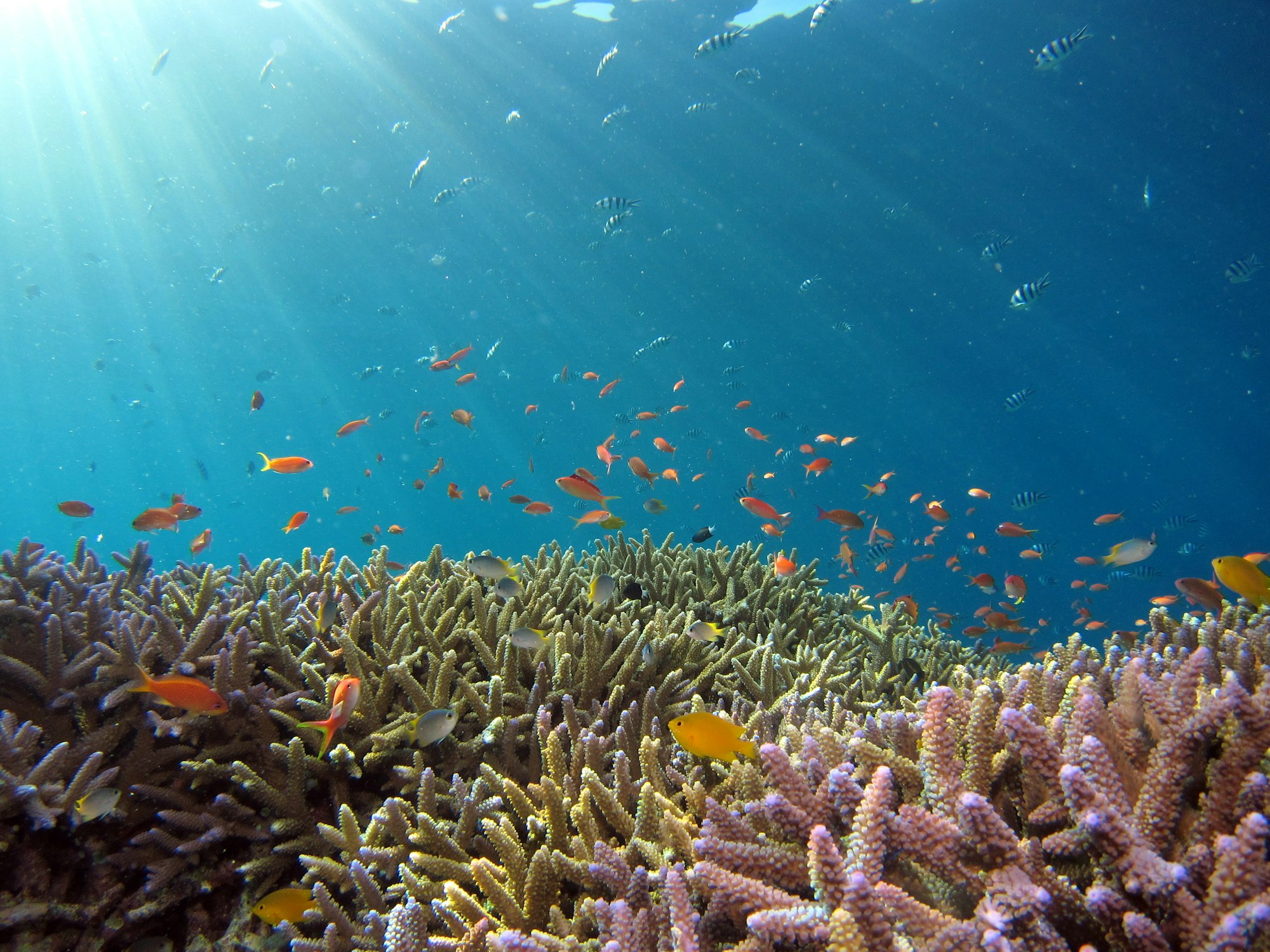
Arborek shark point
0.5672°S 130.5072°E · reef
Arborek Shark Point is a reef dive off the northern tip of Arborek Island in the Dampier Strait, renowned for reliable sightings of blacktip reef sharks and the remarkable epaulette shark — a walking shark found only in the shallow reef flats of eastern Indonesia and Papua New Guinea.
Overview
The waters around Arborek village are some of the most biologically productive in Raja Ampat, and the reef at the northern tip of the island concentrates shark activity in a reliably accessible site. Blacktip reef sharks (Carcharhinus melanopterus) patrol the reef edge in numbers, often in shallow water where their distinctive black-tipped dorsal fins are visible from the surface. The epaulette shark (Hemiscyllium ocellatum) — celebrated for its ability to walk on its pectoral fins across exposed reef flats at low tide — is resident here and a highlight of every visit. Water temperature averages 27–29°C with visibility of 10–20 meters.
Site Information
- Location: Raja Ampat, West Papua, Indonesia
- Entry Type: Boat dive
- Site Type: Reef
- Difficulty Level: Intermediate
- Maximum Depth: 25 meters
- Typical Visibility: 10–20 meters (33–65 feet)
- Current: Variable; can be moderate on tidal exchange
- Best Time: Year-round; epaulette sharks active at dusk and night
Marine Life
Blacktip reef sharks are the dominant species, circling the reef edge throughout the day in groups of 3–10 individuals. Epaulette sharks rest under coral overhangs and in sandy pockets — at dusk they become more active and easier to observe as they walk across the shallow reef flat. Juvenile sharks of both species are sometimes encountered in the very shallows. The reef also supports napoleon wrasse, large groupers, bumphead parrotfish, and aggregations of snapper and sweetlips in crevices along the reef slope.
Dive Profile
The reef structure slopes from the shallows at 2–3 meters down to 20–25 meters. Begin in the shallows to look for epaulette sharks under coral ledges, then work the reef edge at 10–15 meters where blacktips are most active. Check sandy pockets and overhangs throughout the dive — epaulettes are cryptic during daylight. A dusk or night dive dramatically increases epaulette shark activity and is highly recommended if the schedule allows.
Entry and Exit
Accessed by boat from Arborek village — this site is also reachable by local guides operating from the village homestays. Entry via giant stride or from a low platform. The village’s proximity makes repeat dives straightforward. Exit back to the boat or to the village jetty if shore access is arranged.
Tips and Recommendations
- Request a dusk dive for the best epaulette shark activity — they emerge from hiding as light fades
- Do not handle, chase, or restrict epaulette sharks — they are shy and any stress disrupts natural behavior
- Use a torch even on daytime dives to look under ledges where epaulettes rest
- Blacktip sharks are not dangerous but should not be provoked — maintain a respectful distance
- The village of Arborek has excellent local guides who know the exact resting spots
Safety Considerations
Blacktip reef sharks are harmless to divers who behave calmly. Do not feed or approach sharks directly. Currents can be moderate on tidal exchange — carry an SMB. The shallow reef flat is exposed at low tide and entry/exit timing matters to avoid walking on the reef.
Photography
Two distinct photographic subjects define this site. Blacktip sharks are best photographed with a medium wide-angle lens (17–35mm equivalent) in the upper 10 meters where ambient light is strong. Epaulette sharks require a macro or close-focus wide-angle approach with a torch for illumination of their cryptic resting spots. Night and dusk photography of walking epaulettes is among the most unusual wildlife photography available in Indonesia.
Sources: Papua Diving - Raja Ampat Dive Sites, Bluewater Dive Travel - Raja Ampat Diving, La Galigo Liveaboard - Top 10 Raja Ampat Dive Sites, Girls That Scuba - Scuba Diving Raja Ampat, PADI - Diving in Raja Ampat. Last updated 2026-04-04.
Sea-surface temperature and wave height from Open-Meteo Marine (ERA5 reanalysis, monthly averages).
63 verified species observations (45 species) logged within ~11 km of this site between 1999 and 2019, from the Ocean Biodiversity Information System.
- Mobula alfredi · Reef manta ray
- Hippocampus denise
- Hoplolatilus
- Diancistrus
- Atherinidae · Hardyheads
- Dermochelys coriacea · Leatherback sea turtle
- Ambassis · Glassies
- Periophthalmus argentilineatus · Barred Mudskipper
- Pomacentridae · Damselfishes
- Acentrogobius janthinopterus · Mangrove Goby
- Acreichthys tomentosus · Banded Leather-jacket
- Lepidochelys olivacea · Olive ridley
Scientific survey records skew toward sampled taxa (molluscs, corals) and do not reflect what you are guaranteed to see on a dive.
Source: OBIS (obis.org), aggregated Darwin Core occurrence records.
Conditions change with the tide and the season. If you have dived this site, share what it was actually like — date, visibility, current, and what you saw. Real, recent reports from divers are exactly what this guide is built to collect.
Send a conditions report ›