Manta Run
2.1461°N 118.3399°E · reef
Manta Run is a reef dive site on the northwest coast of Sangalaki Island in the Derawan Archipelago, East Kalimantan, Indonesia.
Overview
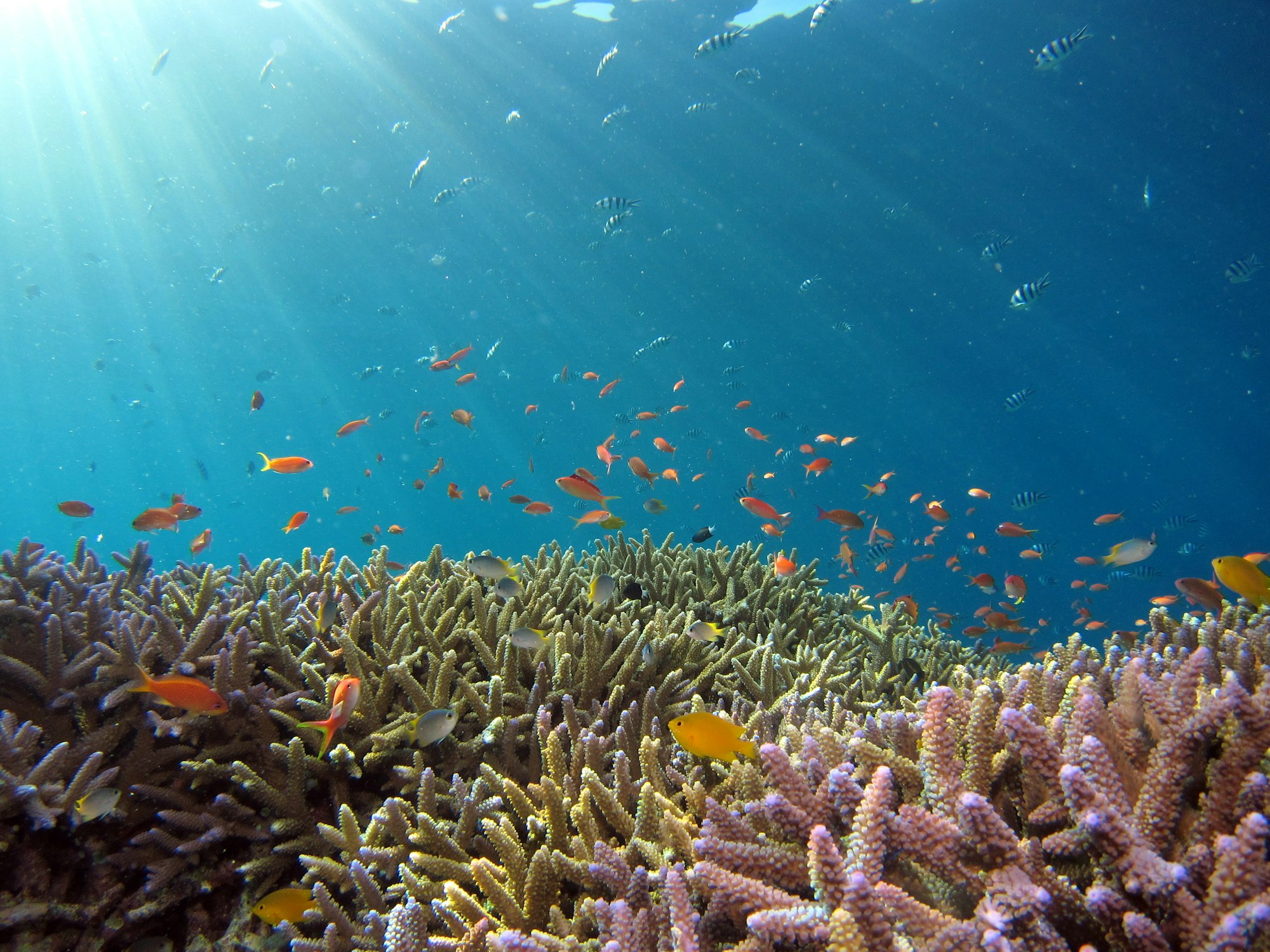
Manta Run forms one segment of Sangalaki’s celebrated “manta highway” — a series of connected reef sites along the island’s northern and eastern shores where reef manta rays (Manta alfredi) gather in extraordinary numbers to feed on plankton-rich currents. The site consists of rocky coral outcrops and bommies studded with gorgonian fans, soft corals, and barrel sponges, forming a sandy-bottomed channel that funnels prevailing currents and concentrates surface plankton. Mantas are regularly observed feeding in the shallow water above the reef, with their wingtips breaking the surface. Most diving here occurs at 5–15 metres. Scuba Junkie Sangalaki describes Manta Run as “intermediate to advanced” due to variable and sometimes strong currents that concentrate the plankton attracting mantas — dive timing is conditions-dependent, and the current that makes mantas gather can also make the dive technically demanding.
Marine Life
- Reef manta rays (Manta alfredi) — feeding and visiting cleaning stations
- Leopard sharks resting on sandy patches
- Garden eels emerging from sandy corridors
- Leaf fish, frogfish, and cardinalfish among bommies
- Feather stars and gorgonian sea fans on coral outcrops
- Schooling fusiliers and reef fish throughout
Dive Profile
Depths range from 5 to 15 metres across sandy channels and coral ridges. Currents are variable — manta activity peaks when gentle surface currents concentrate plankton, so dive timing depends on conditions observed by the boat crew. Visibility averages 15–25 metres. Bottom time is generous given the shallow depth.
Entry and Exit
Boat dive only, departing from Sangalaki or nearby resort jetties. A surface check by the dive guide determines current direction before descent. Manta sightings may also occur at the surface before the dive.
Tips
- Follow your guide’s instructions on positioning — settling low on the reef and remaining still dramatically increases manta dwell time at the site.
- Mantas are best observed at high tide when plankton concentrations are highest near the surface.
- Snorkellers can also encounter mantas here without descending.
- Avoid rising quickly through the water column — ascending slowly prevents startling feeding mantas.
Safety Considerations
Currents can shift unexpectedly. Maintain close contact with your dive group and surface on schedule. The shallow depth makes nitrogen management straightforward, but sun exposure during long surface intervals can be significant — bring sun protection.
Photography
Manta Run rewards wide-angle photography. Shooting upward with blue-water backlighting and mantas silhouetted overhead is the signature shot. A recirculating current can stir up fine particulate — early-morning dives typically offer the clearest water for photography.
Site Information
- Location: Sangalaki Island, Derawan Archipelago, East Kalimantan, Indonesia
- Entry Type: Boat dive
- Site Type: Reef
- Difficulty Level: Intermediate
- Maximum Depth: 15 meters
Additional Resources
- Last Updated: 2026-05-17
Sources: Dive The World – Sangalaki, Starfish.ch – Kalimantan Diving, Scuba Junkie Sangalaki – Top Dive Sites, Asia Dive Site – Sangalaki, Asia Diving Vacation – Sangalaki, Maratua.com – Sangalaki. Last updated 2026-06-27.
Sea-surface temperature and wave height from Open-Meteo Marine (ERA5 reanalysis, monthly averages).
268 verified species observations (69 species) logged within ~11 km of this site between 1994 and 2015, from the Ocean Biodiversity Information System.
- Mobula alfredi · Reef manta ray
- Eviota teresae
- Eviota melasma
- Thyca crystallina
- Tridacna crocea
- Tridacna maxima
- Jorunna funebris
- Chelidonura hirundinina
- Coryphellina exoptata
- Chelidonura varians
- Phyllodesmium kabiranum · アカクセニアウミウシ
- Doriprismatica stellata
Scientific survey records skew toward sampled taxa (molluscs, corals) and do not reflect what you are guaranteed to see on a dive.
Source: OBIS (obis.org), aggregated Darwin Core occurrence records.
Conditions change with the tide and the season. If you have dived this site, share what it was actually like — date, visibility, current, and what you saw. Real, recent reports from divers are exactly what this guide is built to collect.
Send a conditions report ›