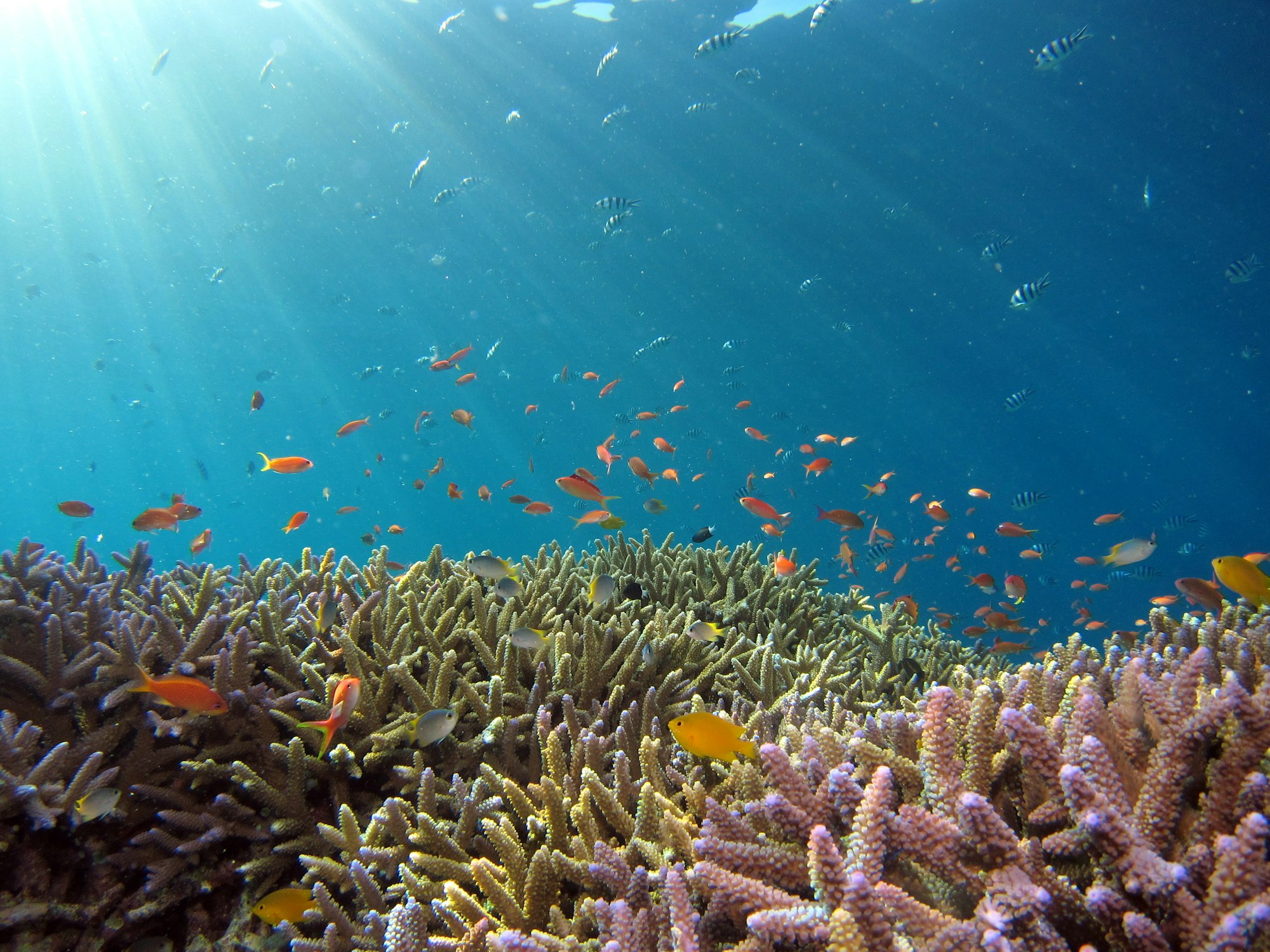
Turtle Traffic
2.1999°N 118.5929°E · reef
Turtle Traffic is a reef dive site near Maratua Island in the Derawan Archipelago, East Kalimantan, Indonesia, renowned for the exceptional density of green and hawksbill sea turtles on a single reef.
Overview
Turtle Traffic earns its name from the sheer volume of turtle encounters — PADI’s site description quips that “if you can count the turtles on a single dive then it is not a normal dive,” and one diver account on Undercurrent counted more than 40 turtles in a single dive. Green sea turtles (Chelonia mydas) are the most common species, found resting beneath large coral heads and table corals; hawksbill turtles (Eretmochelys imbricata) are also regularly spotted feeding on soft corals and sponges. Bluewater Dive Travel describes the site as featuring “sand channels and massive coral bommies” where turtles rest in crevices, particularly during low tide. The site is calm and shallow — maximum 15 metres — making it accessible to entry-level divers and snorkellers.
Marine Life
- Green sea turtles (Chelonia mydas) — resting under table corals and coral heads
- Hawksbill turtles (Eretmochelys imbricata) — feeding on soft corals and sponges
- Moray eels in crevices between bommies
- Mantis shrimp in sand channels
- Lobsters under coral overhangs
- Nudibranchs and flatworms on coral surfaces
- Bumphead parrotfish (periodic, passing aggregations)
Dive Profile
The site is shallow reef with coral bommies and sandy channels to a maximum of 15 metres. Most diving occurs between 5 and 12 metres where turtle density is highest. Currents are mild. Visibility is typically good. Bottom time is extended by the shallow depth. Low tide is recommended by local operators for maximum turtle sightings, when turtles shelter in crevices and under table corals.
Entry and Exit
Boat dive only. A short boat ride from Green Nirvana Maratua Resort or Maratua-based operators. Entry is at the reef edge with a slow descent along the bommies.
Tips
- Dive at low tide when turtles are resting under corals and crevices — they are easier to approach and less likely to move away.
- Move slowly and breathe quietly — turtles on this reef are accustomed to divers but will swim off if approached too rapidly.
- Look under large table corals first — green turtles frequently wedge themselves underneath in groups.
- Hawksbills tend to be found on the bommie slopes where they feed on sponges and soft corals.
Safety Considerations
This is a beginner-appropriate site with minimal current and shallow depth. Standard reef diving precautions apply; maintain buoyancy control to avoid accidental contact with corals or turtles. Turtles are protected under Indonesian law — do not touch, ride, or obstruct their path to the surface.
Photography
Turtle Traffic is one of the best turtle photography sites in Kalimantan. Shooting upward against blue-water backlighting captures turtles in silhouette above the bommies; shooting laterally at turtle level in clear water produces full-body portraits. A wide-angle lens at 16–20 mm works well. The presence of multiple turtles in frame simultaneously is common here, unlike most other turtle sites.
Site Information
- Location: Maratua Island vicinity, Derawan Archipelago, East Kalimantan, Indonesia
- Entry Type: Boat dive
- Site Type: Reef
- Difficulty Level: Beginner
- Maximum Depth: 15 meters
Additional Resources
- Last Updated: 2026-05-17
Sources: PADI – Turtle Traffic, Bluewater Dive Travel – Derawan Islands, Scuba Junkie Sangalaki – Best Kept Secret, Green Nirvana Resort – Fun Dives. Last updated 2026-06-27.
Sea-surface temperature and wave height from Open-Meteo Marine (ERA5 reanalysis, monthly averages).
500 verified species observations (251 species) logged within ~11 km of this site between 1929 and 2020, from the Ocean Biodiversity Information System.
- Stenella longirostris · Spinner dolphin
- Pycnochromis delta
- Abudefduf vaigiensis
- Styela
- Zanclus cornutus
- Chaetodon guttatissimus
- Amblyglyphidodon curacao
- Pseudobalistes fuscus
- Meiacanthus vittatus
- Hemiglyphidodon plagiometopon
- Chromis atripectoralis
- Bodianus mesothorax
Scientific survey records skew toward sampled taxa (molluscs, corals) and do not reflect what you are guaranteed to see on a dive.
Source: OBIS (obis.org), aggregated Darwin Core occurrence records.
Conditions change with the tide and the season. If you have dived this site, share what it was actually like — date, visibility, current, and what you saw. Real, recent reports from divers are exactly what this guide is built to collect.
Send a conditions report ›