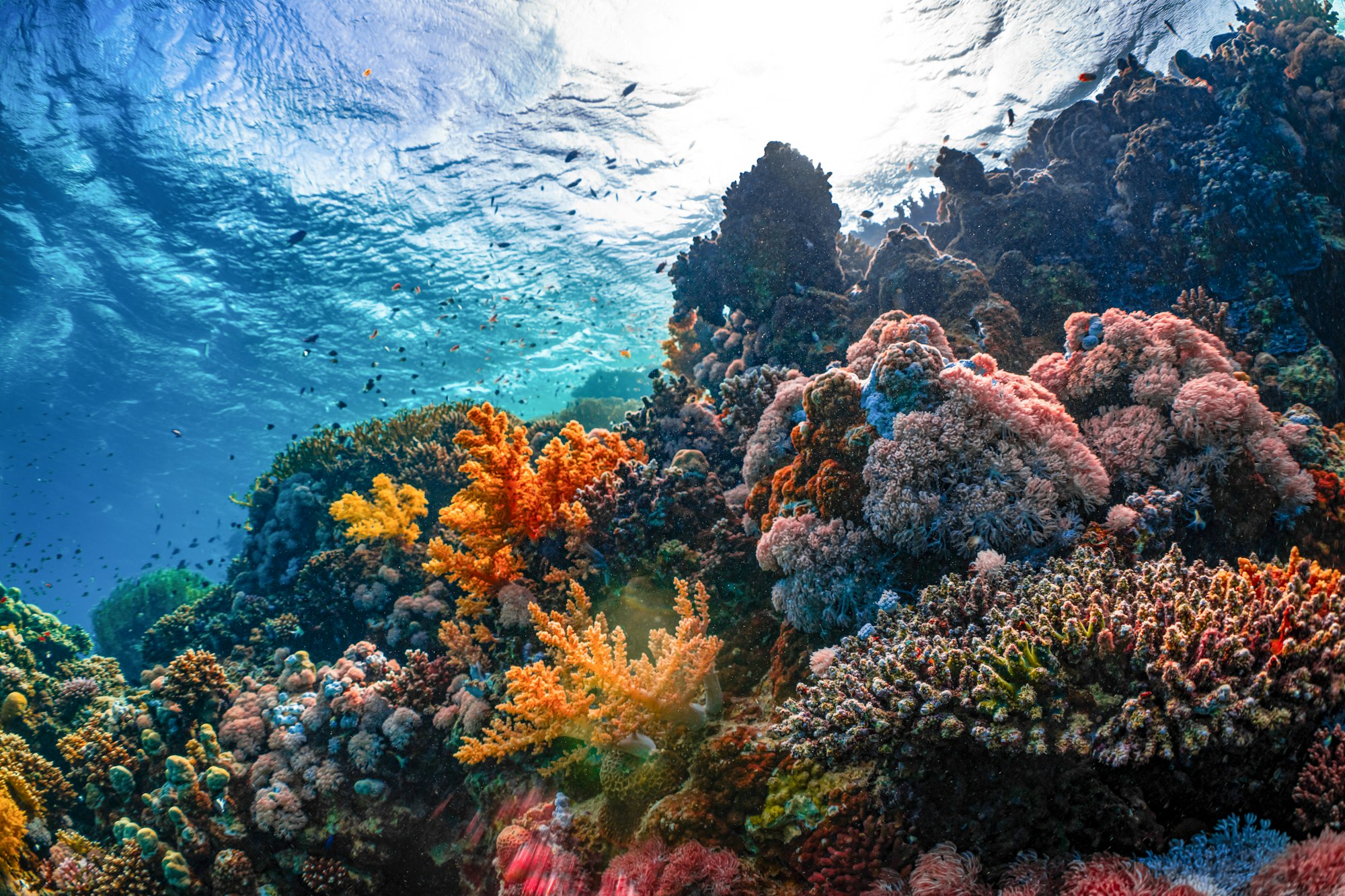
Lobster Lairs
4.1083°N 118.6244°E · wall
A west-side Sipadan wall dive named for the crustacean-filled cracks along its ledges, offering easy-going macro hunting, turtles and cruising reef sharks — an accessible, moderate site for most certified divers.
Overview
Lobster Lairs (also written Lobster Lair) sits on the western flank of Sipadan, the oceanic pinnacle rising from the Celebes Sea off Semporna in Sabah, Malaysian Borneo. It is a wall dive, forming a continuation of the neighbouring Hanging Gardens to the north, where Sipadan’s coral rampart plunges toward deep water. The name comes from the crevices, ledges and overhangs pocketing the wall — the kind of cracks that shelter lobsters and other shy crustaceans.
Why divers come
Sipadan’s marquee sites trade on adrenaline — barracuda tornadoes and turtle traffic jams. Lobster Lairs offers something gentler: a relaxed cruise along a beautifully coralled wall where the reward is in the details. Divers slow down to peer into the cracks, and the payoff is turtles resting on ledges, reef sharks hanging in the blue, and a rich cast of macro subjects. It is a forgiving site that still delivers classic Sipadan encounters.
The dive
This is a drift-friendly wall run. The reef top sits shallow, and the wall drops sharply beneath it; most dives are worked along the upper wall and its ledge system rather than pushed deep, letting you linger over the crevices. Hard and soft corals decorate the face, casting deep shadows — photographers should carry strobes. White-tip reef sharks are often seen resting near the top, while barracuda commonly appear around the safety stop.
Marine life
The site’s calling card is its crustaceans: spiny lobsters and other critters tucked into the cracks, alongside moray eels, scorpionfish and lionfish. It is a strong macro dive, with seahorses, leaf fish, frogfish, pipefish and gobies among the finds. Green and hawksbill turtles are, as everywhere at Sipadan, abundant. Out in the blue, reef sharks patrol and — with luck, not reliably — a passing manta or larger pelagic. One honest caveat repeated by dive guides: lobsters are less common here than the name suggests, and some divemasters jokingly call it “Lobster Liar.” Treat a lobster as a bonus, not a guarantee.
Conditions & who should dive it
Currents are generally light to moderate, and visibility is typically very good, often 20–30 metres or more. That makes Lobster Lairs one of Sipadan’s more accessible sites, suitable for most certified divers with basic buoyancy control, and comfortable for those newer to wall diving. As with any wall over deep water, keep an eye on depth and gas, stay off the coral, and follow your guide’s briefing.
When to go
Sipadan is diveable year-round, with generally calm seas. Conditions are often at their best around the drier months roughly March to October, while the northeast monsoon (around December to February) can bring more variable weather; turtles are present throughout the year. Confirm current conditions with your operator when booking.
Getting there
There is no accommodation on Sipadan itself — the island’s resorts were relocated by the end of 2004 to protect the ecosystem, and it is now a day-trip-only marine park. Divers stay on nearby Mabul or Kapalai, or aboard a liveaboard, and reach the site by boat, typically a 20–30 minute crossing.
A note on protection
Sipadan is a strictly managed marine protected area under Sabah Parks, and access is capped by a daily permit quota allocated through licensed operators — so plan and book well ahead. The quota and rules are periodically revised, so verify the latest permit requirements before travel. Diving here is a privilege on borrowed access: maintain good buoyancy, take nothing, and leave the lobsters in their lairs.
Sea-surface temperature and wave height from Open-Meteo Marine (ERA5 reanalysis, monthly averages).
344 verified species observations (175 species) logged within ~11 km of this site between 1849 and 2018, from the Ocean Biodiversity Information System.
- Coelorinchus commutabilis
- Trimma yanoi
- Gadomus filamentosus
- Nezumia evides
- Ventrifossa nigrodorsalis
- Hymenocephalus nascens
- Trimma agrena
- Trimma tevegae
- Apristurus platyrhynchus
- Trimma stobbsi
- Pycnochromis atripes
- Synchiropus delandi
Scientific survey records skew toward sampled taxa (molluscs, corals) and do not reflect what you are guaranteed to see on a dive.
Source: OBIS (obis.org), aggregated Darwin Core occurrence records.
Conditions change with the tide and the season. If you have dived this site, share what it was actually like — date, visibility, current, and what you saw. Real, recent reports from divers are exactly what this guide is built to collect.
Send a conditions report ›