Angarosh
20.8632°N 37.4380°E · wall
Angarosh is one of Sudan’s premier shark aggregation sites, a reef rising from deep water within Dungonab Bay - Mukkawar Island National Park, about 12km east of Mukawwar Island. Its name is reported to mean “mother of sharks” in the local dialect, and it is celebrated for exceptional concentrations of scalloped hammerhead sharks.
Overview
Angarosh’s reef top sits at about 10 metres and is made up of two plateaus — a shallower one to roughly 25 metres and a deeper one to roughly 45 metres — funnelling nutrient-rich currents upward and attracting a strong food chain. Confirmed sharks include scalloped hammerheads (schools reported over 50 individuals), grey reef sharks, silvertip sharks, whitetip reef sharks, and tiger sharks. The site’s remoteness (roughly 125km north of Port Sudan by sea) keeps diving pressure low. Visibility is typically reported above 25 metres.
Site Information
- Location: Dungonab Bay - Mukkawar Island National Park, ~12km east of Mukawwar Island, ~5km southwest of Abington Reef
- Entry Type: Boat dive
- Site Type: Wall dive
- Difficulty Level: Advanced
- Maximum Depth: 40 meters
- Typical Visibility: 25+ meters
- Current: Moderate to strong
- Best Time: September to May (hammerheads most reliably October to April)
Marine Life
Confirmed by sources: scalloped hammerhead sharks (schools of 50+ individuals reported), grey reef sharks, silvertip sharks, whitetip reef sharks, and tiger sharks, plus schooling jacks and fusiliers. Claims of manta rays, oceanic whitetips, surgeonfish, groupers, moray eels, and lionfish at this specific site from a prior version of this page were not independently confirmed and have been removed.
Dive Profile
Descend quickly along the outer wall to around 18-20 meters, the depth band where hammerheads most commonly cruise. Hovering still and avoiding rapid movements near the wall edge gives the best chance of hammerhead approaches. The wall continues well below recreational limits; strict depth discipline is essential. After hammerhead observation time, explore the upper wall and reef plateau for resident species before beginning a slow ascent with a 5-minute safety stop at 5 meters.
Entry and Exit
Access is exclusively by liveaboard dive boat. Descents typically follow the outer wall rapidly to maximise time in the hammerhead zone. The boat drifts along the wall and picks up divers downstream after an SMB-signalled safety stop. Coordinate ascent timing carefully with the crew, as currents can push divers away from the reef quickly.
Tips and Recommendations
- Dive at first light for the best hammerhead aggregations — sharks disperse as water warms
- Remain still and calm at depth; erratic movements disturb hammerhead schools
- Blue/black wetsuits are recommended over bright colours near sensitive shark zones
- Use a dive computer to keep disciplined depth control on a wall with no visible bottom
- Wide-angle camera setup is essential — hammerhead schools provide dramatic subject matter
- Bring a high-visibility SMB; drift pickups are common in the strong current
Safety Considerations
Strong currents require good buoyancy control and situational awareness at all times. The wall offers no anchor point for orientation — monitor depth continuously as the blue water beyond makes spatial reference difficult. Sharks at Angarosh are wild and habituated to minimal human contact; maintain calm and respectful behaviour. Always dive with a buddy and carry signalling equipment for boat recovery.
Photography
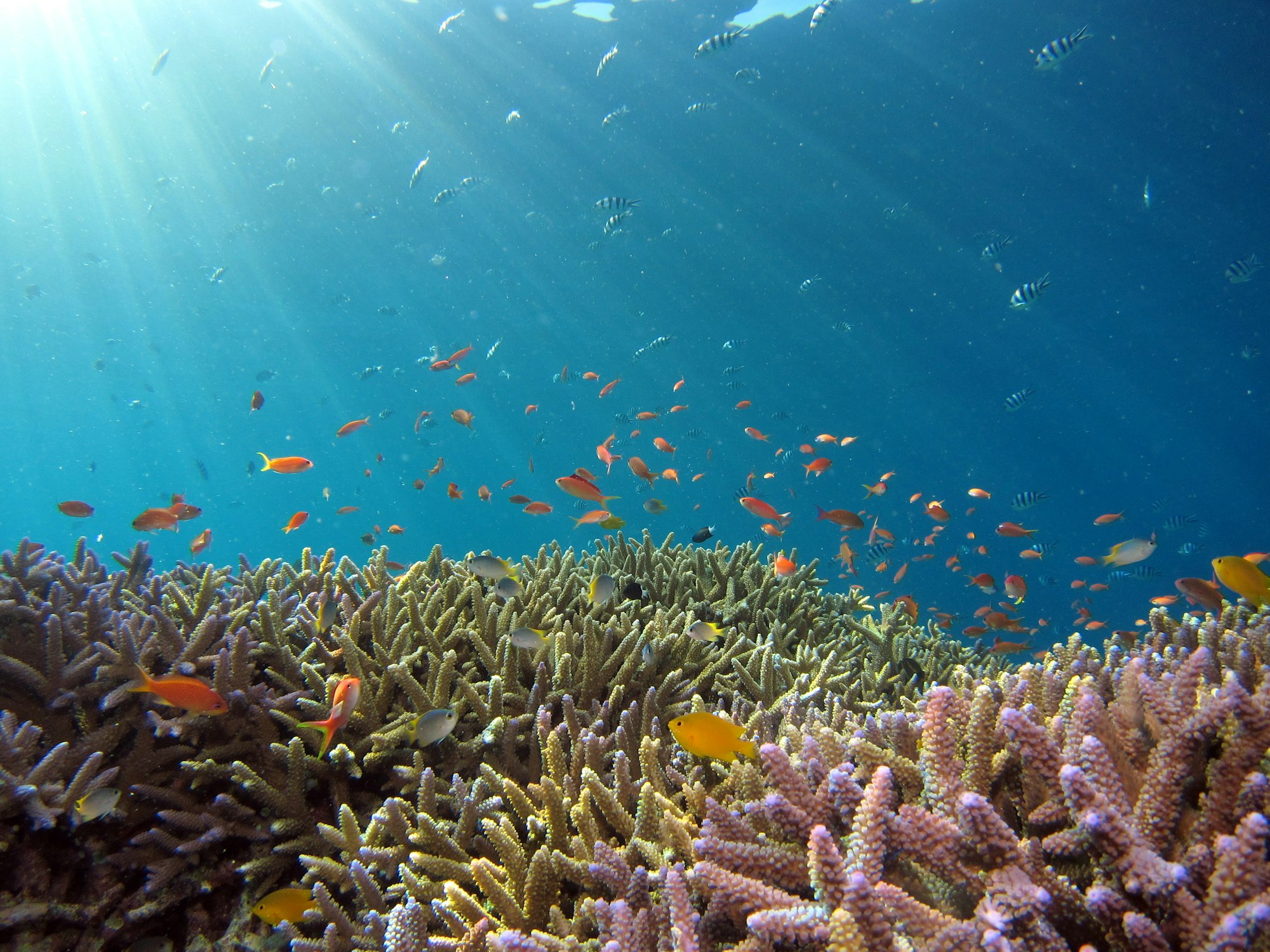
Angarosh is one of the Red Sea’s iconic wide-angle photography locations. Hammerhead schools at the wall edge create opportunities for silhouette and school shots using natural backlighting from above. For close-up reef life, the wall face between 5-15 meters offers colourful soft corals and anthias clouds against the blue water backdrop.
Sources: Diving in Sudan - dive-the-world.com, Dive Site Directory - Angarosh, Central & South route - Blue Force Fleet. Last updated 2026-07-03.
Sea-surface temperature and wave height from Open-Meteo Marine (ERA5 reanalysis, monthly averages).
34 verified species observations (23 species) logged within ~11 km of this site between 1977 and 2009, from the Ocean Biodiversity Information System.
- Enneapterygius abeli
- Chromodoris
- Trapezionida dispar
- Thalamita poissonii
- Plesionika narval
- Catapaguroides pectinipes
- Metopograpsus messor
- Coenobita scaevola
- Pontocaris profundior
- Xiphonectes tenuicaudatus
- Parapenaeus indicus
- Cirolana meseda
Scientific survey records skew toward sampled taxa (molluscs, corals) and do not reflect what you are guaranteed to see on a dive.
Source: OBIS (obis.org), aggregated Darwin Core occurrence records.
Conditions change with the tide and the season. If you have dived this site, share what it was actually like — date, visibility, current, and what you saw. Real, recent reports from divers are exactly what this guide is built to collect.
Send a conditions report ›