Ron's Wreck
16.0830°N 86.8960°W · wreck
Ron’s Wreck is a small sunken fishing boat sitting on a sandy bottom at 18 m (60 ft), nestled within a U-shaped reef wall on the south side of Utila — a relaxed wreck dive accessible to Intermediate divers.
Overview
Ron’s Wreck lies within a distinctive U-shaped coral reef enclosure, with the wreck itself resting on a gently sloping sandy bottom at approximately 18 m (60 ft) — that 18 m figure is the site’s depth, not the vessel’s length, which is not documented in any source. Sources disagree on what the vessel originally was: some describe it as a small tugboat deliberately sunk to create an artificial reef, while others describe it as a former shrimp or fishing boat; no source resolves this conflict, so both accounts are noted here rather than picking one. The site can be approached by crossing over the western wall of the reef system, and the surrounding sandy area extends to about 10 m (35 ft). The site is sometimes included as a secondary stop within the Moon Hole area, which features a large sandy patch surrounded by coral ideal for buoyancy practice. The combination of a small wreck with adjacent coral habitat makes this a popular training site as well as a recreational dive.
Marine Life
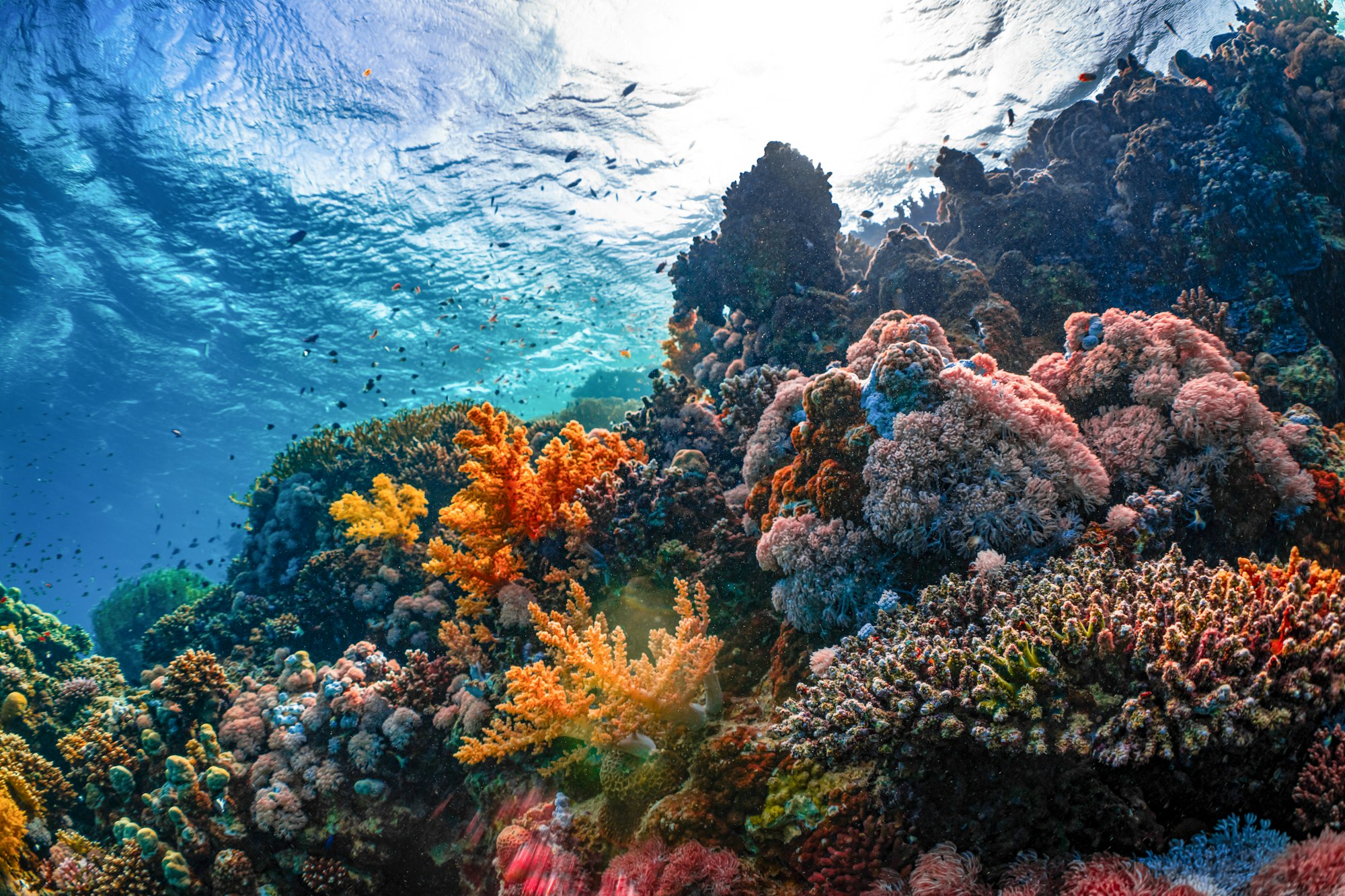
The wreck has developed into a small artificial reef. A purple vase sponge on the structure is known to host large, assertive coral-banded shrimp, and lobster and octopus forage among the coral rubble and hull. Moray eels, pipefish, parrotfish, lionfish, and nudibranchs/sea slugs have been reported around the wreck, along with spotted eagle rays passing over the surrounding sand. Night divers have reported bioluminescent ostracods performing “String of Pearls” mating displays around the wreck. Grouper and snapper, listed in earlier drafts of this page, were not confirmed by any source consulted during this audit and have been removed.
Dive Profile
- Wreck depth: ~18 m (60 ft) on sand
- Surrounding reef / sand: ~10 m (35 ft)
- Wreck size: a small vessel (tugboat or fishing boat, per conflicting sources); exact length not documented
- Current: minimal — sheltered south side location
- Visibility: typically 15–25 m
Entry / Exit
Boat dive from Utila town. Often combined with Moon Hole as a two-site dive given the close proximity of both within the same reef complex.
Tips
- A gentle, unhurried dive — take time to search the wreck’s nooks for shrimp, crabs, and octopus.
- Good site for Underwater Navigation specialty training given the defined reef structure.
- Can be combined with Moon Hole as a back-to-back dive or extended single dive.
Photography
The wreck’s encrusted hull and resident macro life (coral-banded shrimp, octopus, nudibranchs) reward close-focus photography. Night divers can look for the bioluminescent “String of Pearls” ostracod display. Natural light at 18 m is typically adequate for ambient shots.
Sources: We Dive Utila – Dive Sites, Lena on the Move – Dive Guide Utila, Madison Vibra – Finding My Underwater Tribe in Utila. Last updated 2026-07-08 (re-audited: removed a fabricated vessel-length claim that conflated the site’s depth with the boat’s length; flagged an unresolved source conflict over whether the vessel was a tugboat or fishing boat; removed unconfirmed grouper/snapper; added site-specific detail on the vase sponge/coral-banded shrimp and bioluminescent ostracod display).
Sea-surface temperature and wave height from Open-Meteo Marine (ERA5 reanalysis, monthly averages).
720 verified species observations (150 species) logged within ~11 km of this site between 1936 and 2022, from the Ocean Biodiversity Information System.
- Rhincodon typus · Whale Shark
- Pterois · lionfish
- Risor ruber · tusked goby
- Tigrigobius multifasciatus
- Anchoa lyolepis
- Lythrypnus
- Ogilbia
- Elacatinus
- Strongylura timucu
- Scorpaena albifimbria
- Priolepis hipoliti · rusty goby
- Tomicodon fasciatus
Scientific survey records skew toward sampled taxa (molluscs, corals) and do not reflect what you are guaranteed to see on a dive.
Source: OBIS (obis.org), aggregated Darwin Core occurrence records.
Conditions change with the tide and the season. If you have dived this site, share what it was actually like — date, visibility, current, and what you saw. Real, recent reports from divers are exactly what this guide is built to collect.
Send a conditions report ›