Ted's Point
16.0878°N 86.8862°W · wall
Ted’s Point is a south side wall dive featuring several sand channels, a gently sloping sandy bottom, and a notable bonus attraction — a sunken sailboat resting at 60 ft (18 m) on the sand at the base of the reef.
Overview
Ted’s Point begins in very shallow water, with the reef top sitting at just 10–15 ft (3–5 m) — making for bright, calm entry conditions. The wall drops to around 40 ft (12 m) where it meets a gently sloping sandy bottom, and the sailboat wreck sits at roughly 60-75 ft (18-23 m) on this sand plateau. Several sand channels cut through the reef, providing corridors between coral sections and the sandy bottom that add navigational variety to the dive. According to one local diver’s account, the ferro-cement sailboat was stripped of its fittings and mast while the owner was away and was subsequently sunk deliberately to turn it into an artificial reef — this origin story comes from a single source and is not independently confirmed. The site is accessible by Intermediate divers, with the wall depth and optional sailboat exploration offering enough interest for those with more experience.
Marine Life
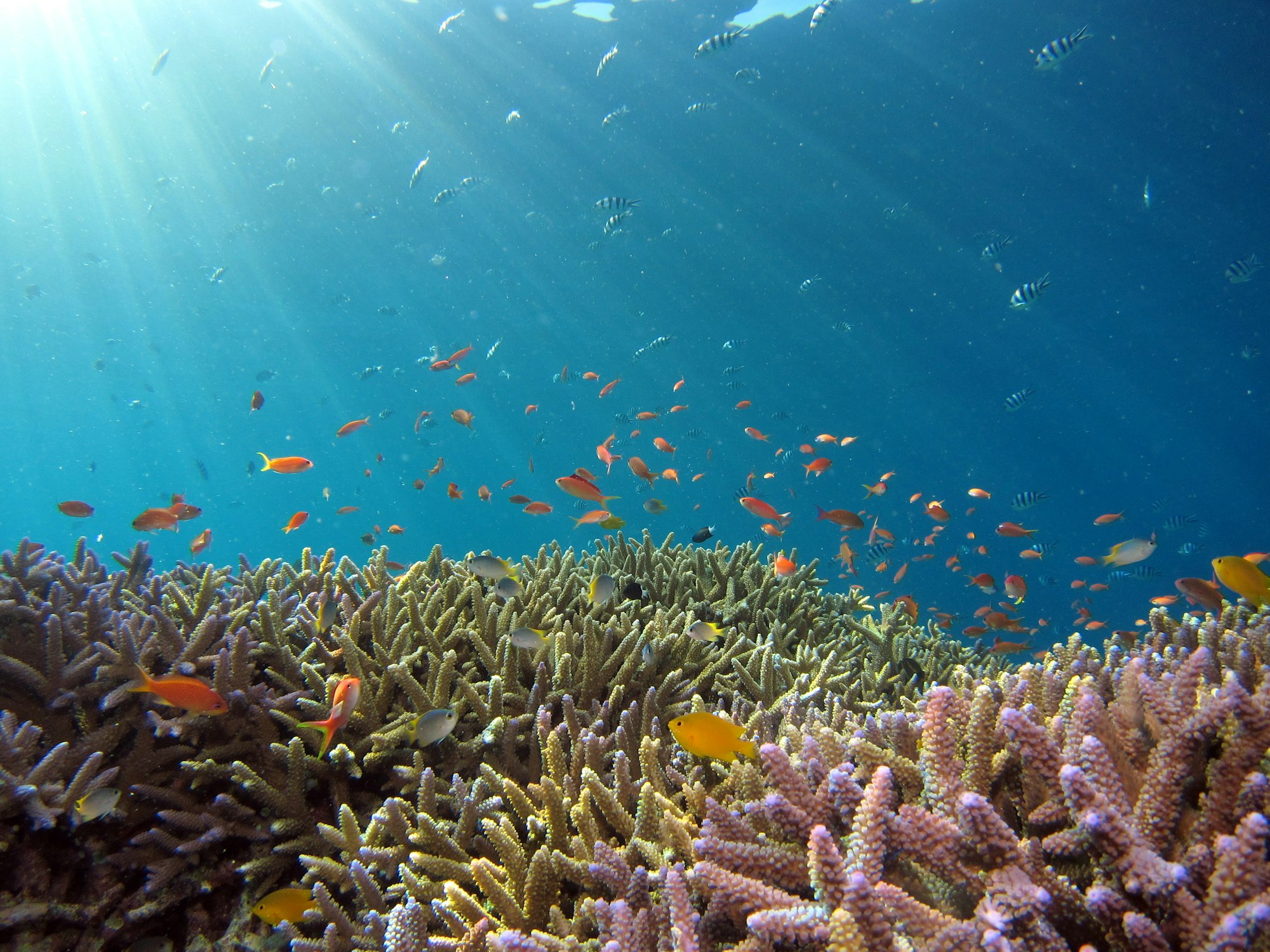
Ted’s Point supports a healthy mix of south side Caribbean species. Schools of black margate are frequently seen gathering near the mooring buoy. Documented sightings include blue tang and green moray eels on and around the reef structure. Spotted eagle rays are reported at the site, patrolling the wall and sand. The sand channels and gently sloping bottom provide habitat for flatfish and small benthic species typical of the south side, while the sailboat wreck has attracted encrusting corals and resident fish in the years since sinking. Groupers, listed in an earlier draft of this page, were not confirmed by any source consulted during this audit and have been removed.
Dive Profile
- Reef top: 10–15 ft (3–5 m) — very shallow, excellent for safety stops
- Wall: drops to ~40 ft (12 m)
- Sandy bottom: gently sloping below the wall
- Sailboat wreck: sources vary between ~60 ft (18 m) and ~75 ft (23 m) on sand
- Current: generally mild on the south side
- Visibility: typically 15–25 m
Entry / Exit
Boat dive from Utila town. The south side location provides reliable access even when north side conditions are rough.
Tips
- The sunken sailboat at 60 ft is a secondary highlight — plan dive profile to include a visit without exceeding no-decompression limits.
- The very shallow reef top at 10–15 ft makes an excellent extended safety stop.
- Sand channels are worth exploring slowly for flatfish and invertebrates.
Photography
The combination of a wall dive, coral-covered reef top, and a small sailboat wreck gives photographers varied subjects. A coral-and-sponge-encrusted barbecue grill resting near the wreck is a distinctive, frequently photographed feature. Eagle ray encounters on the wall face are a highlight.
Sources: We Dive Utila – Dive Sites, UnderwaterPhotography.com – Ted’s Point, The Scuba Directory – Ted’s Point, Utila, Geoff Schultz’s BlueJacket Sailing Site – Utila Dive Sites. Last updated 2026-07-08 (re-audited: removed unconfirmed grouper sighting; added black margate schools and the encrusted barbecue grill feature; hedged the sailboat’s sinking backstory as single-sourced and unconfirmed; broadened wreck depth to a 60-75 ft range per source disagreement).
Sea-surface temperature and wave height from Open-Meteo Marine (ERA5 reanalysis, monthly averages).
661 verified species observations (140 species) logged within ~11 km of this site between 1936 and 2022, from the Ocean Biodiversity Information System.
- Rhincodon typus · Whale Shark
- Pterois · lionfish
- Risor ruber · tusked goby
- Tigrigobius multifasciatus
- Lythrypnus
- Elacatinus
- Priolepis hipoliti · rusty goby
- Carcharhinus isodon
- Pomacanthus paru
- Coryphopterus kuna
- Orcinus orca · Killer whale
- Xiphophorus hellerii
Scientific survey records skew toward sampled taxa (molluscs, corals) and do not reflect what you are guaranteed to see on a dive.
Source: OBIS (obis.org), aggregated Darwin Core occurrence records.
Conditions change with the tide and the season. If you have dived this site, share what it was actually like — date, visibility, current, and what you saw. Real, recent reports from divers are exactly what this guide is built to collect.
Send a conditions report ›