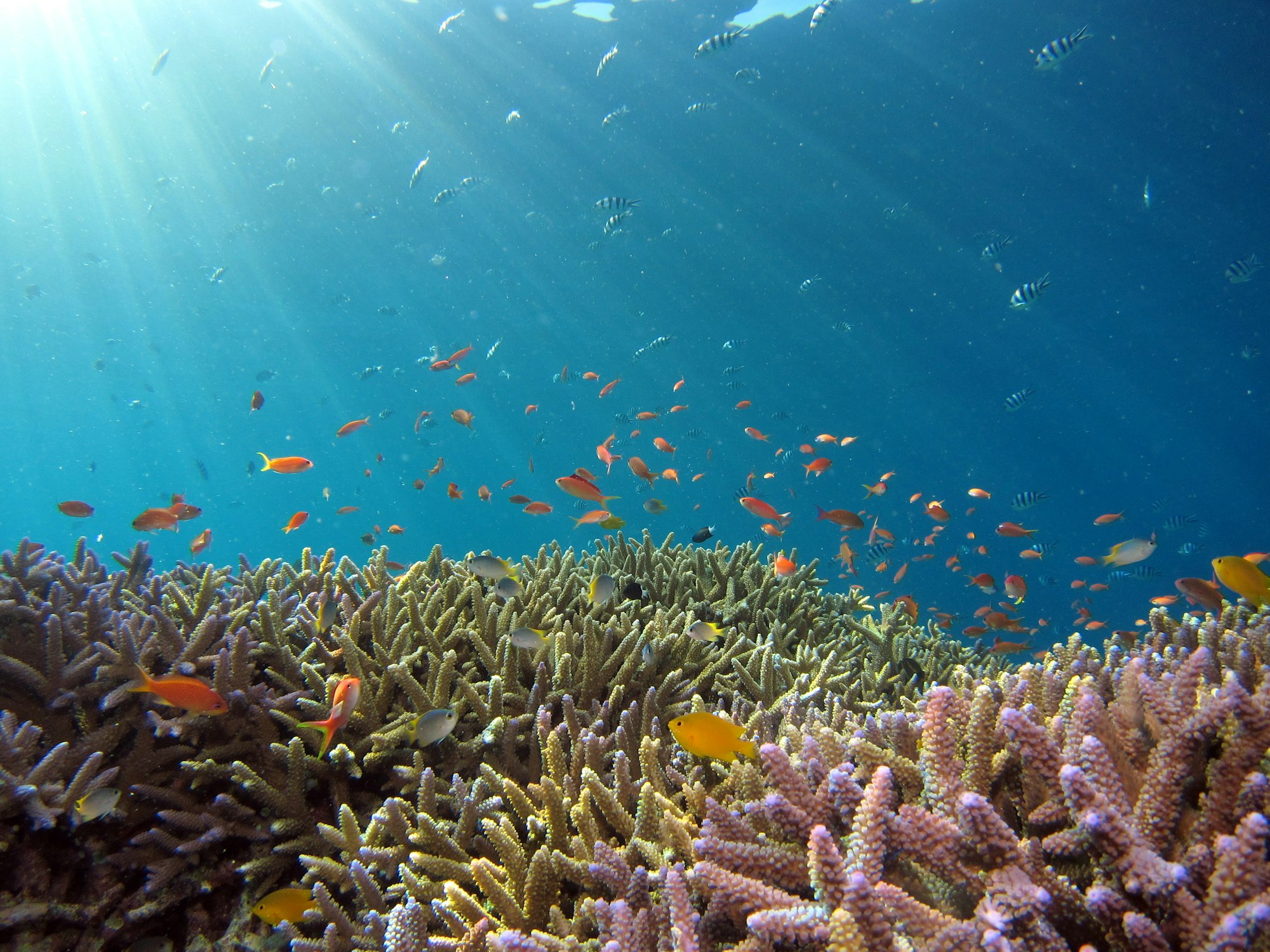
Amberjack Reef
24.4079°N 76.6495°W · reef
Amberjack Reef is a patch reef in the Exuma Cays Land and Sea Park, known for exceptional shark encounters and dense marine life protected by the park’s strict no-take regulations.
Overview
This compact patch reef — roughly 50 feet in length, confirmed independently today via oceanatik.com in addition to the previously-cited uncommoncaribbean.com — punches well above its size in terms of marine life density. It sits within the Exuma Cays Land and Sea Park, confirmed today directly against the Bahamas National Trust’s own park page as a no-take reserve since 1986 (no fishing, shelling, or conching park-wide).
Source conflict on shark feeding: the previous pass stated feeding “has been discontinued in accordance with the park’s management policies.” That claim could not be confirmed today and is contradicted by other sources. Uncommon Caribbean’s own article is hedged rather than definitive — it says feeding happens “in accordance with the Land and Sea Park’s request, sharks are no longer fed here (or in principle they should not be),” which reads as a stated policy rather than a confirmed practice. Meanwhile Zentacle.com (re-fetched today) describes Amberjack Reef in the present tense as “a fantastic shark feeding dive” and explicitly names it as the site of “AquaCat Liveaboard Cruises’ shark diving operations”; a search of AquaCat’s own marketing corroborates that the All Star Aqua Cat liveaboard runs a weekly “passive shark feed” dive in the Exumas, with Amberjack Reef named as that location. The Bahamas National Trust’s own Exuma park page, fetched directly today, does not mention shark feeding at all (it addresses fishing/shelling/conching only), so there is no primary-source confirmation of a park rule against feeding, and nationally, the Bahamas has actively encouraged (not restricted) shark-tourism feeding practices, unlike Florida. Net assessment: whether feeding is discontinued at this specific site is unresolved and possibly false — treat the “feeding discontinued” claim as unconfirmed, not settled fact. Sharks are well-documented to congregate at the site regardless of whether feeding is ongoing.
Site Information
- Location: Exuma Cays Land and Sea Park, Bahamas
- Entry Type: Boat dive
- Site Type: Reef
- Maximum Depth: 15 meters
- Typical Visibility: 20-30 meters
- Current: Moderate
- Best Time: November to May
Marine Life
Up to 10 Caribbean reef sharks are commonly seen circling the reef (figure corroborated today via dive-the-world.com), alongside nurse sharks resting on the sandy bottom. Large groupers — black grouper, yellowmouth grouper, and yellowfin grouper — are resident on the reef structure (corroborated today via dive-the-world.com and oceanatik.com). Eagle rays make regular appearances (oceanatik.com describes them as “immense”). The sandy seafloor between coral heads is home to garden eels swaying in the current. Lobsters are abundant, consistent with the park’s no-take status. Smaller residents include pirate blennies (confirmed via dive-the-world.com) and various reef fish. One source (dive-the-world.com) also reports large aggregations — over 100 horse-eye jacks — around the safety-stop depth; this detail was not corroborated by a second source today, so it is noted here but not asserted as certain.
Dive Profile
Descend to approximately 15 meters (50 feet) to the patch reef structure. The site suits beginner to intermediate divers due to its modest depth. Most marine life activity concentrates on and around the reef structure itself. Allow plenty of time — the sharks and grouper interactions here are the highlight.
Entry and Exit
Access is by boat only, typically as part of organised dive trips from Staniel Cay or via liveaboard. No shore access is available in this part of the park.
Tips and Recommendations
- Wide-angle photography is ideal for the shark encounters
- The park’s own rules (confirmed directly against the Bahamas National Trust today) strictly prohibit fishing, shelling, and conching; whether shark feeding specifically is still practiced at this site is disputed between sources — see the Overview above
- Plan for a surface interval to maximise your time on the reef during a two-tank trip
Safety Considerations
The Caribbean reef sharks present here are described by multiple sources as habituated to divers, whether from historical or (per some sources) ongoing feeding — they remain wild animals regardless. Do not corner, chase, feed, or attempt to touch sharks. Shark encounters here should never be characterized as risk-free; treat any shark interaction, fed or unfed, with standard shark-diving caution. The Exuma Cays Land and Sea Park rules prohibit disturbing marine life. Carry an SMB for your ascent.
Sources: Uncommon Caribbean - Amberjack Reef (accessed via search cache; direct fetch returned 403 today), Zentacle - Amberjack Reef, Dive the World - Exuma Cays, Oceanatik - Amberjack Reef (accessed via search cache), Bahamas National Trust - Exuma Cays Land & Sea Park. Last updated 2026-07-17.
Sea-surface temperature and wave height from Open-Meteo Marine (ERA5 reanalysis, monthly averages).
21 verified species observations (19 species) logged within ~11 km of this site between 1949 and 2008, from the Ocean Biodiversity Information System.
- Pterois · lionfish
- Melanostomias biseriatus
- Kogia sima · Dwarf sperm whale
- Haemulon
- Gnatholepis thompsoni
- Rhizoprionodon terraenovae
- Hemiramphus balao
- Neoniphon vexillarium
- Malacoctenus macropus
- Physeter macrocephalus · Sperm whale
- Haemulon flavolineatum
- Phosinella pulchra
Scientific survey records skew toward sampled taxa (molluscs, corals) and do not reflect what you are guaranteed to see on a dive.
Source: OBIS (obis.org), aggregated Darwin Core occurrence records.
Conditions change with the tide and the season. If you have dived this site, share what it was actually like — date, visibility, current, and what you saw. Real, recent reports from divers are exactly what this guide is built to collect.
Send a conditions report ›