Dean's Blue Hole
23.1050°N 75.0294°W · cave
Dean’s Blue Hole
A marine blue hole plunging 202 metres off Long Island — the world’s third-deepest known ocean blue hole (after Taam Ja’ and Dragon Hole), and the world record venue for competitive freediving.
Overview
Dean’s Blue Hole is a spectacular natural geological formation in a bay west of Clarence Town, Long Island, Bahamas. The sinkhole is approximately 30 metres in diameter at the surface, widening to roughly 100 metres in diameter below, then plunging to a maximum depth of 202 metres. The hole formed through limestone karst collapse — geological sources describe it as caused either by a fault allowing corrosive solution to rise, or by a buried cavern ceiling collapsing to create a sinkhole. Wikipedia now classifies Dean’s Blue Hole as the world’s third-deepest known ocean blue hole, after Taam Ja’ Blue Hole in Mexico and Dragon Hole in the South China Sea. It is world-famous as the venue for competitive freediving world records: William Trubridge (New Zealand) has set multiple records here, including a 101-metre unassisted dive in December 2010, and the site hosts the annual Vertical Blue freediving competition. The hole’s still water, freedom from current, and extraordinary visibility (30–40+ metres in the sinkhole itself) make it one of the most visually dramatic dive experiences in the world. Recreational scuba divers are limited to the upper 40 metres, which still represents an extraordinary dive.
Site Information
| Detail | Value |
|---|---|
| Depth Range | 1–40 m (recreational) |
| Difficulty | Advanced |
| Entry Type | Shore |
| Site Type | Cave/Blue Hole |
| Visibility | 30–40+ m |
| Current | None |
| Water Temp | 24–27°C |
Marine Life
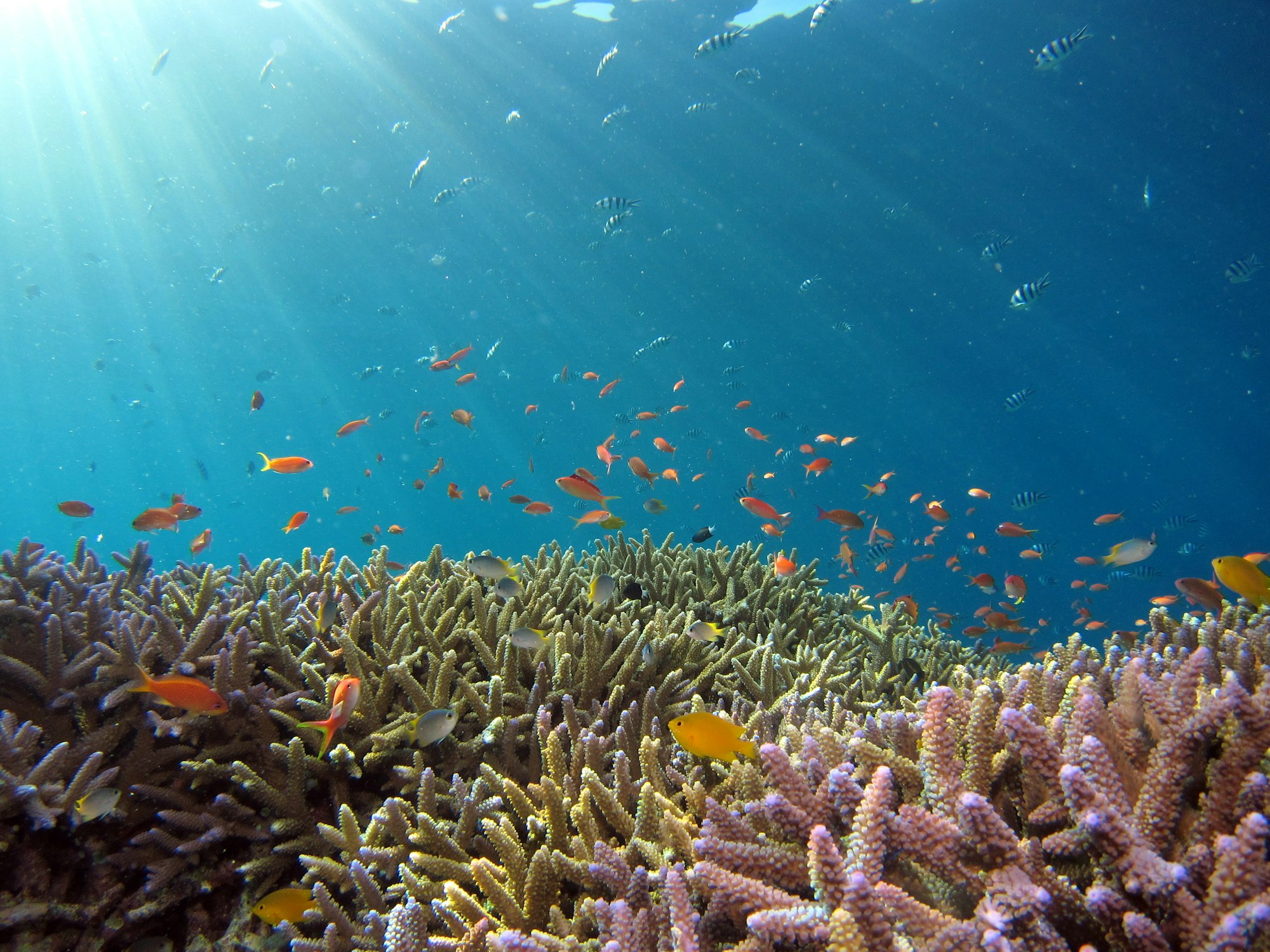
The upper section of the blue hole (0–30 meters) supports typical Caribbean reef fish including parrotfish, blue tang, and sergeant majors that swim in from the adjacent reef. The transition zone from the entrance shelf to the main chamber at 20 meters is the most biologically productive section. Below 30 meters the sinkhole is essentially devoid of marine life — the extreme depth and lack of light penetration create a biologically poor but visually stunning environment.
Dive Profile
Shore entry via the small beach adjacent to the hole. Descend through the narrow entrance zone to the wider chamber below 20 meters. Recreational divers typically hover at the chamber entrance at 20–25 meters to appreciate the scale before ascending. Advanced divers can explore the chamber walls to 30–35 meters — this is where the blue hole’s distinctive appearance, with the pale-white limestone walls disappearing into infinite blue below, is most striking. Maximum recreational depth: 40 meters (appropriate equipment and certification required).
Entry and Exit
Shore entry from the small beach at the blue hole’s edge. Entry by walking in or shallow dive entry from the rock ledge. The hole has no current, making entry and exit straightforward. The calm, sheltered nature of the sinkhole makes it suitable for multiple dives per day.
Tips and Recommendations
Freediving or snorkelling in the upper sections (0–20 m) is remarkable and requires no certification. Scuba diving to 30–40 meters requires appropriate experience and certification. The world freediving community regularly trains at Dean’s Blue Hole — visitors should be aware that training sessions may be in progress and should not interfere with freedivers on the surface. Visiting at low sun angle (morning or evening) creates dramatic light shafts into the sinkhole from above.
Safety Considerations
The extreme depth of this sinkhole creates narcosis risk for scuba divers who exceed 30–35 meters. Recreational divers must strictly observe their depth limits — the visually compelling experience of looking down into 202 meters can create a compelling urge to descend further. Always carry a freediving float/DSMB for surface visibility. The hole’s calm nature is deceptive — proper training and planning are still required for deep sections.
Photography
Dean’s Blue Hole is one of the most photographed natural formations in the Bahamas. The classic image is looking upward from the chamber at 25–30 meters toward the circular opening above, with natural light streaming down and a freediver descending in silhouette. Wide-angle to fisheye captures the full dramatic scale. The transition from the entrance shelf to the wider chamber is best captured at the junction depth.
Additional Resources
- Bahamas Vertical: freediving instruction and guided scuba at Dean’s Blue Hole
- Long Island, Bahamas: accessible by flight from Nassau to Deadman’s Cay Airport
Sources: Wikipedia - Dean’s Blue Hole, Atlas Obscura - Dean’s Blue Hole, Bahamas Air Tours - Dean’s Blue Hole, Scuba.com - Freediving Haven Dean’s Blue Hole. Re-audited 2026-07-17: third-deepest-blue-hole ranking (behind Taam Ja’ and Dragon Hole) and 202m depth independently re-confirmed via fresh search; no factual corrections needed. Last updated 2026-07-17.
Sea-surface temperature and wave height from Open-Meteo Marine (ERA5 reanalysis, monthly averages).
40 verified species observations (31 species) logged within ~11 km of this site between 1936 and 2014, from the Ocean Biodiversity Information System.
- Lampanella minima
- Melampus coffea
- Puperita pupa
- Ctenoides scaber
- Nerita tessellata
- Cenchritis muricatus
- Lottia leucopleura
- Laciolina magna
- Codakia orbicularis
- Turbinella angulata
- Cymatium femorale
- Vasula deltoidea
Scientific survey records skew toward sampled taxa (molluscs, corals) and do not reflect what you are guaranteed to see on a dive.
Source: OBIS (obis.org), aggregated Darwin Core occurrence records.
Conditions change with the tide and the season. If you have dived this site, share what it was actually like — date, visibility, current, and what you saw. Real, recent reports from divers are exactly what this guide is built to collect.
Send a conditions report ›