Glass Window Bridge
25.4382°N 76.6036°W · reef
Glass Window Bridge is a shallow reef dive at one of the most striking geographic features in the Bahamas — the narrow rock bridge where Eleuthera Island pinches to just 9 meters wide and the turquoise Caribbean meets the deep blue Atlantic.
Overview
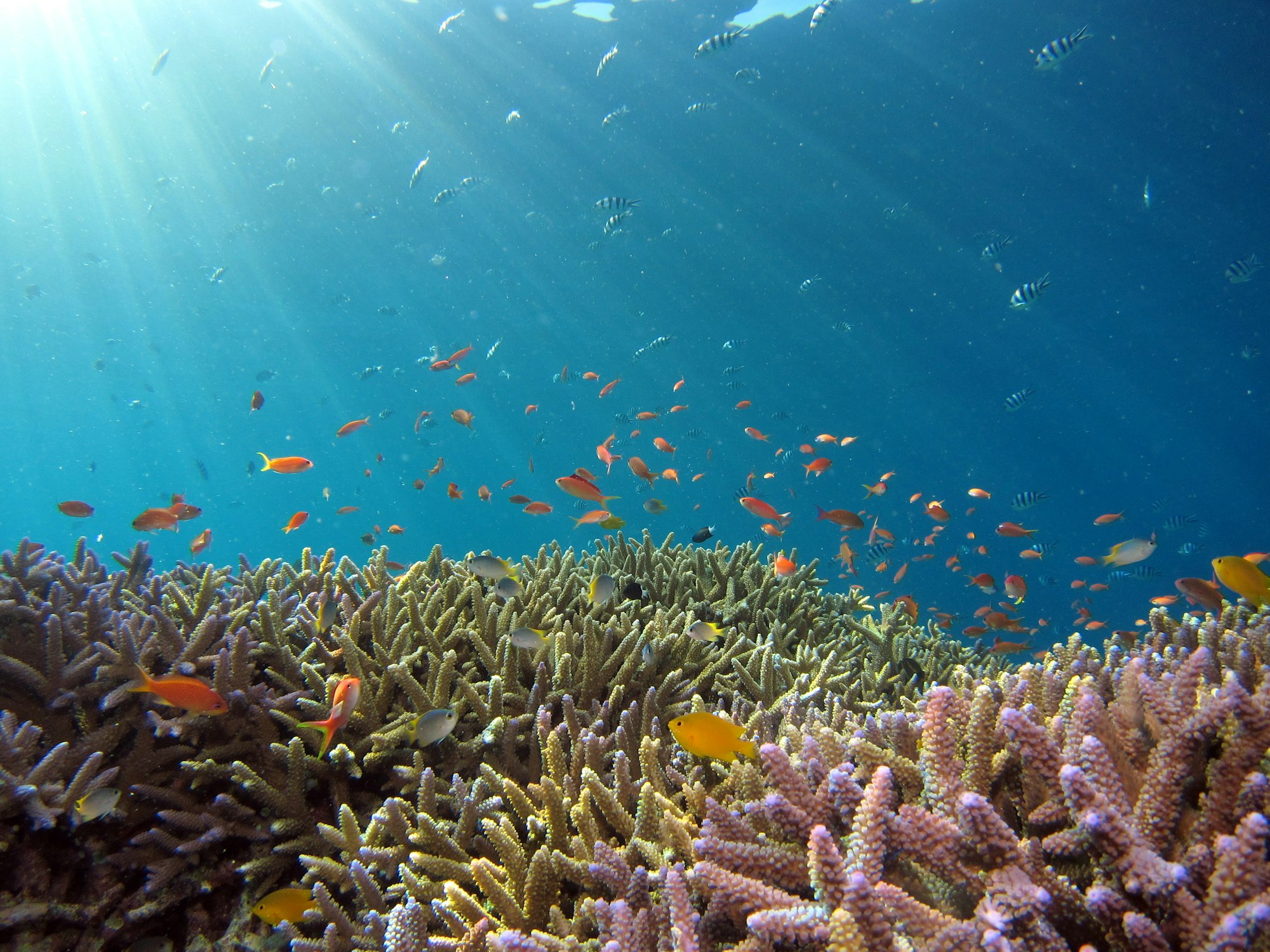
The Glass Window Bridge dive site sits just east of the famous land bridge on North Eleuthera where the Atlantic Ocean and the calmer Bight of Eleuthera are separated by a sliver of rock. The underwater dive area features large boulders that have fallen or been deposited on the sea floor, creating an environment of cracks, tunnels, and small caverns sheltering significant marine life. The visual contrast above water — aquamarine Caribbean versus deep blue Atlantic — extends underwater into distinct reef communities on each side of the isthmus.
Site Information
- Location: Glass Window Bridge area, North Eleuthera, Bahamas
- Entry Type: Boat dive
- Site Type: Reef
- Maximum Depth: 8 meters
- Typical Visibility: 15-25 meters
- Current: Variable — Atlantic swell can affect the site
- Best Time: November to May
Marine Life
Large groupers are resident in the boulder crevices and overhang areas. The sheltered crack and tunnel formations attract an assortment of reef fish, invertebrates, and small shark species. The relatively protected Caribbean side of the site supports healthy coral growth with typical Bahamian reef fish communities.
Dive Profile
A shallow dive well within beginner certification limits. The site is more about exploring the boulder landscape than depth. Penetrate the cracks and tunnels with a torch to find resident groupers and resting fish. Visibility is typically good on the protected Caribbean side of the bridge. Be aware that surge from Atlantic swells can build quickly in the crevice areas.
Entry and Exit
Boat dive. Work with a local North Eleuthera dive operator who can assess conditions on the day — the Atlantic exposure makes this site weather-dependent despite its shallow depth.
Tips and Recommendations
- The above-water scenery at Glass Window Bridge is extraordinary — plan to visit the land feature as well
- The boulder and cavern areas are best explored with a small torch to illuminate the crevices
- The dive is a natural pairing with the nearby Current Cut, combining a gentle reef dive with a more dramatic drift
Safety Considerations
Important: Glass Window Bridge is subject to sudden Atlantic “rage waves” — enormous waves driven by distant storms that surge over the narrow rock bridge even under clear skies. This is not a generic warning: the area has a documented history of fatalities from rogue waves, including a well-known 1991 incident (Sam Pedican, swept from the bridge) and separate, more recent deaths at nearby Queen’s Bath (a 2019 incident and another in 2023) — confirmed via bahamascourtnews.com and eleuthera-map.com reporting. These incidents occurred at the bridge and adjoining shoreline rather than underwater at the dive site itself, but they establish that the “rage” phenomenon here is real and has killed people, not a folkloric exaggeration. Check weather forecasts for Atlantic swell carefully before any visit, surface or underwater. Even modest Atlantic swells can be amplified in the narrow channel between the two bodies of water.
Sources: Zentacle - Glass Window Bridge, Bahamas.com - Glass Window Bridge, Dive the World - Eleuthera Bahamas, Bahamas Court News - American man killed by rogue wave in Eleuthera, Eleuthera Map - Rage at Glass Window Bridge. All re-verified 2026-07-17; depth (8m), difficulty (Beginner), and grouper sighting confirmed unchanged against zentacle.com. Last updated 2026-07-17.
Sea-surface temperature and wave height from Open-Meteo Marine (ERA5 reanalysis, monthly averages).
254 verified species observations (159 species) logged within ~11 km of this site between 1949 and 2018, from the Ocean Biodiversity Information System.
- Pterois · lionfish
- Sphyraena barracuda
- Acanthurus bahianus
- Ocyurus chrysurus
- Cephalopholis fulva
- Epinephelus striatus
- Halichoeres radiatus
- Tylosurus crocodilus
- Sparisoma chrysopterum
- Lutjanus analis
- Phaeoptyx conklini
- Holocentrus adscensionis
Scientific survey records skew toward sampled taxa (molluscs, corals) and do not reflect what you are guaranteed to see on a dive.
Source: OBIS (obis.org), aggregated Darwin Core occurrence records.
Conditions change with the tide and the season. If you have dived this site, share what it was actually like — date, visibility, current, and what you saw. Real, recent reports from divers are exactly what this guide is built to collect.
Send a conditions report ›