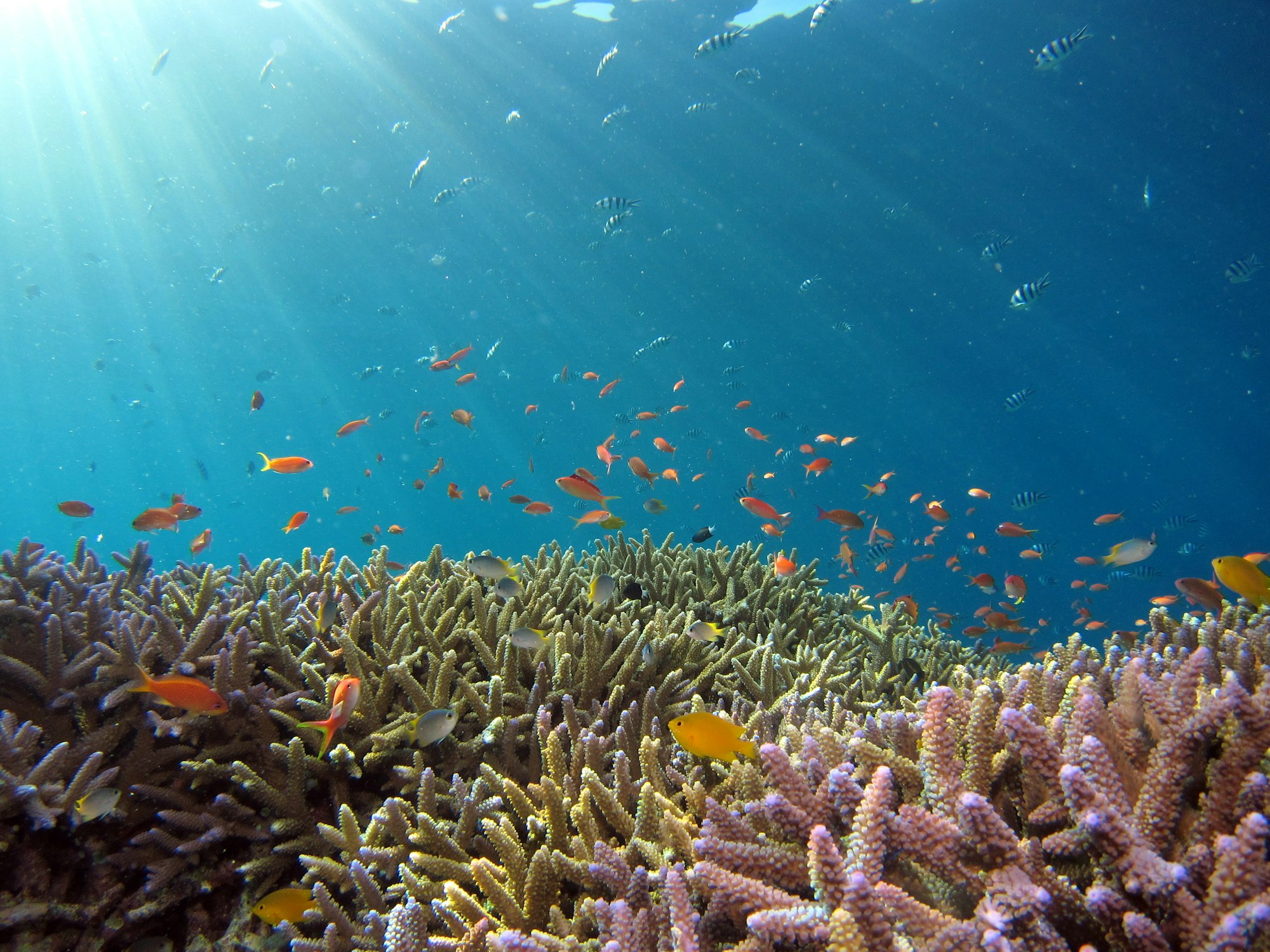
Jeep Reef
24.3704°N 76.6185°W · reef
Jeep Reef is a coral reef dive site located within the protected boundaries of the Exuma Cays Land and Sea Park, one of the Bahamas’ most biologically rich marine reserves.
Overview
The site takes its name from a coral-encrusted Jeep that lies on the reef — real, verifiable, and independently confirmed across multiple sources today (a diver review on thescubadirectory.com describes it as looking like it “has been in the ocean for a very long time,” and dive-the-world.com/thescubadirectory.com both describe it as “thickly encrusted in corals and sponges”). The reef sits within the Exuma Cays Land and Sea Park, the Bahamas’ and the wider Caribbean’s first marine reserve (established 1958) and first no-take reserve (since 1986) — confirmed directly against the Bahamas National Trust’s own park page today, which prohibits “fishing, shelling, conching of any kind” park-wide. The site is dived at or near slack tide; multiple sources independently describe currents strong enough that “the dive can only be done at slack tide.”
Location note: our on-file coordinates (24.3704, -76.6185) sit near Pimlico Cay, in the core Warderick Wells section of the park — consistent with how diveboard.com identifies the site (“Pimlico Cay, Exumas”). However, several other sources (thescubadirectory.com, februarypoint.com) describe Jeep Reef as “close to February Point,” a resort/marina near George Town at the south end of Great Exuma, roughly 90 km from Pimlico Cay and outside the park’s core boundaries. This is an unresolved conflict between sources that could not be settled today — it’s possible operators use “close to February Point” loosely to mean “reachable from February Point’s marina” rather than geographically adjacent, or that write-ups have been conflated across two similarly-named sites. Given our coordinates match the Pimlico Cay identification, the Land and Sea Park framing is retained, but this ambiguity is flagged for future review.
Site Information
- Location: Exuma Cays Land and Sea Park, Bahamas (near Pimlico Cay — see location note above)
- Entry Type: Boat dive
- Site Type: Reef
- Maximum Depth: 15 meters
- Typical Visibility: 20-30 meters
- Current: Moderate to strong at tidal change — dive at slack tide
- Best Time: November to May
Marine Life
Correction from the 2026-05-17 pass: the previous marine-life list (Caribbean reef sharks, southern stingrays, spotted eagle rays, large black grouper, yellowfin grouper, yellowmouth grouper, barracuda, garden eels) could not be re-confirmed as specific to Jeep Reef today — it closely matches this repo’s separate Amberjack Reef listing and appears to have been drawn from a generic Exuma Park species list rather than site-specific sourcing, which this repo’s anti-hallucination policy prohibits. Species independently confirmed at Jeep Reef specifically across today’s sources (dive-the-world.com and thescubadirectory-derived text) are: lobsters, sea slugs, porcupinefish, squirrelfish, Nassau grouper, schools of southern sennet (a barracuda-family fish, not generic “barracuda”), bluehead wrasse, trumpetfish, needlefish, French grunts, and blue tangs, plus occasional small nurse sharks resting under the reef ledges. The park’s no-take status (confirmed directly against the Bahamas National Trust’s own page) supports healthy fish density generally, but the no-take language “have allowed fish populations to recover fully” has been softened since no source quantified a “full recovery” specifically. Caribbean reef sharks, eagle rays, and stingrays are well documented elsewhere in the wider park (e.g., at Amberjack Reef) but are not confirmed sightings at Jeep Reef itself; they have been removed from this site’s list rather than presented as site-specific.
Dive Profile
The reef top sits around 10-11 meters, sloping to about 15 meters before the drop-off into Exuma Sound. Begin the dive shallower and work deeper. The coral-encrusted Jeep is the focal point, surrounded by healthy hard and soft coral formations. A cavern-like swim-through nicknamed “the Cathedral,” reported at roughly 12 m (40 ft), is mentioned by februarypoint.com as a feature of this dive, though it was not independently corroborated by a second source today. Buoyancy control is important to protect the reef structure and avoid stirring up silt around the Jeep.
Entry and Exit
All diving here is by boat. Most divers visit on organised day trips from Staniel Cay or aboard liveaboards transiting the Exuma Cays. Check tidal timing before entry — the channels between the cays generate strong currents.
Tips and Recommendations
- Time your dive for slack water to avoid the strongest tidal currents
- The park prohibits any collection of marine life — this is a strict no-take reserve
- Bring a wide-angle or macro lens — the reef’s grouper, wrasse, and the encrusted Jeep itself are the reliable photo subjects here; shark sightings at this specific site are occasional (nurse sharks) rather than a headline feature
Safety Considerations
Currents can build quickly in the Exuma Cays, and multiple sources note this dive is only advisable at slack tide. Plan your dive profile around the tidal cycle and carry a surface marker buoy (SMB). Boat traffic in the cays can be significant during peak season.
Sources: Bahamas National Trust - Exuma Cays Land & Sea Park, Dive the World - Exuma Cays, The Scuba Directory - Jeep Reef, February Point - 6 Not-to-Miss Diving Destinations in the Exumas. Last updated 2026-07-17. Note: Diveboard.com, previously cited, returned server errors (503) on every attempt today and could not be re-verified — dropped from this list pending a future retry. Yachts Bahama Charters’ “wall diving” article, also previously cited, was re-fetched today and does not mention Jeep Reef at all (it covers seven different Exuma wall sites) — it has been removed as a source for this page; the earlier citation of it here appears to have been an error in the prior validation pass.
Sea-surface temperature and wave height from Open-Meteo Marine (ERA5 reanalysis, monthly averages).
70 verified species observations (63 species) logged within ~11 km of this site between 1949 and 2008, from the Ocean Biodiversity Information System.
- Pterois · lionfish
- Melanostomias biseriatus
- Synodus saurus
- Malacoctenus macropus
- Epinephelus
- Lutjanus
- Scarus
- Apogon maculatus
- Doratonotus megalepis
- Haemulon
- Labridae
- Coryphopterus glaucofraenum
Scientific survey records skew toward sampled taxa (molluscs, corals) and do not reflect what you are guaranteed to see on a dive.
Source: OBIS (obis.org), aggregated Darwin Core occurrence records.
Conditions change with the tide and the season. If you have dived this site, share what it was actually like — date, visibility, current, and what you saw. Real, recent reports from divers are exactly what this guide is built to collect.
Send a conditions report ›