Balboa Wreck
19.3250°N 81.3667°W · wreck
A steel cargo freighter sunk by the catastrophic 1932 hurricane and subsequently dynamited in 1957, its coral-encrusted debris field now harboring tarpon and tropical fish off George Town harbor.
Overview
The Balboa was a steel cargo ship carrying lumber from Texas to Jamaica when she stopped in Grand Cayman for repairs and was battered and sunk during the catastrophic November 1932 hurricane. Sources describe the vessel as approximately 375 feet and 1,389 gross tons. The hull was subsequently dynamited in 1957 to reduce the threat to navigation. Her scattered remains now lie off the west coast of George Town in approximately 8–10 meters of water — a true debris-field wreck where most of the ship’s structure is no longer intact. The shattered hull plates and remnants have become encrusted with coral over the decades. Access increasingly requires clearance coordination due to the site’s location in or near the cruise ship transfer channel. The Balboa is noted as an excellent night dive site.
Site Information
- Location: Off George Town harbor, West Bay, Grand Cayman
- Entry Type: Boat dive
- Site Type: Wreck dive
- Difficulty Level: Beginner
- Maximum Depth: 10 meters
- Typical Visibility: 15–30 meters (50–100 feet)
- Current: Light to moderate
- Water Temperature: 26–29°C (79–84°F)
- Best Time: Year-round (permit required)
Marine Life
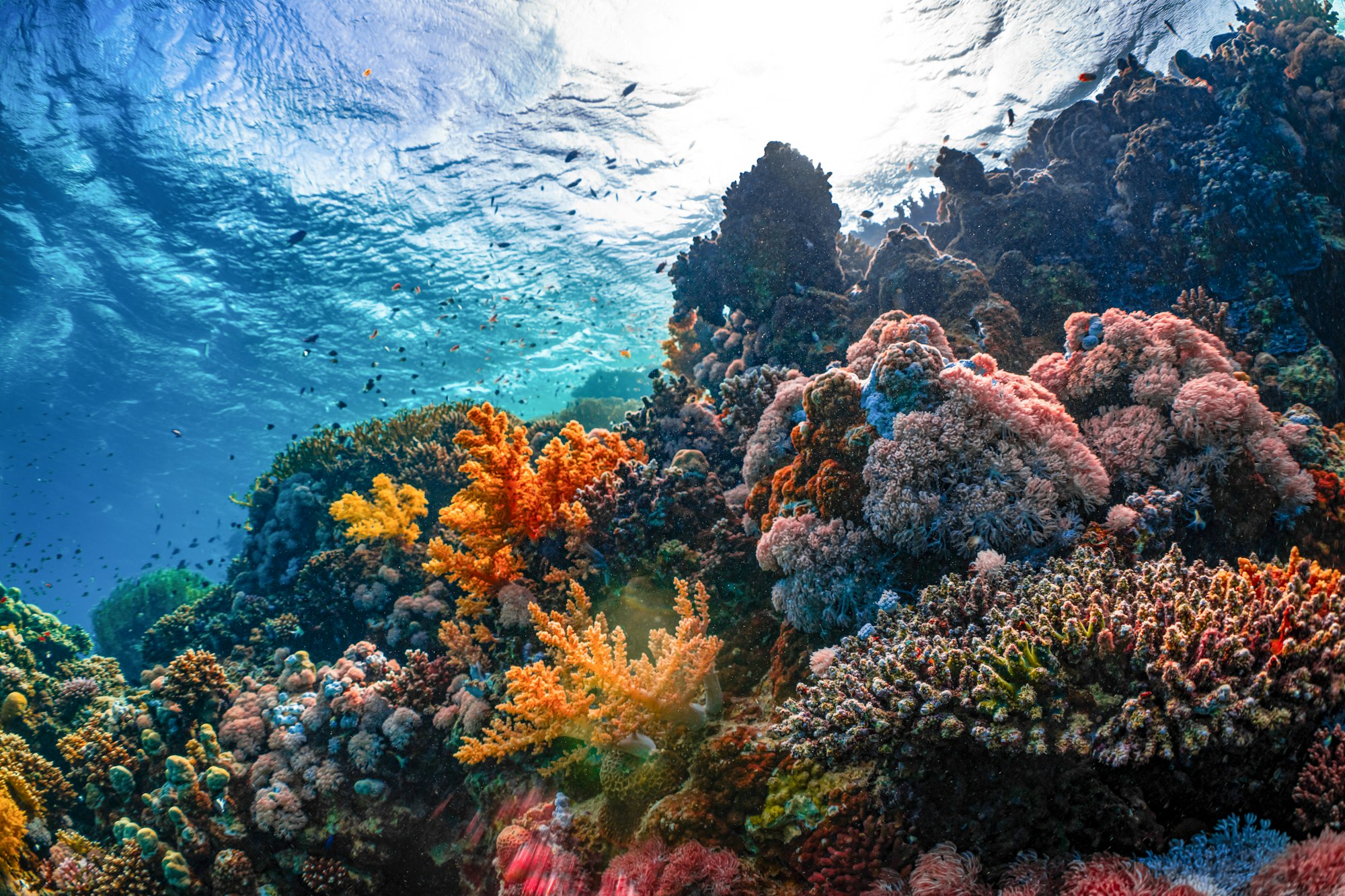
Large tarpon are specifically documented at the Balboa site by multiple sources. Colorful sponges and coral growth on the debris are confirmed. The site’s scattered nature and night dive popularity suggest octopus and lobster in crevices, though these are not specifically confirmed in reviewed sources as Balboa-specific sightings. Reef fish including grunt, snapper, and tropical species are generally documented throughout the George Town area reef. The “three-bladed propellers” mentioned in some descriptions are a signature feature — their presence should be verified with local operators as the dispersed debris field makes layout unclear from sources reviewed.
Dive Profile
The wide scatter of debris allows exploration across a large area at consistent shallow depth (8–10 meters). Begin with the most identifiable structural elements and work across the debris field. The shallow, flat profile allows very extended bottom time. This is cited as one of Grand Cayman’s better night dive options — many structures and crevices are easier to explore in the focused beam of a torch.
Entry and Exit
Boat dive with advance coordination required — call Port Security at (345) 914-3700 before diving, as the site sits in the cruise ship transfer channel. Giant stride entry. Operators familiar with the site manage the required clearances. SMB deployment on ascent is essential given the harbor traffic.
Tips and Recommendations
- Always pre-arrange Port Security clearance before attempting this dive — do not assume access is available
- The large tarpon are a highlight not to be missed
- The Balboa is specifically recommended as a night dive by local operators
- Combine with the nearby Cali wreck for a paired wreck day in the George Town area
- Early morning access before cruise ship activity typically provides the easiest clearance
Safety Considerations
The harbor-adjacent location means active boat traffic is a constant concern — SMB deployment on every ascent is mandatory. The shallow 8–10 meter depth means no-decompression limits are not a concern, but harbor navigation awareness is. Coordinate all dives with Port Security to ensure the channel is clear. Never surface without confirming your position relative to vessel traffic.
Photography
The Balboa’s coral-encrusted hull plates and large propellers are classic Caribbean wreck photography subjects. Large tarpon in clear water make impressive natural light subjects. The scattered nature of the debris field allows varied compositions across a single dive. Ambient light penetration in George Town’s clear shallow water provides excellent natural light photography conditions.
Sources: Red Sail Sports – Shipwreck Dive Guide, Tortuga Divers – Best Shipwreck Dives Grand Cayman, NUMA – Shipwrecks in Grand Cayman. Last updated 2026-05-20.
Sea-surface temperature and wave height from Open-Meteo Marine (ERA5 reanalysis, monthly averages).
3545 verified species observations (250 species) logged within ~11 km of this site between 1937 and 2015, from the Ocean Biodiversity Information System.
- Sparisoma aurofrenatum
- Apogon townsendi
- Sparisoma viride
- Cephalopholis cruentata
- Scarus taeniopterus
- Acanthurus coeruleus
- Scarus iseri
- Lythrypnus elasson
- Haemulon sciurus
- Enchelycore nigricans
- Moringua edwardsi
- Halichoeres bivittatus
Scientific survey records skew toward sampled taxa (molluscs, corals) and do not reflect what you are guaranteed to see on a dive.
Source: OBIS (obis.org), aggregated Darwin Core occurrence records.
Conditions change with the tide and the season. If you have dived this site, share what it was actually like — date, visibility, current, and what you saw. Real, recent reports from divers are exactly what this guide is built to collect.
Send a conditions report ›