Ghost Mountain
19.4020°N 81.3860°W · pinnacle
A dramatic mushroom-shaped pinnacle on Grand Cayman’s North Wall (West Bay area) that peaks at approximately 15 meters and falls away into the depths — one of the island’s more remote and less-visited North Wall dives.
Overview
Ghost Mountain is a prominent pinnacle on Grand Cayman’s North Wall in the West Bay area, not near Little Cayman as previously recorded. Multiple sources confirm this site at approximately N19°24.138’/W81°23.141’ on the North Wall. The pinnacle is described as mushroom-shaped, with its top at approximately 15 meters (50 feet) and the surrounding wall dropping away to over 1,000 meters. The site features healthy gorgonian fans, brown tube sponges, orange encrusted octopus sponges, and rope sponges. Its remoteness means it receives less traffic than other North Wall sites, offering a more intimate experience. There is a hole through the pinnacle at approximately 33 meters (110 feet) — dive guides advise against swimming through it.
Site Information
- Location: North Wall, West Bay, Grand Cayman (confirmed; not Little Cayman)
- Entry Type: Boat dive
- Site Type: Pinnacle/seamount
- Difficulty Level: Intermediate
- Maximum Depth: 30 meters
- Typical Visibility: 25–40 meters (82–130 feet)
- Current: Light to moderate
- Water Temperature: 26–29°C (79–84°F)
- Best Time: Year-round (December–April for calmest conditions)
Marine Life
Ghost Mountain’s pinnacle structure hosts gorgonian fans, tube sponges, and encrusting octopus sponges as the primary documented life on the structure. The surrounding North Wall environment typically supports Caribbean reef sharks, eagle rays, and large reef fish. However, no site-specific marine life reports were identified for Ghost Mountain in sources reviewed — regional Cayman North Wall fauna applies, including typical wall species. The site’s remoteness means firsthand accounts are less common in published sources.
Dive Profile
Descend to the pinnacle top at approximately 15 meters and work around the structure, examining the sponge and gorgonian growth. Deeper sections at 20–30 meters lead toward the wall edge. Do not enter the hole at 33 meters. Ascend up the pinnacle structure for a natural safety stop on the shallow top. The pinnacle’s isolated position makes depth monitoring critical as there is no gradual slope for reference.
Entry and Exit
Boat dive from West Bay operators who run North Wall trips. The site’s remote position means transit time is longer than standard North Wall sites. Giant stride entry. SMB required for ascent.
Tips and Recommendations
- This site is less frequently dived than Babylon or Eagle Ray Pass — its remoteness is part of its appeal
- The sponge community on the pinnacle is the primary attraction
- Do not swim through the hole at approximately 33 meters — dive guides at this site consistently advise against it
- Early morning dives before wind develops provide the most comfortable conditions
- Combine with other North Wall sites for a full North Wall day
Safety Considerations
The 30-meter maximum depth is within standard recreational diving limits. Current can develop on the North Wall — monitor throughout the dive. The isolated pinnacle requires good buoyancy to avoid contact with the structure. Always carry an SMB for ascent from a remote location.
Photography
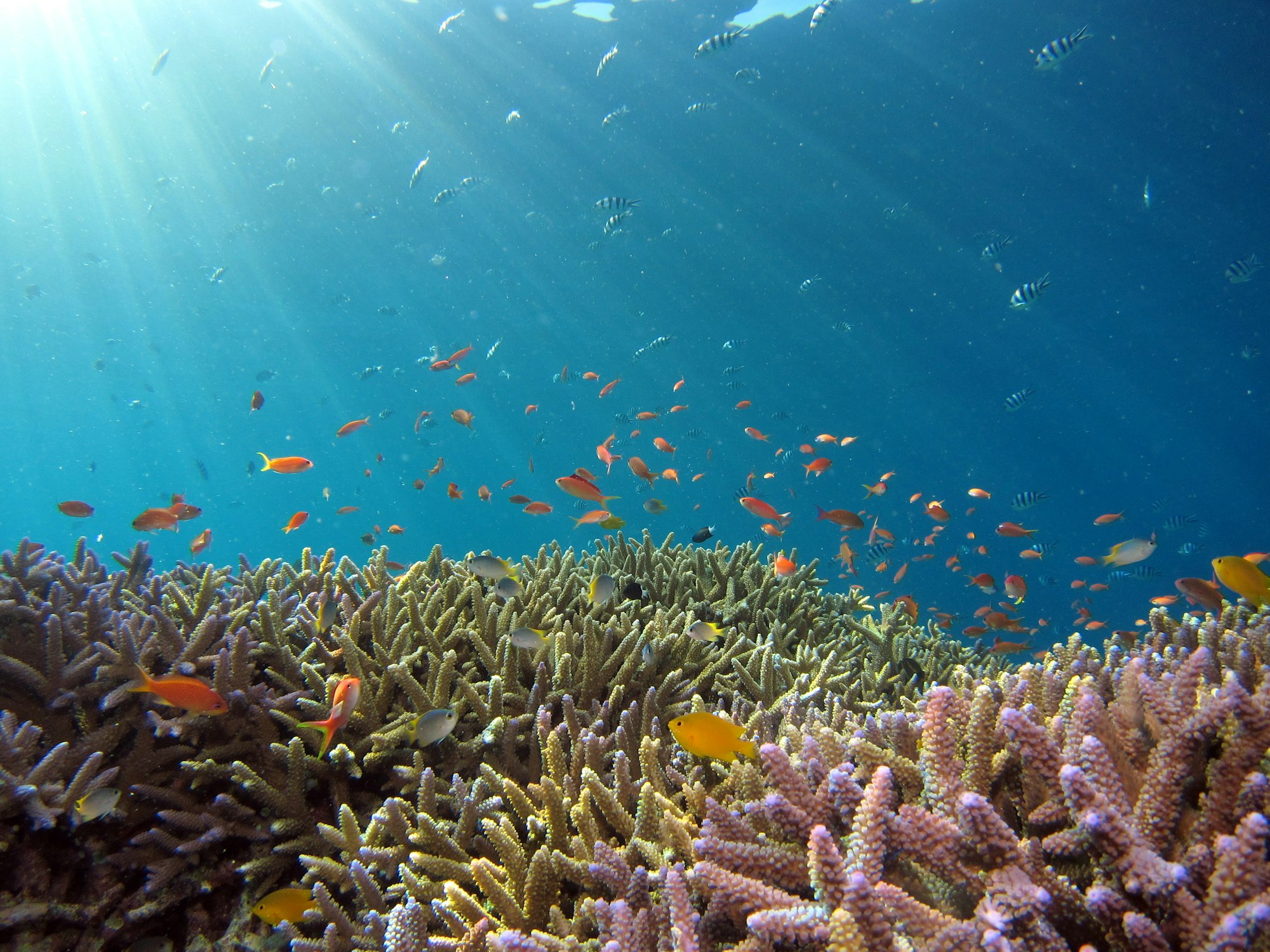
Ghost Mountain’s pinnacle covered in gorgonians and sponges provides striking wide-angle compositions. The pinnacle face against deep blue water is visually distinctive. The sponge variety — tube, octopus, and rope sponges — offers detailed close-focus opportunities with a strobe.
Sources: Red Sail Sports – North Wall Dive Guide, DiveSpot.app – Ghost Mountain, Scuba Diving Resource – Grand Cayman Dive Sites. Last updated 2026-05-20.
Sea-surface temperature and wave height from Open-Meteo Marine (ERA5 reanalysis, monthly averages).
2241 verified species observations (213 species) logged within ~11 km of this site between 1952 and 2015, from the Ocean Biodiversity Information System.
- Acanthurus coeruleus
- Apogon townsendi
- Scarus iseri
- Sparisoma aurofrenatum
- Haemulon sciurus
- Sparisoma viride
- Scarus taeniopterus
- Phaeoptyx conklini
- Coryphopterus glaucofraenum
- Cephalopholis cruentata
- Apogon lachneri
- Kaupichthys hyoproroides
Scientific survey records skew toward sampled taxa (molluscs, corals) and do not reflect what you are guaranteed to see on a dive.
Source: OBIS (obis.org), aggregated Darwin Core occurrence records.
Conditions change with the tide and the season. If you have dived this site, share what it was actually like — date, visibility, current, and what you saw. Real, recent reports from divers are exactly what this guide is built to collect.
Send a conditions report ›