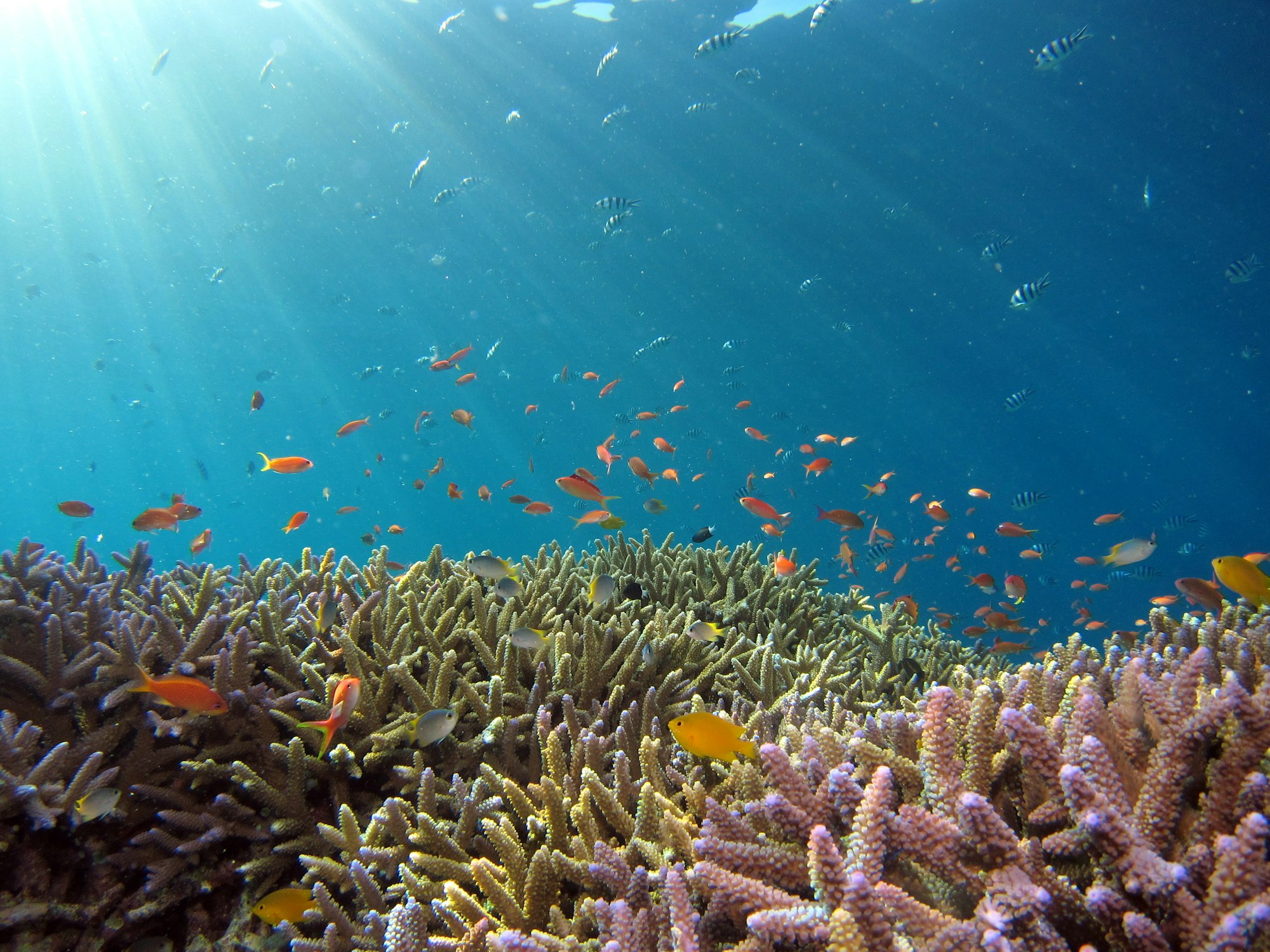
Mixing Bowl Little Cayman
19.6833°N 80.0667°W · wall
The junction point where Bloody Bay Wall meets Jackson Bight — an underwater amphitheater of coral canyons, tunnels, and swim-throughs at the eastern end of Little Cayman’s world-famous wall system.
Overview
Mixing Bowl marks the eastern terminus of Bloody Bay Wall where it meets Jackson Bight, creating one of Little Cayman’s most distinctive dive environments. While Bloody Bay Wall is primarily defined by its dramatic vertical drop-off, the Mixing Bowl area transitions into the Jackson Bight characteristic topography of horizontal tunnels, coral canyons, and swim-throughs rather than a continuous wall face. Divers who have dived Bloody Bay Wall repeatedly often find Mixing Bowl provides a welcome contrast — a more enclosed, navigational dive experience within the same Marine Park. The coral formations at the junction point are exceptional, with the meeting of two different current patterns contributing to a particularly productive marine environment.
Site Information
- Location: Eastern Bloody Bay Wall / Jackson Bight junction, North Shore, Little Cayman
- Entry Type: Boat dive
- Site Type: Wall dive
- Difficulty Level: Intermediate
- Maximum Depth: 25 meters
- Typical Visibility: 25–40 meters (82–130 feet)
- Current: Light to moderate
- Water Temperature: 26–29°C (79–84°F)
- Best Time: Year-round (December–April preferred)
Marine Life
Marine life documented specifically at Mixing Bowl includes Caribbean reef sharks, nurse sharks, horse-eye jacks, sea turtles, yellow-headed jawfish, Bermuda chubs, eagle rays, groupers, snappers, and grunts — all confirmed in site-specific accounts from Little Cayman Divers and other Mixing Bowl dive reports. The tunnel interiors host tarpon and deeper reef species. The site is also cited for small/macro life in its fissures.
Dive Profile
Depending on which direction the dive boat approaches, begin either on the Bloody Bay Wall side (working eastward toward the junction) or the Jackson Bight side (working westward into the tunnels). The 25-meter maximum depth is appropriate for the area but many of the swim-throughs and canyons are shallower, allowing extended bottom time. Plan the dive to include both the wall junction and at least one of the significant Jackson Bight tunnels.
Entry and Exit
Boat dive from Little Cayman resort operators. The Bloody Bay Marine Park is mooring-buoyed. Giant stride entry. Little Cayman operators run this and adjacent sites daily when conditions allow.
Tips and Recommendations
- This site is best understood as a combination site — plan to divide time between the wall junction and the tunnel system
- The Mixing Bowl area is more topographically complex than the open wall — navigation planning helps
- Tarpon sheltering in tunnel recesses can be approached very closely in the darker areas
- Ask your dive guide to distinguish Mixing Bowl from the broader Jackson Bight area for clarity
- Multiple dives in this zone over several days reveal features that a single dive misses
Safety Considerations
The tunnel and swim-through elements require good buoyancy control to avoid silting conditions. Do not enter any overhead environment without proper training and equipment. The wall junction area can develop current — monitor conditions and plan exit direction accordingly. Little Cayman’s limited medical infrastructure requires conservative dive planning.
Photography
The combination of wall and tunnel environments provides varied photographic opportunities. Tarpon in the tunnel interiors create dramatic ambient light portraits. Wide-angle compositions of the wall junction with sea fan frames are distinctive. The junction between the vertical wall and horizontal canyon topography is an unusual landscape rarely found elsewhere. Strobe lighting for tunnel subjects balances the dark interior with the brighter ambient exterior.
Sources: Little Cayman Divers – Dive Sites and Map, Cayman Greatest Dive Sites – Mixing Bowl / Three Fathom Wall, CITA – Dive 365 Mixing Bowl. Last updated 2026-05-20.
Sea-surface temperature and wave height from Open-Meteo Marine (ERA5 reanalysis, monthly averages).
4129 verified species observations (80 species) logged within ~11 km of this site between 1930 and 2016, from the Ocean Biodiversity Information System.
- Acanthurus coeruleus
- Sparisoma viride
- Sparisoma aurofrenatum
- Scarus iseri
- Scarus taeniopterus
- Melichthys niger
- Cephalopholis cruentata
- Chaetodon capistratus
- Acanthurus chirurgus
- Acanthurus bahianus
- Microspathodon chrysurus
- Haemulon flavolineatum
Scientific survey records skew toward sampled taxa (molluscs, corals) and do not reflect what you are guaranteed to see on a dive.
Source: OBIS (obis.org), aggregated Darwin Core occurrence records.
Conditions change with the tide and the season. If you have dived this site, share what it was actually like — date, visibility, current, and what you saw. Real, recent reports from divers are exactly what this guide is built to collect.
Send a conditions report ›