USS Kittiwake Shipwreck
19.3621°N 81.4014°W · wreck
A 251-foot Chanticleer-class submarine rescue vessel (1,780 tons displacement) deliberately scuttled in 2011 off Seven Mile Beach — Grand Cayman’s most dived artificial reef, now lying on its port side following Tropical Storm Nate in October 2017.
Overview
The USS Kittiwake (ASR-13) is a Chanticleer-class submarine rescue ship, 251 feet long and displacing 1,780 tons, launched in 1945 and commissioned in 1946. She served the U.S. Navy for 48 years before decommissioning in September 1994, with deployments across the Caribbean, Mediterranean, Atlantic, and Indian Oceans. Notable service included submarine rescue training and assisting in the recovery of the Challenger space shuttle’s flight data recorder in 1986. In 2011, after hazardous materials removal and hull modifications including the removal of all doors and cutting of access openings, she was deliberately scuttled off Seven Mile Beach on 5 January 2011 to create an artificial reef and dive attraction. She settled upright on the sandy seabed with her shallowest point around 5 meters and maximum depth around 20 meters. In October 2017, Tropical Storm Nate snapped the Kittiwake’s anchor chains and the wave action rolled the vessel onto her port side, shifting her roughly 18–20 meters toward the adjacent Sand Chute dive site. Today she lies on her side in the West Side Marine Park, where no fishing, no gloves, and no removal of any material is permitted. Original instruments and many interior fittings were left intact, allowing divers to explore a functioning-era navy vessel.
Site Information
- Location: Off Seven Mile Beach, West Bay, Grand Cayman
- Entry Type: Boat dive
- Site Type: Wreck dive
- Difficulty Level: Intermediate
- Maximum Depth: 20 meters
- Typical Visibility: 20–40 meters (65–130 feet)
- Current: Light to moderate
- Water Temperature: 26–29°C (79–84°F)
- Best Time: Year-round
Marine Life
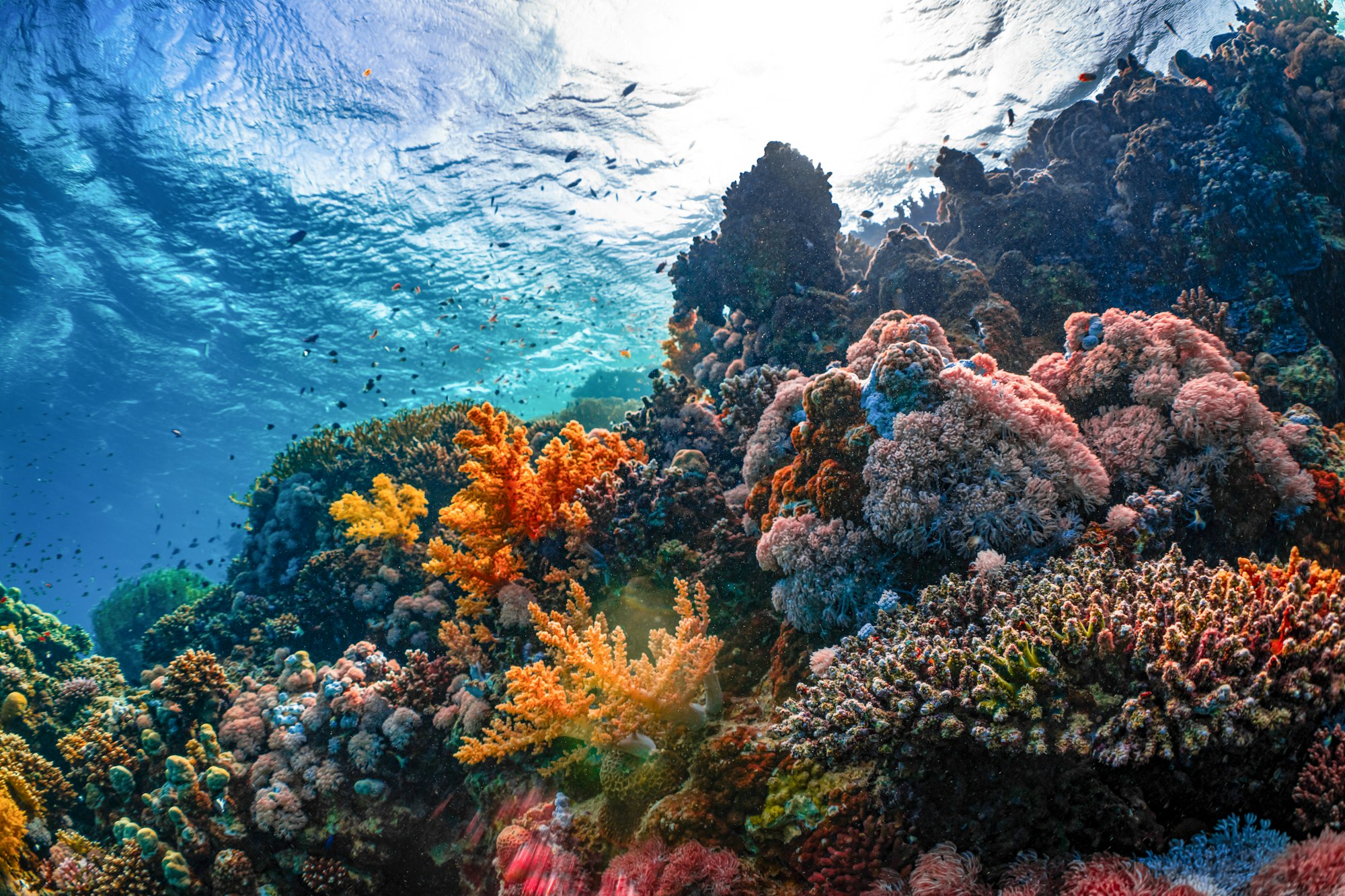
The Kittiwake has become a thriving artificial reef community. Hawksbill turtles are frequently encountered resting on the hull or near the superstructure — multiple sources confirm these as regular sightings at this site. Large schools of horse-eye jacks and barracuda are documented circling the hull. Green moray eels are confirmed occupying interior spaces. Colorful encrusting sponges and corals are actively colonizing the hull surfaces. Caribbean reef sharks and nurse sharks are sometimes seen in the broader area; however, no site-specific dive reports confirm them as regular Kittiwake residents — those claims have been qualified accordingly.
Dive Profile
Post-2017, the wreck lies on its port side, so what was once the deck is now the vertical face. Begin by descending to the hull underside at 20 meters and work along the length of the wreck, then circle up over the now-vertical deck face to the exposed starboard side. Multiple access openings allow basic penetration of compartments. The shallowest point (the starboard keel, now uppermost) at approximately 5 meters is an excellent safety stop venue with excellent light.
Entry and Exit
Boat dive from Seven Mile Beach operators — this is Grand Cayman’s most visited dive site with numerous operators running daily trips. Mooring buoys are provided by the Marine Park authority. Giant stride entry. The accessible location means entry and exit are straightforward. SMB deployment for surface pickup.
Tips and Recommendations
- Multiple dives on multiple days are recommended — the post-2017 orientation change means the wreck rewards fresh exploration from different angles
- Interior penetration through the removed doors and cut openings is accessible to non-cave-certified divers, though wreck training improves the experience
- The large jacks and barracuda schools can be dense enough to temporarily obstruct visibility — exciting rather than dangerous
- Morning dives before tour boat traffic arrives provide the most comfortable experience
- The adjacent reef near the mooring buoys adds additional dive time after the wreck
Safety Considerations
The wreck is inside the Marine Park — gloves are prohibited, no touching or taking anything is permitted, and no fishing is allowed. These are Cayman law, not guidelines. The post-storm sideways orientation means navigational reference points changed significantly from pre-2017 descriptions — update your expectations before diving. Standard recreational depth management at 20 meters. Deploy SMB before ascending given the busy Seven Mile Beach boat corridor.
Photography
The USS Kittiwake in its current sideways orientation creates unique wide-angle compositions not available on standard upright wrecks. The hull silhouette against Cayman’s blue water is immediately recognizable. Schools of jacks and barracuda provide dynamic subject matter in the water column around the wreck. Interior rooms with ambient light from access openings create dramatic corridor shots. Turtle encounters on the hull are among Grand Cayman’s most sought-after marine life photographs.
Sources: Wikipedia – USS Kittiwake (ASR-13), Sunset House – History of the Kittiwake Wreck, Scuba Diver Life – Tropical Storm Nate and Kittiwake, Cayman News Service – Kittiwake Toppled, Ambassador Divers – USS Kittiwake. Last updated 2026-05-20.
Sea-surface temperature and wave height from Open-Meteo Marine (ERA5 reanalysis, monthly averages).
2944 verified species observations (231 species) logged within ~11 km of this site between 1937 and 2015, from the Ocean Biodiversity Information System.
- Sparisoma aurofrenatum
- Acanthurus coeruleus
- Apogon townsendi
- Scarus taeniopterus
- Phaeoptyx conklini
- Coryphopterus glaucofraenum
- Scarus iseri
- Moringua edwardsi
- Apogon lachneri
- Cephalopholis cruentata
- Starksia lepicoelia
- Enchelycore nigricans
Scientific survey records skew toward sampled taxa (molluscs, corals) and do not reflect what you are guaranteed to see on a dive.
Source: OBIS (obis.org), aggregated Darwin Core occurrence records.
Conditions change with the tide and the season. If you have dived this site, share what it was actually like — date, visibility, current, and what you saw. Real, recent reports from divers are exactly what this guide is built to collect.
Send a conditions report ›