Blue Holes
7.1372°N 134.2226°E · cave
Blue Holes
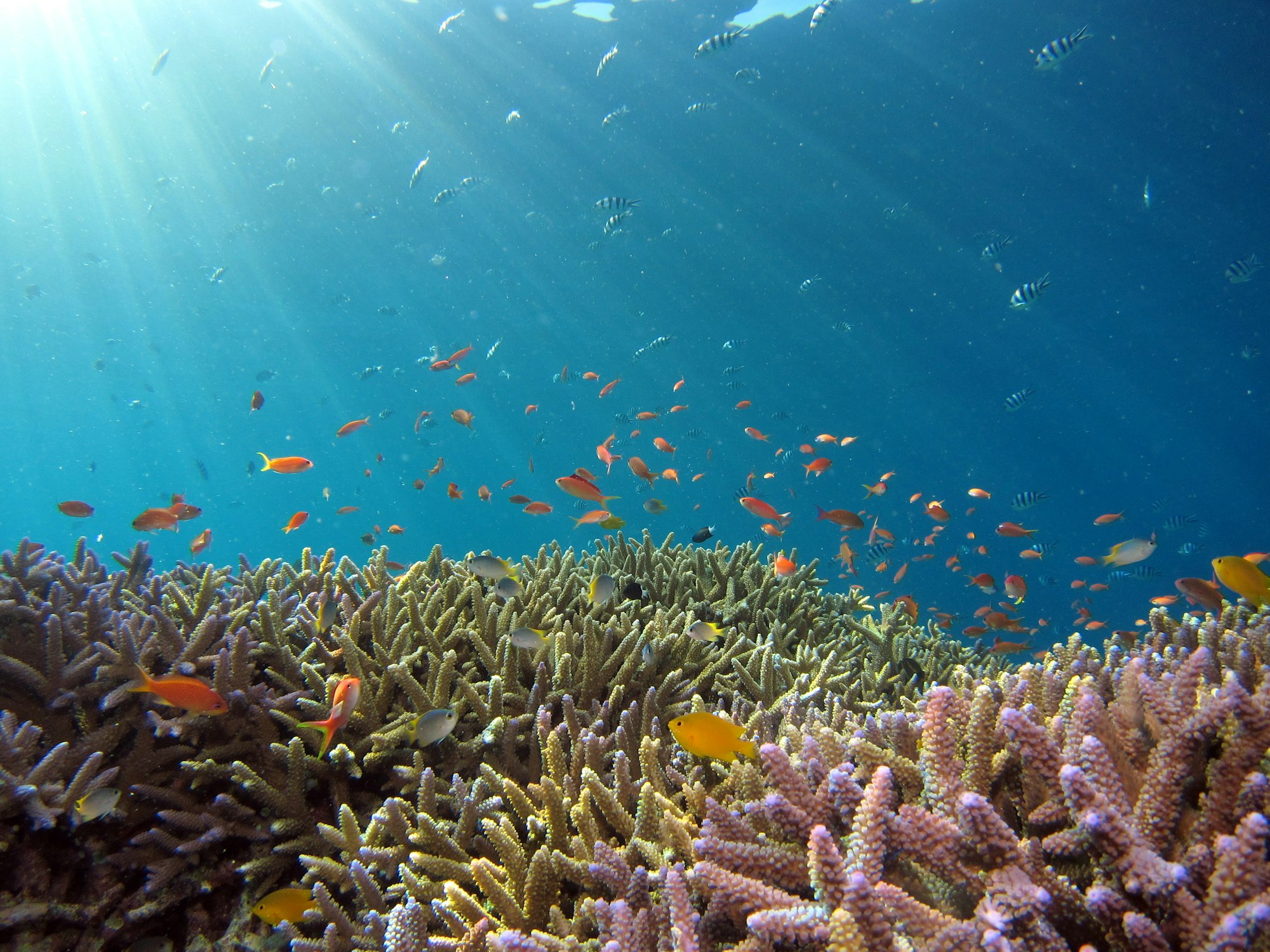
Four vertical openings in the reef top drop into a massive cavern at Ngemelis Island, where sunbeams create one of Palau’s most photographed underwater light displays
Overview
Blue Holes is a cavern dive located northwest of Ngemelis Island on Palau’s western barrier reef, approximately 30 miles from Koror (50–70 minutes by speedboat). Four vertical openings in the reef top at 3–6 feet (1–2 meters) depth drop into an expansive limestone cavern. The cavern bottom sits at approximately 40 meters (120 feet), with a large opening to the west — visible as deep blue — at 26–42 meters depth. A smaller window approximately 15 feet (5 meters) in diameter at 45–55 feet depth provides an alternative exit. The site’s fame rests on the extraordinary light effects: shafts of sunlight stream through the four ceiling holes, illuminating the cavern like spotlights. Best light is achieved with the sun overhead between approximately 10am and 2pm.
At the north end of the cavern, at approximately 25–27 meters depth, a narrow entrance leads to a separate, deeper cave system known as Temple of Doom. Fish N Fins explicitly notes this area carries “multiple fatalities” and should only be entered by cave-certified divers with specialist equipment.
Site Information
- Location: Northwest of Ngemelis Island, Rock Islands, Palau, Micronesia
- Entry Type: Boat dive
- Site Type: Cave/cavern
- Difficulty Level: Intermediate
- Maximum Depth: 40 meters
- Typical Visibility: 18–45 meters (60–150 feet)
- Current: Light to none inside cavern; moderate to strong on outer wall
- Best Time: Year-round; best light effects with overhead sun between 10am and 2pm
Marine Life
Inside the cavern, soft corals and Tubastraea decorate the interior walls where light penetrates. Nudibranchs and shells are found on the sandy cavern floor. Schools of fish patrol near the large western opening. Exiting onto the outer wall, the marine life shifts to pelagic species — grey reef sharks, Napoleon wrasse, and barracuda are found near Blue Corner to the south. Soft corals and sea fans decorate the outer wall face. Turtles are frequently seen cruising along the drop-off.
Dive Profile
Divers descend through one of the four holes in the reef top at 1–2 meters, dropping into the main chamber. The cavern is spacious, with the floor at 40 meters. Most intermediate divers explore the upper portions of the cavern — the light effects are best in the 15–25 meter range. After exploring the light effects and interior, divers exit through the large western opening and continue as a wall drift, either heading south toward Blue Corner or north along the reef. The Temple of Doom entrance at the cavern’s north end is marked but must not be entered without cave certification and appropriate equipment. Safety stop at 5 meters on the reef top.
Entry and Exit
Boat access from Koror (50–70 minutes) or from liveaboards anchoring in the area. Entry is a giant stride followed by a descent through one of the four reef-top openings. Exit is a drift pickup after ascending from the wall section — deploy an SMB from 5 meters.
Tips and Recommendations
- Visit between 10am and 2pm for the best sunlight effects through the holes
- Carry a dive torch to explore the darker sections and illuminate the cavern walls
- This dive pairs perfectly with Blue Corner as a two-site drift — ask your operator
- Hover at mid-depth inside the cavern to appreciate the full light-beam effect
- Do NOT enter the Temple of Doom entrance without cave certification
Safety Considerations
Although classified as a cavern with multiple exits and natural light visible throughout, divers should be comfortable in overhead environments. Watch your depth on exit — the wall drops away steeply, and it is easy to descend beyond planned limits. Air management is important given the depth and duration of a combined Blue Holes/Blue Corner dive. The Temple of Doom entrance at the north end of the cavern has been associated with multiple fatalities — never enter without a cave diving qualification and specialist equipment. Silt can be stirred in the cavern, so maintain good buoyancy and finning technique.
Photography
Blue Holes is one of Palau’s premier underwater photography sites. The sunbeam effect through the four holes is best captured with a wide-angle or fisheye lens, exposing for the ambient light. Position yourself near the cavern floor looking up for the most dramatic beam shots. A diver silhouetted in one of the holes adds compelling scale. On the outer wall, wide-angle is essential for capturing the reef topography and passing pelagics.
Sources: Fish N Fins Palau – Blue Holes, Palau Dive Adventures, PADI – Blue Holes. Last updated 2026-06-25.
Sea-surface temperature and wave height from Open-Meteo Marine (ERA5 reanalysis, monthly averages).
2638 verified species observations (310 species) logged within ~11 km of this site between 1954 and 2017, from the Ocean Biodiversity Information System.
- Chaetodon ephippium
- Myripristis
- Chlorurus sordidus
- Acanthuridae
- Eviota pellucida
- Hemigymnus melapterus
- Scarus dimidiatus
- Parupeneus multifasciatus
- Chaetodon kleinii
- Epinephelus merra
- Callogobius
- Saurida gracilis
Scientific survey records skew toward sampled taxa (molluscs, corals) and do not reflect what you are guaranteed to see on a dive.
Source: OBIS (obis.org), aggregated Darwin Core occurrence records.
Conditions change with the tide and the season. If you have dived this site, share what it was actually like — date, visibility, current, and what you saw. Real, recent reports from divers are exactly what this guide is built to collect.
Send a conditions report ›