Jake SeaPlane
7.3692°N 134.4485°E · wreck
Jake SeaPlane
A remarkably preserved WWII Japanese reconnaissance floatplane resting upright on a sandy bottom in just 12–15 meters, one of the Pacific’s most photogenic and accessible wreck dives
Overview
The Jake SeaPlane is the wreck of a Japanese Aichi E13A reconnaissance floatplane — known by its Allied code name “Jake” — that went down near the Meyuns seaplane base in Palau during World War II. The aircraft was discovered in 1994 by a local fisherman who spotted it from the surface and informed a local diving school. The exact cause of loss is not confirmed: the propeller blades are unbent, suggesting the engine was not running at the moment of water impact, which points to a non-combat loss such as an engine failure during takeoff or landing rather than being shot down. Sources do not agree on the specific circumstances.
The wreck rests in approximately 12–15 meters of water on a sandy bottom, about 500 yards west of the Meyuns seaplane ramp and a short boat ride from most Koror dive shops. The fuselage and port wing remain largely recognizable after more than 80 years underwater; coral growth has effectively embedded the airframe into the reef. The tail section separated on impact and lies approximately 6 meters away, heavily obscured by coral. The starboard float sits detached from the main structure. The aircraft is 11.3 meters long with a 14.5-meter wingspan (confirmed against Wikipedia specifications for the Aichi E13A).
Site Information
- Location: Near Meyuns seaplane base, Koror, Palau, Micronesia
- Entry Type: Boat dive
- Site Type: Wreck dive
- Difficulty Level: Beginner
- Maximum Depth: 12 meters
- Typical Visibility: 18–30 meters (60–90 feet); best at high tide
- Current: None to light; high tide recommended for best visibility
- Best Time: Year-round; sheltered location
Marine Life
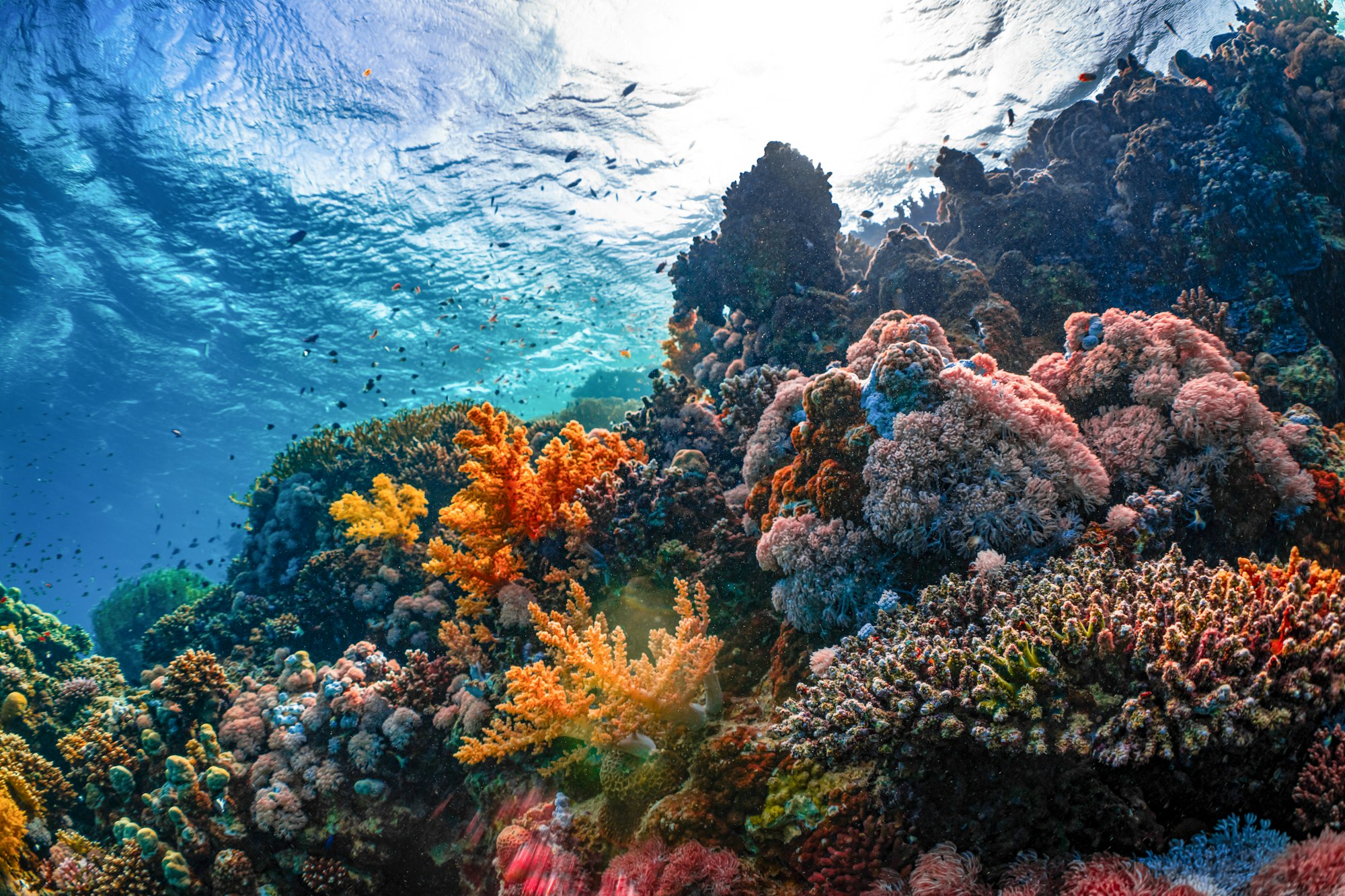
Staghorn, lettuce, brain, and table corals have colonised the airframe, along with a variety of soft corals. Nudibranchs are found on the encrusted surfaces. Octopus occupy crevices in the airframe. Various reef fish inhabit the surrounding coral. The wreck functions as a small artificial reef within a broader coral formation. Note: sources do not confirm large pelagic species specifically at this site.
Dive Profile
A simple and relaxed dive. Descend to the sandy bottom at 12–15 meters and approach the aircraft. The fuselage and port wing are the most intact portions. The detached tail section lies a short distance away and can be found with a guide. Swim around the exterior, examining the engine bay, cockpit, and wing structures. The shallow depth allows extended bottom times of 60 minutes or more. Safety stop at 5 meters over the sand flat. Total dive time can easily extend to 60 minutes.
Important: The wreck contains live World War II–era ammunition, including rounds and small ordnance in and around the cockpit. Do not touch, move, or disturb any ordnance — aged ammunition is unstable and can be hazardous.
Entry and Exit
Short boat ride from Koror (approximately 5–15 minutes). Entry by giant stride into calm, protected water. The wreck is visible from the surface in good visibility conditions. Exit by climbing back onto the boat, which typically anchors nearby. No significant current means the boat stays in position throughout the dive.
Tips and Recommendations
- Dive at high tide for the best visibility at this site
- Visit early morning for the best overhead light illuminating the wreck
- Bring a torch to examine the cockpit area and coral-encrusted details
- The shallow depth gives you extended bottom time — take time to find the detached tail section with your guide
- This is a WWII war grave — treat it with respect; do not remove any artifacts
Safety Considerations
One of Palau’s most straightforward dive sites in terms of conditions: no current, shallow depth, and protected waters. The wreck is a war grave — do not remove artifacts or disturb the structure. Live ordnance is present; do not touch anything that could be ammunition. Avoid silting the sandy bottom near the wreck with careless finning.
Photography
The wreck is one of the most photographed in Micronesia. Wide-angle captures the fuselage against the sandy bottom, and the clean white sand provides a bright, uncluttered background. Natural light at 12–15 meters is excellent. Strobes bring out the vivid colors of the coral encrustation. Macro opportunities are abundant on the coral-covered surfaces. Shoot from low angles to silhouette the wreck against the surface light.
Sources: Fish N Fins Palau, Wrecked In My rEvo, Discover Wildlife, Wikipedia – Aichi E13A. Last updated 2026-06-25.
Sea-surface temperature and wave height from Open-Meteo Marine (ERA5 reanalysis, monthly averages).
22844 verified species observations (364 species) logged within ~11 km of this site between 1947 and 2016, from the Ocean Biodiversity Information System.
- Callogobius
- Cheilodipterus
- Eviota
- Halichoeres
- Gobiidae
- Cheilinus fasciatus
- Exyrias belissimus
- Acanthuridae
- Centropyge vrolikii
- Yongeichthys criniger
- Zoramia leptacanthus
- Chaetodon ephippium
Scientific survey records skew toward sampled taxa (molluscs, corals) and do not reflect what you are guaranteed to see on a dive.
Source: OBIS (obis.org), aggregated Darwin Core occurrence records.
Conditions change with the tide and the season. If you have dived this site, share what it was actually like — date, visibility, current, and what you saw. Real, recent reports from divers are exactly what this guide is built to collect.
Send a conditions report ›